El conocimiento y la riqueza de las naciones

El conocimiento y la riqueza de las naciones

David Warsh / Esther Rabasco / Luis Toharia

28,00 €
IVA incluido
Disponible
Editorial:
Antoni Bosch Editor
Año de edición:
2009
Materia
Economía política
ISBN:
9788495348241
28,00 €
IVA incluido
Disponible

Selecciona una librería:

  • Librería Samer Atenea
  • Librería Aciertas (Toledo)
  • Kálamo Books
  • Librería Perelló (Valencia)
  • Librería Elías (Asturias)
  • Donde los libros
  • Librería Kolima (Madrid)
  • Librería Proteo (Málaga)

En 1980, Paul Romer, estudiante de doctorado de veinticuatro años, trató de resolver uno de los enigmas más antiguos en economía. Ocho años más tarde lo había resuelto. Este libro cuenta la historia de lo que se denomina la nueva teoría del crecimiento económico: la paradoja identificada por Adam Smith hace más de doscientos años, su desaparición del horizonte científico y su esporádico resurgimiento en el siglo XIX, el desarrollo de nuevos instrumentos en el siglo XX y, finalmente, el estudiante que fue capaz de ver más allá que sus profesores.La nueva teoría del crecimiento, fascinante en sí misma, ayuda a explicar por qué las empresas pioneras como IBM o Microsoft acaban dominando su sector, destaca la importancia de la propiedad intelectual y brinda perspectivas únicas para entender por qué se expanden las economías. Este revelador libro nos situa, al igual que Chaos de James Gleick o The Elegant Universe de Brian Greene, en la vanguardia de la investigación científica.?Warsh nos lleva a un fascinante viaje por el mundo del pensamiento económico ?y de la vida de los economistas- desde Adam Smith hasta el momento actual? No he visto nunca a nadie escribir tan bien como Warsh sobre el entorno social de la investigación económica, un mundo de gente brillante, a menudo excéntrica, que nada tiene que ver con los deprimentes personajes que vemos hablando de economía en CNBC? Si le gusta leer historias de intensos dramas intelectuales, si quiere saber el origen de ideas que, como dijo Keynes, ?son peligrosas para bien y para mal?, entonces éste es su libro.? Paul Krugman, Premio Nobel de economía 2008. Catedrático de Princeton University, columnista del New York Times y autor de numerosos libros, en su crítica del libro en el New York Times Book Review. 10


Artículos relacionados

  • Private Affluence and Public Squalor
    Paul L L Nevins / Paul L Nevins
    Are the values that Americans collectively hold destroying the American Dream? The answer to that question depends upon the answers to some very specific questions. What do we as citizens of the United States believe we owe to one another as citizens? What is the purpose of government? What is of the role of the private enterprise? What is the meaning of equal opportunity? To w...
    Disponible

    24,04 €

  • Of Privacy and Power
    Abraham L. Newman / Henry Farrell
    How disputes over privacy and security have shaped the relationship between the European Union and the United States and what this means for the futureWe live in an interconnected world, where security problems like terrorism are spilling across borders, and globalized data networks and e-commerce platforms are reshaping the world economy. This means that states’ jurisdictions ...
    Disponible

    30,80 €

  • Migration and Democracy
    Abel Escribà-Folch / Covadonga Meseguer / Joseph Wright
    How remittances-money sent by workers back to their home countries-support democratic expansionIn the growing body of work on democracy, little attention has been paid to its links with migration. Migration and Democracy focuses on the effects of worker remittances-money sent by migrants back to their home countries-and how these resources shape political action in the Global S...
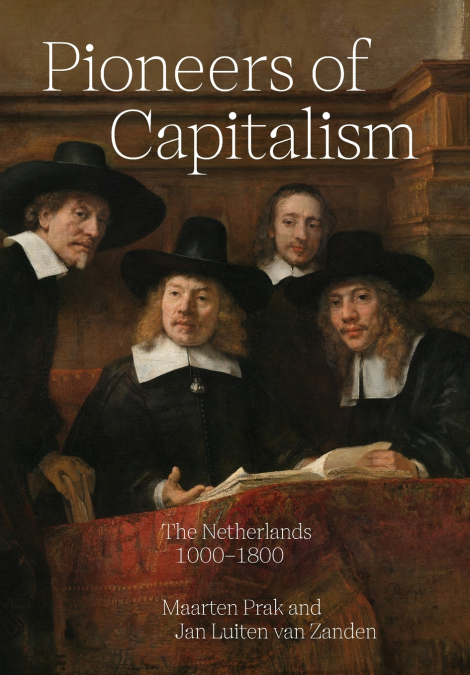
  • Pioneers of Capitalism
    Jan Luiten van Zanden / Maarten Prak / Ian Cressie
    How medieval Dutch society laid the foundations for modern capitalismThe Netherlands was one of the pioneers of capitalism in the Middle Ages, giving rise to the spectacular Dutch Golden Age while ushering in an era of unprecedented, long-term economic growth. Pioneers of Capitalism examines the formal and informal institutions in the Netherlands that made this economic miracle...
  • Pillars of Prosperity
    Timothy Besley / Torsten Persson
    How nations can promote peace, prosperity, and stability through cohesive political institutions'Little else is required to carry a state to the highest degree of opulence from the lowest barbarism, but peace, easy taxes, and a tolerable administration of justice; all the rest being brought about by the natural course of things.' So wrote Adam Smith a quarter of a millennium ag...
    Disponible

    57,93 €

  • Luxury Fever
    Robert H. Frank
    The turn of the twenty-first century witnessed a spectacular rise in gross consumption. With the super-rich setting the pace, everyone spent furiously in a desperate attempt to keep up. As cars and houses grew larger and more expensive, the costs were enormous--not only monetarily but also socially. Consumers spent more time at work and less time with their family and friends; ...
    Disponible

    35,97 €