
Einführung in die klassische und moderne Zahlentheorie

Einführung in die klassische und moderne Zahlentheorie

Hans Schubart

83,82 €
IVA incluido
Disponible
Editorial:
Springer Nature B.V.
Año de edición:
1974
ISBN:
9783528033132
83,82 €
IVA incluido
Disponible

Selecciona una librería:

  • Librería Samer Atenea
  • Librería Aciertas (Toledo)
  • Kálamo Books
  • Librería Perelló (Valencia)
  • Librería Elías (Asturias)
  • Donde los libros
  • Librería Kolima (Madrid)
  • Librería Proteo (Málaga)

Dieses Buch mochte zahlentheoretische Probleme darstellen, wie ich sie seit etwa 15 Jahren in Vorlesungen an der Universit~t (TH) Karlsruhe, sp~ter auch an der P~dagogischen Hochschule Karlsruhe, behandelt habe. Nachdem es trotz mancher 'Unkenrufe aus scheinbar kompetentem Munde' urn 1950 gelang, die beiden Hauptsatze der analytischen Zahlentheorie elementar - i. e. ohne sehr tiefliegende Satze aus der Theorie komplexer Funktionen - zu beweisen, waren Freude und Erstaunen gleichermaBen erheblich. Bis zu dieser Zeit blieben die Beweise der S~tze von GauB und Dirichlet fast ausschlieBlich speziellen Oberseminaren vorbehalten und wurden in normal en Vor­ lesungen lediglich zitiert. W~hrend Dirichlet den nach ibm be­ nannten Satz: 'Jede aritbmetische Folge erster Ordnung a·n+b (mit teilerfremden ganzrationalen Zahlen a und b)enth~lt unend­ liche viele Primzahlen' selbst beweisen konnte, hat GauB die nach ibm benannte Aussage: 'lim ,,(x) ~lOgx = 1 (wobei ,,(x) fUr die -- zahl der Primzahlen unterhalb x steht) II nur ausgesprochen. Sie wurde erstmals 1896 von Hadamad (1865 bis 1963) und de la Vallee Poussin (1866 bis 1962) bewiesen. Heute ist es durch die im 4. und 5. Kapitel dieses Buches ausfUl~lich behandelten Ergebnisse moglich, die genannten Hauptsatze lediglich mit Mitteln zu be­ weisen, zu deren Voraussetzungen nicht’mehr gehort als im Mathe­ matikunterricht ,der SI- und SII-Stufe erortert wird. Von diesen Kenntnissen geht die vorliegende Darstellung aus. Die heute verbreitete Schreibweise fUr Mengen, fUr Relationen und fUr Strukturen ist sehr sparsam verwendet.
Artículos relacionados

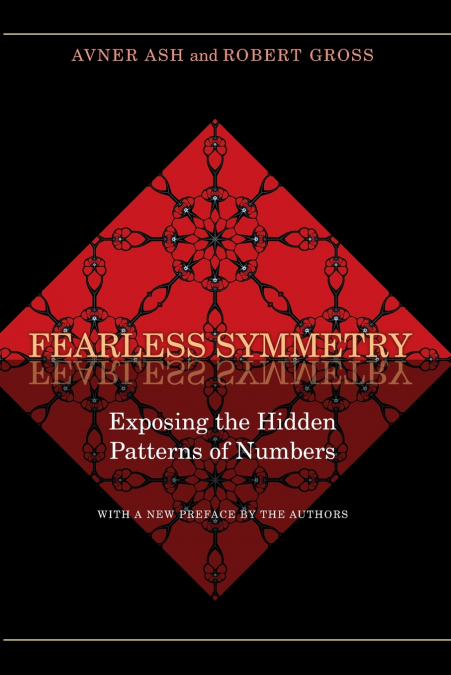
  • Fearless Symmetry
    Avner Ash / Robert Gross
    Mathematicians solve equations, or try to. But sometimes the solutions are not as interesting as the beautiful symmetric patterns that lead to them. Written in a friendly style for a general audience, Fearless Symmetry is the first popular math book to discuss these elegant and mysterious patterns and the ingenious techniques mathematicians use to uncover them. Hidden symmetri...
    Disponible

    45,64 €

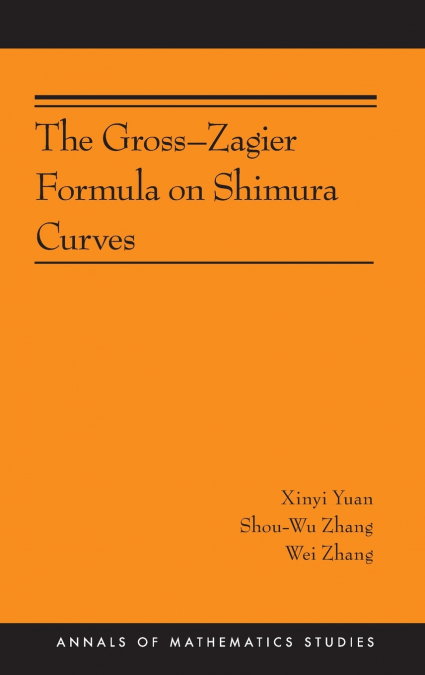
  • The Gross-Zagier Formula on Shimura Curves
    Shou-Wu Zhang / Wei Zhang / Xinyi Yuan
    This comprehensive account of the Gross-Zagier formula on Shimura curves over totally real fields relates the heights of Heegner points on abelian varieties to the derivatives of L-series. The formula will have new applications for the Birch and Swinnerton-Dyer conjecture and Diophantine equations. The book begins with a conceptual formulation of the Gross-Zagier formula in ter...
  • Prime-Detecting Sieves (LMS-33)
    Glyn Harman
    This book seeks to describe the rapid development in recent decades of sieve methods able to detect prime numbers. The subject began with Eratosthenes in antiquity, took on new shape with Legendre’s form of the sieve, was substantially reworked by Ivan M. Vinogradov and Yuri V. Linnik, but came into its own with Robert C. Vaughan and important contributions from others, notably...
  • Prime-Detecting Sieves (LMS-33)
    Glyn Harman
    This book seeks to describe the rapid development in recent decades of sieve methods able to detect prime numbers. The subject began with Eratosthenes in antiquity, took on new shape with Legendre’s form of the sieve, was substantially reworked by Ivan M. Vinogradov and Yuri V. Linnik, but came into its own with Robert C. Vaughan and important contributions from others, notably...
    Disponible

    114,46 €

  • Non-abelian Fundamental Groups and Iwasawa Theory
    ...
    Disponible

    109,19 €

  • The largest known prime number
    Philipi Schneider
    Note: This is no longer the largest known prime number. The Mersenne project announced the discovery of a larger prime number on October 21, 2024. We have already published a new edition with the newly discovered number.A prime number is a natural number greater than 1 with no divisors other than 1 and itself. According to Euclid’s theorem there are infinitely many prime number...
    Disponible

    35,81 €