Inicio > Humanidades > Filosofía > Einfuhrung in Die Idealistische Dialektik Hegels
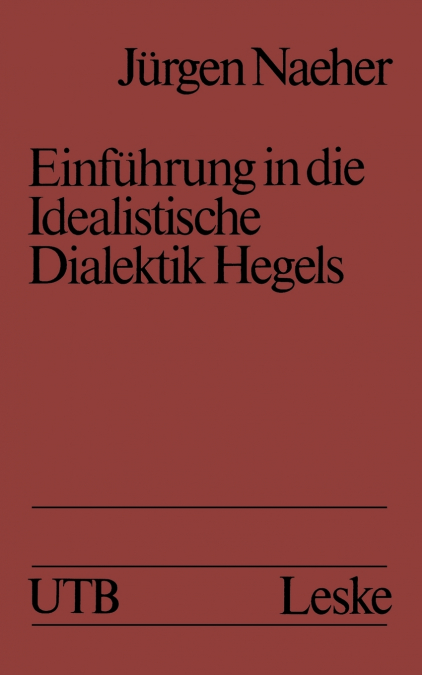
Einfuhrung in Die Idealistische Dialektik Hegels

Einfuhrung in Die Idealistische Dialektik Hegels

Jeurgen Naeher / Jurgen Naeher

72,85 €
IVA incluido
Disponible
Editorial:
Springer Nature B.V.
Año de edición:
1981
Materia
Filosofía
ISBN:
9783810002723
72,85 €
IVA incluido
Disponible

Selecciona una librería:

  • Librería Samer Atenea
  • Librería Aciertas (Toledo)
  • Kálamo Books
  • Librería Perelló (Valencia)
  • Librería Elías (Asturias)
  • Donde los libros
  • Librería Kolima (Madrid)
  • Librería Proteo (Málaga)

'Besonders der Anfang der ,Phiinomenologie des Geistes’, niimlich die Dialektik der sinnlichen Gew~heit, setzt dem Verstiindnis oft einen scheinbar uniiberwindlichen Widerstand entgegen. ,,1 Ein Buch, das, wie das vorliegende, in die Idealistische Dia­ lektik (Hegels) vorrangig am Beispiel der beriihmten 'Pha­ nomenologie des Geistes' (im folgenden: PhdG) einftihren will, am Beispiel also eines der schwierigsten Texte der philosophischen Literatur iiberhaupt: mu~ das auch ein besonders schwieriges Buch sein? Es ware unverantwortlich, in diesem Vorwort den Eindruck nahezulegen, da~ es - trotzdem - durchweg 'ganz leicht' zugehen wird, z. B. aufgrund der Darstellung. Unverant­ wortlich nicht nur, weil dem Text der PhdG yom besonders schwierigen Anfang her gefolgt wird - iiber eine weite Strecke. 'Kein Problem!' sagt die Sprache des Alltagsja dort, wo es wahrhaftig urn keine philosophischen Probleme geht, urn keine philosophischen Problemstellungen. J edenfalls urn noch keine, bzw. urn so1che, die noch nicht als philosophi­ sches Problem bewu~t sind. Philo sophie - Dialektik zumal - ist kein bequemer Weg zum Ziel; keine bequeme Methode etwa (griech.: methodos heillt ja: der Weg) . .. Vermittlung', ein zentrales Motiv der Dialektik, ist kein 'goldener Mittelweg' (Vermittlung, einmal populiir gespro­ chen: als 'Synthese' von 'These' und 'Antithese'). Banalisierung darf nicht der Preis sein; Vereinfachung darf nicht Simplifizierung, Abkiirzung nicht Verklirzung be­ deuten. 1 W. Wieland: Hegels Dialektik der sinnl. GewUlheit, a.a.O., S. 69.
Artículos relacionados

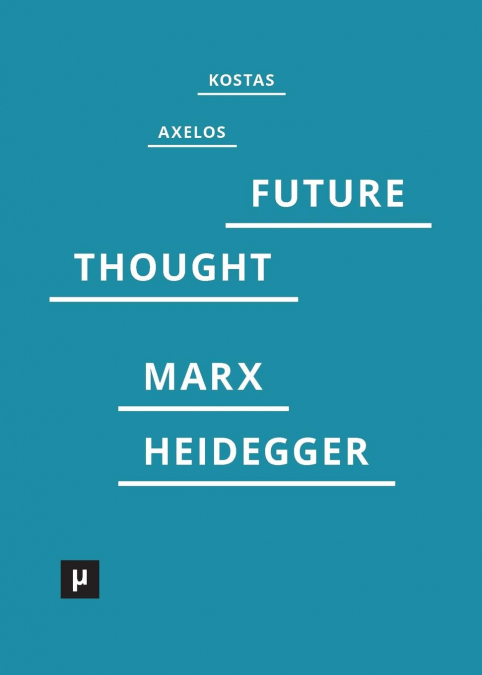
  • Introduction to a Future Way of Thought
    Kostas Axelos / Kenneth Mills
    'Technologists only change the world in various ways in generalized indifference; the point is to think the world and interpret the changes in its unfathomability, to perceive and experience the difference binding being to the nothing.'Anticipating the age of planetary technology Kostas Axelos, a Greek-French philosopher, approaches the technological question in this book, firs...
    Disponible

    18,58 €

  • Capsule
    John Kenneth Press
    Join John and Adam as they wander the mean streets of Japan on a psychedelic fueled search for identity. While fun for the average reader, this book could also serve as a philosphy textbook because of its ordered exploration of sources of identity. Ultimately this trip through nationalist attacks, sex, and drugs, will take you to a better understanding of yourself and your pl...
    Disponible

    11,51 €

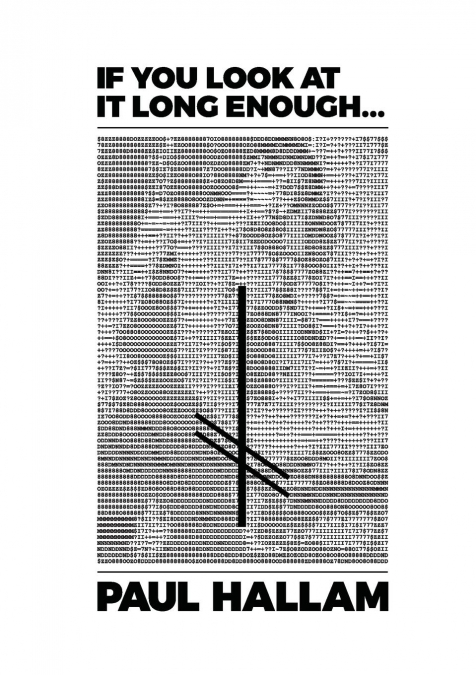
  • If you look at it long enough...
    Paul Hallam
    Originally written for an academic journal, If you look at it long enough... is primarily a personal account of Paul Hallam’s recollections of “self-abuse” through the consumption of porn over several decades. Challenging the familiar form of an “academic essay,” this autobiographical narrative raises several questions in relation to our contemporary morals related to sex in ge...
    Disponible

    11,30 €

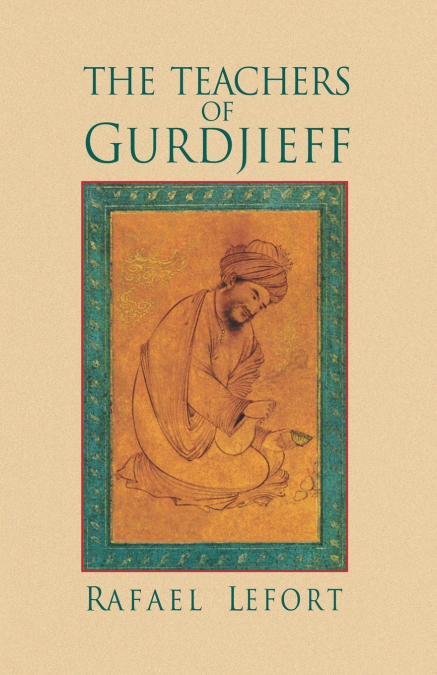
  • The Teachers of Gurdjieff
    Rafael Lafort / Rafael Lefort
    When The Teachers of Gurdjieff was first published more than 50 years ago, it made a considerable stir. George Ivanovich Gurdjieff had been one of the most famous mystics in the West in the first half of the 20th century - a teaching master who had many fashionable and influential pupils. He had a striking appearance and manner of teaching, and his teaching proved to be very in...
    Disponible

    20,45 €

  • Manifesto of the Communist Party
    Karl Marx
    The Communist Manifesto was first published on February 21, and it is one of the world’s most influential political tracts. Commissioned by the Communist League and written by communist theorists Karl Marx and Friedrich Engels, it laid out the League’s purposes and program. The Manifesto suggested a course of action for a proletarian (working class) revolution to overthrow the ...
  • The Art of Literature
    Arthur Schopenhauer
    Collected here are eight short essays, On Authorship, On Style, On the Study of Latin, On Men of Learning, On Thinking for Ones Self, On Criticism, On Reputation, On Genius, by the world renowned philosopher Arthur Achopenhauer. ...