 Librería Samer Atenea
 Kálamo Books
 Librería Elías (Asturias)
 Librería Kolima (Madrid)
 Librería Proteo (Málaga)
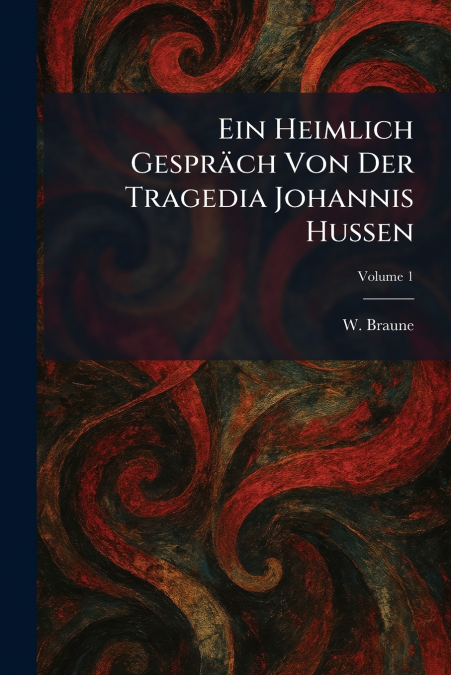
'Ein Heimlich Gespräch Von Der Tragedia Johannis Hussen' ist ein bedeutendes literarisches Zeugnis der Reformationszeit, das die tragischen Ereignisse um den böhmischen Reformator Jan Hus in den Mittelpunkt stellt. In Form eines vertraulichen Dialogs verfasst, reflektiert das Werk die tiefgreifenden religiösen und politischen Spannungen des 16. Jahrhunderts. Es beleuchtet die Rezeption von Hus’ Lehren und sein Schicksal aus der Perspektive der protestantischen Bewegung jener Ãra.Das 1538 entstandene Werk dient nicht nur als historisches Dokument, sondern auch als theologisches Manifest, das die moralische Standhaftigkeit gegenüber kirchlicher Autorität betont. Durch die dramatische Darstellung der 'Tragedia' wird Jan Hus als zentraler Vorläufer der Reformation gewürdigt. Der Text bietet wertvolle Einblicke in die Entwicklung der Dialogliteratur und zeigt auf, wie Märtyrerberichte zur Identitätsbildung des neuen Glaubens beitrugen. Für Forscher der Kirchengeschichte, Literaturwissenschaftler und Interessierte an der Frühneuzeit stellt dieser Text eine unverzichtbare Primärquelle dar, die die geistigen Auseinandersetzungen ihrer Zeit lebendig werden lässt.This work has been selected by scholars as being culturally important, and is part of the knowledge base of civilization as we know it. This work was reproduced from the original artifact, and remains as true to the original work as possible. Therefore, you may see the original copyright references, library stamps (as most of these works have been housed in our most important libraries around the world), and other notations in the work.This work is in the public domain in the United States of America, and possibly other nations. Within the United States, you may freely copy and distribute this work, as no entity (individual or corporate) has a copyright on the body of the work.As a reproduction of a historical artifact, this work may contain missing or blurred pages, poor pictures, errant marks, etc. Scholars believe, and we concur, that this work is important enough to be preserved, reproduced, and made generally available to the public. We appreciate your support of the preservation process, and thank you for being an important part of keeping this knowledge alive and relevant.