 Librería Samer Atenea
 Kálamo Books
 Librería Elías (Asturias)
 Librería Kolima (Madrid)
 Librería Proteo (Málaga)
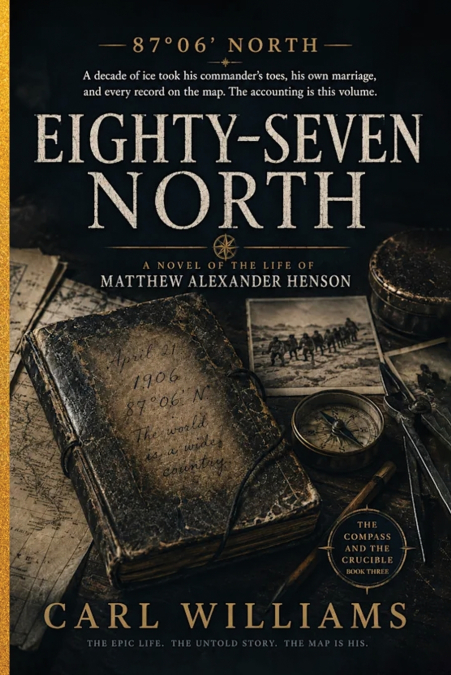
The histories printed the number with a flag beside it. He kept it with a price tag.For ten years, the ice has had the whole of Matthew Henson. He freezes a ship into Kane Basin and races a Norwegian rival north on nothing but a rumor off the Nova Scotia coast. He holds his commander down in a frozen hut while a surgeon takes most of the man’s feet, then helps haul him two hundred and fifty miles to the sea alive. He breaks the trails, keeps the books, and learns the law of a people who call a blizzard 'some snow' and a famine 'the lean time.'In April of 1906, he stood where no man had ever stood, eighty-seven degrees and six minutes north, one hundred and seventy-four miles short of the Pole, with the food eaten past the line drawn for turning back. They turn back. The march home scatters the expedition across the polar sea, leaving no party knowing whether the others live. They starve. They eat the dogs. They come to land in twos and threes, burned black, walking skeletons, and Henson keeps the slate at the gangway where the names of the missing wait in an empty column.The decade takes his commander’s toes and a great deal else. It also gives him what no American record will hold: a wife in the north, by the custom of the country, and a son born on a coast no letter can reach. He will go south, because the work walks south. He will never see the boy’s face.Fifty years on, an old man at a Harlem window opens the sea chest he has guarded since 1907 and lays the estate on the table. The notebook. The letters sewn shut in two women’s stitches, addressed to a place no mail has ever run. A small flat stone, sent down the long paths, that he would not trade for the Pole itself.The number was true. The cost was true. This is the accounting.THE COMPASS AND THE CRUCIBLE follows Matthew Henson across five volumes and a lifetime, from a Maryland boyhood to the roof of the world and the long reckoning after, each book told in the only voice that ever kept the books: his own.