Inicio > Lenguas > Lingüistica > Efficient Parsing for Natural Language
Efficient Parsing for Natural Language

Efficient Parsing for Natural Language

Masaru Tomita

132,87 €
IVA incluido
Consulta disponibilidad
Editorial:
Springer Nature B.V.
Año de edición:
1985
Materia
Lingüistica
ISBN:
9780898382020

Selecciona una librería:

  • Librería Samer Atenea
  • Librería Aciertas (Toledo)
  • Kálamo Books
  • Librería Perelló (Valencia)
  • Librería Elías (Asturias)
  • Donde los libros
  • Librería Kolima (Madrid)
  • Librería Proteo (Málaga)

Parsing Efficiency is crucial when building practical natural language systems. ’Ibis is especially the case for interactive systems such as natural language database access, interfaces to expert systems and interactive machine translation. Despite its importance, parsing efficiency has received little attention in the area of natural language processing. In the areas of compiler design and theoretical computer science, on the other hand, parsing algorithms 3 have been evaluated primarily in terms of the theoretical worst case analysis (e.g. lXn, and very few practical comparisons have been made. This book introduces a context-free parsing algorithm that parses natural language more efficiently than any other existing parsing algorithms in practice. Its feasibility for use in practical systems is being proven in its application to Japanese language interface at Carnegie Group Inc., and to the continuous speech recognition project at Carnegie-Mellon University. This work was done while I was pursuing a Ph.D degree at Carnegie-Mellon University. My advisers, Herb Simon and Jaime Carbonell, deserve many thanks for their unfailing support, advice and encouragement during my graduate studies. I would like to thank Phil Hayes and Ralph Grishman for their helpful comments and criticism that in many ways improved the quality of this book. I wish also to thank Steven Brooks for insightful comments on theoretical aspects of the book (chapter 4, appendices A, B and C), and Rich Thomason for improving the linguistic part of tile book (the very beginning of section 1.1).
Artículos relacionados

  • User-Centered Computer Aided Language Learning
    Giorgos Zacharia / Panayiotis Zaphiris
    ...
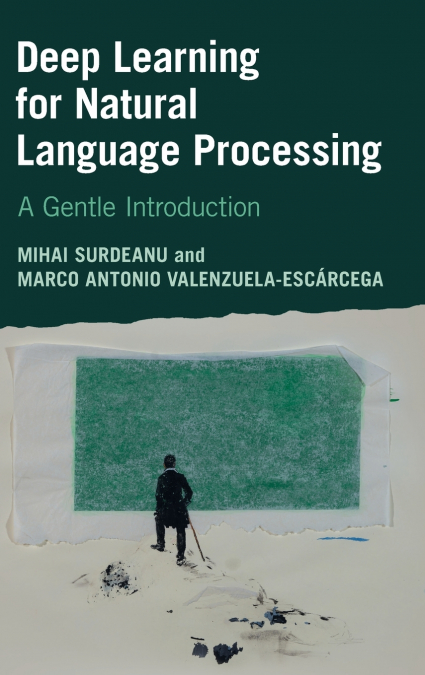
  • Deep Learning for Natural Language Processing
    Marco Antonio Valenzuela-Escárcega / Mihai Surdeanu
    ...
    Disponible

    47,60 €

  • Deep Learning for Natural Language Processing
    Marco Antonio Valenzuela-Escárcega / Mihai Surdeanu
    ...
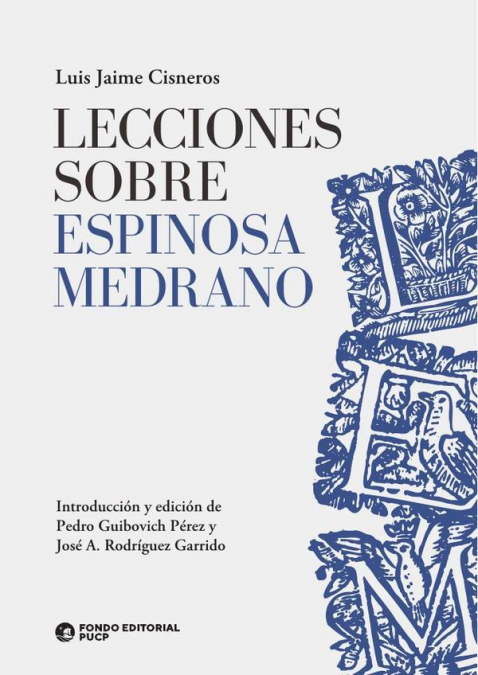
  • Lecciones sobre espinosa medrano
    Luis Jaime Cisneros Vizquerra
    La obra de Juan de Espinosa Medrano, apodado en su tiempo «El Lunarejo» (c. 1629-1688), fue uno de los mayores focos de interés académico de Luis Jaime Cisneros (1921-2011). En 1980 aparecieron sus primeros trabajos dedicados a estudiar los textos capitales de Espinosa Medrano (el Apologético en favor de don Luis de Góngora, la Panegírica declamación por la protección de las ci...
    Disponible

    17,63 €

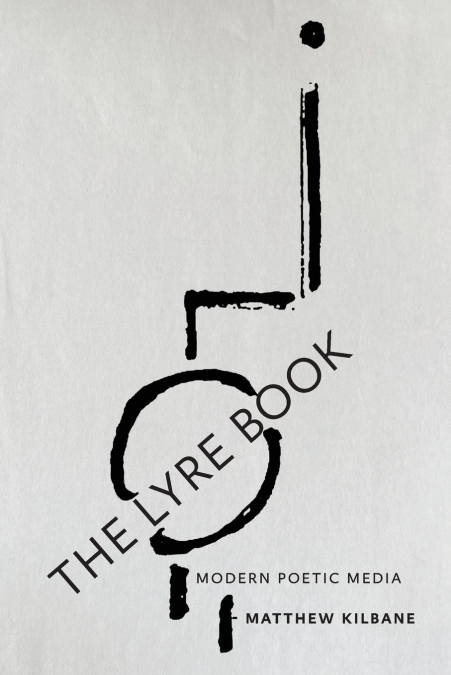
  • Lyre Book
    Matthew Kilbane
    Redefines modern lyric poetry at the intersection of literary and media studies.In The Lyre Book, Matthew Kilbane urges literary scholars to consider lyric not as a genre or a reading practice but as a media condition: the generative tension between writing and sound. In addition to clarifying issues central to the study of modern poetry--including its proximity to popular song...
    Disponible

    50,84 €

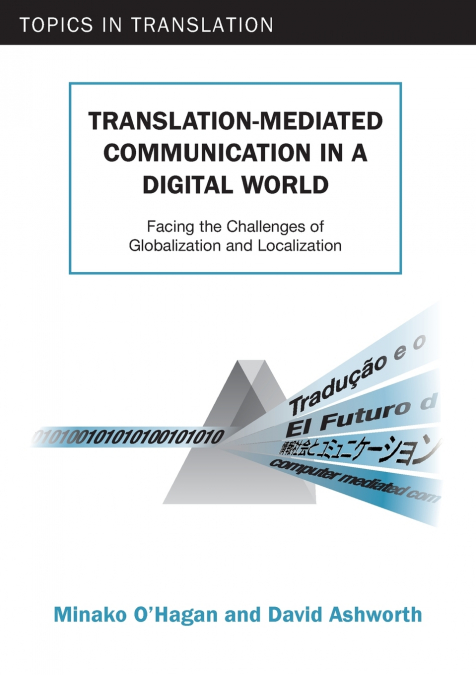
  • Translation-mediated Communication in a Digital World
    David Ashworth / Minako O’Hagan
    The Internet is accelerating globalization by exposing organizations and individuals to global audiences. This in turn is driving teletranslation and teleinterpretation, new types of multilingual support, which are functional in digital communications environments. The book describes teletranslation and teleinterpretation by exploring a number of key emerging contexts for langu...
    Disponible

    45,19 €

Otros libros del autor

  • Current Issues in Parsing Technology
    Masaru Tomita
    ...
    Disponible

    269,02 €

  • Generalized LR Parsing
    Masaru Tomita
    The Generalized LR parsing algorithm (some call it 'Tomita’s algorithm') was originally developed in 1985 as a part of my Ph.D thesis at Carnegie Mellon University. When I was a graduate student at CMU, I tried to build a couple of natural language systems based on existing parsing methods. Their parsing speed, however, always bothered me. I sometimes...
    Disponible

    134,43 €

  • Efficient Parsing for Natural Language
    Masaru Tomita
    Parsing Efficiency is crucial when building practical natural language systems. ’Ibis is especially the case for interactive systems such as natural language database access, interfaces to expert systems and interactive machine translation. Despite its importance, parsing efficiency has received little attention in the area of natural language process...
    Disponible

    134,23 €

  • Generalized LR Parsing
    Masaru Tomita
    The Generalized LR parsing algorithm (some call it 'Tomita’s algorithm') was originally developed in 1985 as a part of my Ph.D thesis at Carnegie Mellon University. When I was a graduate student at CMU, I tried to build a couple of natural language systems based on existing parsing methods. Their parsing speed, however, always bothered me. I sometimes...
  • Current Issues in Parsing Technology
    Masaru Tomita
    ...