Effects of Warning on Strategic Stability

Effects of Warning on Strategic Stability

Bruce G. Blair / John D. Steinbruner

16,95 €
IVA incluido
Disponible
Editorial:
Bloomsbury Publishing plc
Año de edición:
1991
Materia
Relaciones internacionales
ISBN:
9780815709398
16,95 €
IVA incluido
Disponible

Selecciona una librería:

  • Librería Samer Atenea
  • Librería Aciertas (Toledo)
  • Kálamo Books
  • Librería Perelló (Valencia)
  • Librería Elías (Asturias)
  • Donde los libros
  • Librería Kolima (Madrid)
  • Librería Proteo (Málaga)

Among its many important effects, the political revolution in central Europe has provided a sharp reminder that international security is as much a state of mind as it is a physical condition. The threat of a Soviet invasion of Western Europe, long hypothesized by Western defense ministries on the basis of a perceived imbalance in inherent conventional force capability, is now acknowledged to be a practical impossibility because shifts in political alignment have been credited. In the wake of that judgement, the force deployments themselves are virtually certain to be reduced, equalized, and disengaged, thereby removing firepower advantage as a threat to international stability. Moreover, though the intrinsic connection is remote, a similar judgement seems to be affecting global strategic deployments. As strategic forces are projected to be reduced to common ceilings by mutual agreement, the fear of preemptive attacks on theoretically vulnerable land-based installations appears to be receding more rapidly than the inherent capability that originally inspired it.This relief from the narrowly focused, obsessive fears that have dominated U.S. security policy for several decades is certainly a constructive development, but unfortunately it is not comprehensively valid. For strategic forces in particular, some subtle interaction between human judgement and physical capability remain potentially dangerous, presenting a security problem that will not be resolved simply by completing the projected agenda of national weapons development and international arms control agreements. The problem arises from conceivable combinations of events that are undoubtedly improbable but unprecedentedly catastrophic should any of them ever occur. The standards of safety that have evolved for improbable disasters of much smaller magnitude—nuclear reactor meltdown, for example—have been applied to only peacetime operations and have not been extended to the circumstances of advanced crisis or to the actual implications of combat operations. To appreciate the implications of this limitation and the dangers that emerge from it requires a substantial revision of standard perspectives on strategic security.

Artículos relacionados

  • Realism in Practice
    The purpose of this book is to appraise the current relevance and validity of realism as an interpretative tool in contemporary International Relations. All chapters of the book are animated by a theoretical effort to define the conceptual aspects of realism and attempt to establish whether the tradition still provides the necessary conceptual tools to scholars.The chapters add...
    Disponible

    20,36 €

  • Predicting gender violence in India
    Shritha K Vasudevan
    In this provocative new book, Shritha Vasudevan argues that feminist international relations (IR) theory has inadvertently resulted in a biased worldview, the very opposite of what feminist IR set out to try to rectify. This book contests theoretical presumptions of Western feminist IR and attempts to reformulate it in contexts of non-Western cultures. Vasudevan deftly utilizes...
    Disponible

    230,65 €

  • Contemporary security issues in Africa
    Isiaka Alani Badmus / Lere Amusan
    In volume, an emerging generation of African scholars examines specific states in Africa where instability is the order of the day. Considerations of African instability are highly relevant in today’s world, where one examines the types of regimes that were put in place after the Cold War and their effects on Africa. Multiparty systems introduced in Africa, rather than bringing...
    Disponible

    274,45 €

  • Chronicles of the first and second chechen wars
    Ilya Milyukov
    Presented by Russian author and attorney Ilya Milyukov, Chronicles of the First and Second Chechen War presents the main events of the First (1994-1996) and Second (1999-2009) Wars in Chechnya, Russia’s deadliest conflicts since World War II. The First War began in December 1994 and lasted for one year and nine months, ending in August 1996. There were two major urban battles -...
    Disponible

    291,94 €

  • Political instability in Africa
    Isiaka Alani Badmus / Lere Amusan
    This book offers broad-gauged analyses of the causes, nature, and changing patterns of armed conflict in Africa as well as the reasons for these patterns. It also situates conflicts that have been haunting the African continent since the time of decolonization within the various theoretical schools such as 'new war,' 'economic war,' 'neo-patrimonial,' and 'globalization.' It be...
    Disponible

    274,70 €

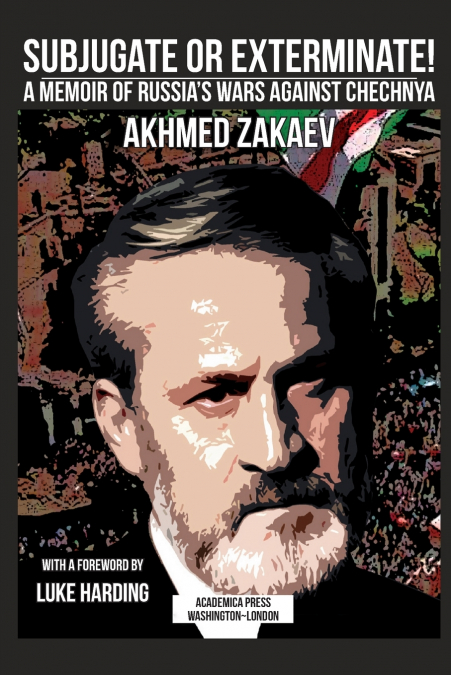
  • Subjugate or exterminate!
    Akhmed Zakaev / Arch Tait
    Foreword by Luke HardingAkhmed Zakaev is a symbol of the indomitable will of the Chechen nation. In this important memoir, he tells the story of the Chechen struggle as he experienced it, describing the conflict in human terms and providing a detailed documentary record of little known or badly understood events that will be of benefit to historians for generations to come.- Da...
    Disponible

    41,63 €