Inicio > Ciencias de la tierra, geografía, medioambiente, planificación > Ciencias de la tierra/geociencias > Efeitos da configuração do terreno e da gestão de resíduos na soja
Efeitos da configuração do terreno e da gestão de resíduos na soja

Efeitos da configuração do terreno e da gestão de resíduos na soja

Aishwarya Rathod / Gajanan Bhalerao / Sunil Kinge

75,25 €
IVA incluido
Disponible
Editorial:
KS OmniScriptum Publishing
Año de edición:
2024
Materia
Ciencias de la tierra/geociencias
ISBN:
9786207171866
75,25 €
IVA incluido
Disponible

Selecciona una librería:

  • Librería Samer Atenea
  • Librería Aciertas (Toledo)
  • Kálamo Books
  • Librería Perelló (Valencia)
  • Librería Elías (Asturias)
  • Donde los libros
  • Librería Kolima (Madrid)
  • Librería Proteo (Málaga)

A configuração do terreno tem uma grande influência no arejamento do solo, na disponibilidade de humidade e na temperatura do solo, o que, por sua vez, afecta o rendimento e a qualidade das culturas e constitui uma nova ferramenta potencial para a conservação do solo e da humidade. A configuração adequada do terreno, como o sistema de leito largo e sulco, cumeeiras e sulcos, aumenta o rendimento das culturas devido ao aumento da infiltração de água no perfil do solo, que fica disponível para as culturas durante a interrupção prolongada das monções e controla as crises de água na agricultura, aumentando o número de culturas por gota. A reciclagem de resíduos de culturas tem a vantagem de converter o excedente de resíduos agrícolas em produtos valiosos para a recolha de nutrientes para as culturas. Com a utilização do microrganismo Trichoderma sp., os resíduos das colheitas, como o lixo da cana, o lixo dos arrozais, o lixo do trigo e o bolo de lama da prensa, podem ser reciclados em composto de boa qualidade, não só ao nível do poço, mas também in situ, o que melhorará a matéria orgânica, juntamente com os macro e micronutrientes, as condições físico-químicas e biológicas do solo, para além de salvar o ambiente, e manterá a sustentabilidade da produção agrícola.

Artículos relacionados

  • Polarimetric SAR Techniques and Applications
    Carlos López-Martínez / Juan Manuel Lopez-Sanchez
    An increasing number of spaceborne Synthetic Aperture Radar (SAR) systems have been equipped with polarimetric capabilities: ALOS and ALOS-2, Radarsat-2, TerraSAR-X, Envisat-ASAR, Sentinel-1a/b, etc. Future mission will still present this type of diversity: RCM, SAOCOM, Cosmo-Skymed 2nd generation or PAZ. Polarimetry allows sensitivity to the structural and geometric properties...
    Disponible

    59,61 €

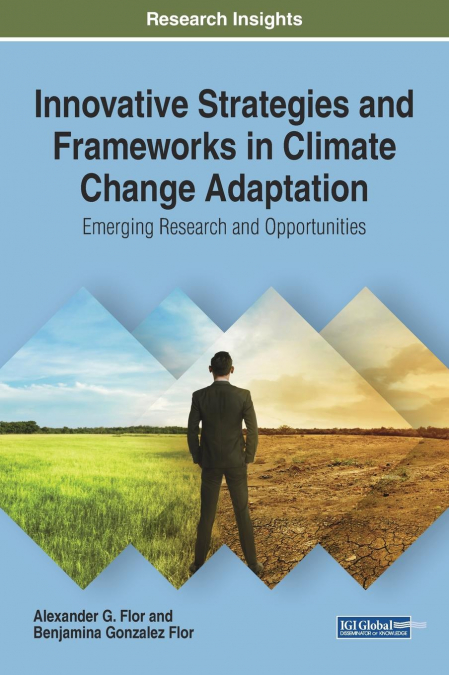
  • Innovative Strategies and Frameworks in Climate Change Adaptation
    Alexander G. Flor / Alexander GFlor / Benjamina Gonzalez Flor
    The changes the earth is currently undertaking has been at the forefront of scientific discourse in recent years. Humans as a species have needed to react to these changes and shift their behavior accordingly. Innovative Strategies and Frameworks in Climate Change Adaptation: Emerging Research and Opportunities is a critical scholarly resource that examines the relationship bet...
  • Air Quality Monitoring and Forecasting
    Air quality is personal. Its management is highly so. Asthmatic or air-pollutant-sensitive individuals depend on accurate air quality forecasts to help manage their daily activities.  However, the adverse effects of poor air quality on public health and visibility extend far beyond the daily time horizon. Pneumonic and cardiac vascular responses of individuals in all age groups...
    Disponible

    59,74 €

  • Application of Artificial Neural Networks in Geoinformatics
    Saro Lee
    Recently, a need has arisen for prediction techniques that can address a variety of problems by combining methods from the rapidly developing field of machine learning with geoinformation technologies such as GIS, remote sensing, and GPS. As a result, over the last few decades, one particular machine learning technology, known as artificial neural networks, has been successfull...
    Disponible

    59,81 €

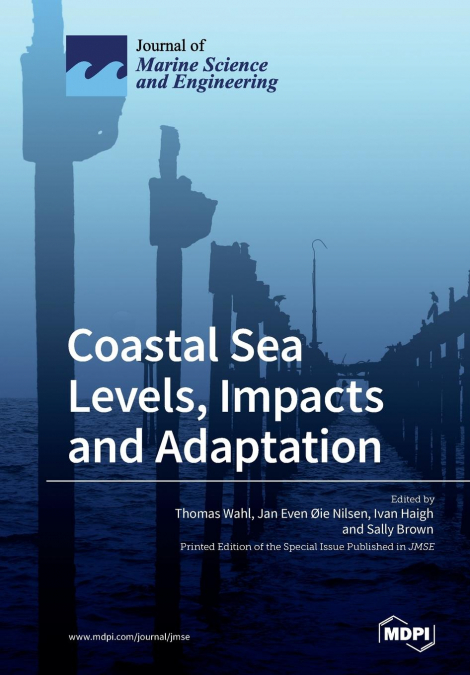
  • Coastal Sea Levels, Impacts and Adaptation
    Extreme sea levels can lead to hazardous events, such as coastal flooding, erosion, or salt water intrusion, with-wide ranging environmental, societal, and economic consequences. In combination with climate-driven sea-level rise, and, potentially, additional changes in storminess, dynamic wave contributions, and tidal dynamics, the adverse consequences of extreme oceanographic ...
    Disponible

    75,97 €

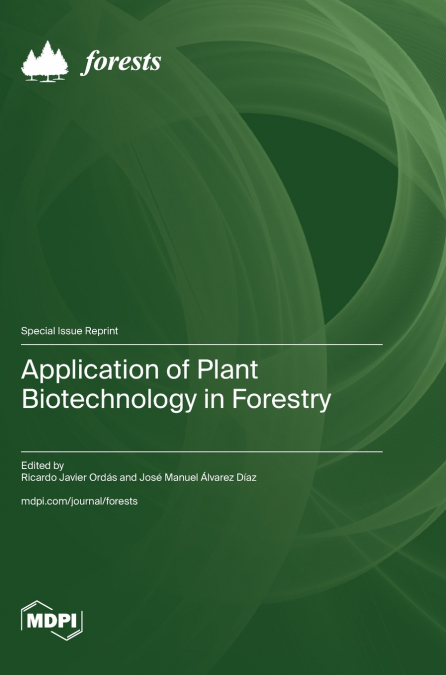
  • Application of Plant Biotechnology in Forestry
    The aim of this reprint is to immerse the reader in the latest biotechnological approaches employed in forestry. From rejuvenation through clonal propagation to somatic embryogenesis, the cryopreservation of germplasm, and the use of molecular techniques and genetic engineering, we aim to unravel the potential and promise of these cutting-edge technologies. In this reprint, lea...