

 Librería Samer Atenea
 Kálamo Books
 Librería Elías (Asturias)
 Librería Kolima (Madrid)
 Librería Proteo (Málaga)
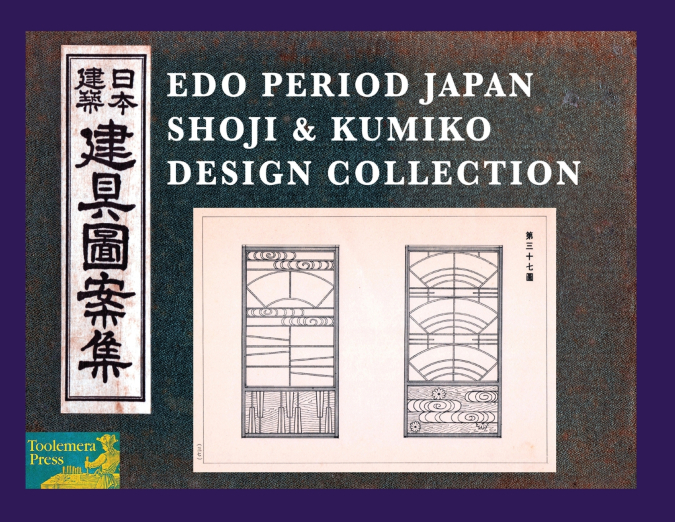
EDO PERIOD JAPAN, SHOJI & KUMIKO DESIGN COLLECTION retains the historical elements of the original publication. This essential reference book has been produced as an important reference for architects, carpenters and builders by Toolemera Press. Production design, content creation, historical research and contextual preface by Gary Roberts, Toolemera Press publisher.Japanese Architectural Joinery Design Collection, by Ito Yozo, was published by Kogyo Shōin first in September 9, 1920 and subsequently reissued in May 10, 1934 with a photographic supplement of existing Edo period architectural interiors. Kogyo Shōin was an important early to mid 20th century technical publisher of architectural and Buddhist texts during Japan’s Taisho (1912-1926) and Showa (1926-1989) eras. Japanese Architectural Joinery Design Collection is a compendium of Edo (1603-1868) era architectural elements, primarily of Shoji designs. Shoji are sliding panels used as doors, windows and room dividers. Combining art, architecture, nature, woodworking, paper making and painting, Shoji are ubiquitous to homes, commercial and governmental architecture. Shoji are constructed using Kumiko, a woodworking technique using often small individual pieces of wood and assembled without nails or brads. Ranging from complex to minimalist patterns, Kumiko designs are most often based upon the natural elements reflected in Shinto, a religion and a cultural way of life. Shinto embodies the reverence for the sacred spirits or forces found in nature, animals, and places. Shoji are, in essence, Shinto architecture.





