 Librería Samer Atenea
 Kálamo Books
 Librería Elías (Asturias)
 Librería Kolima (Madrid)
 Librería Proteo (Málaga)
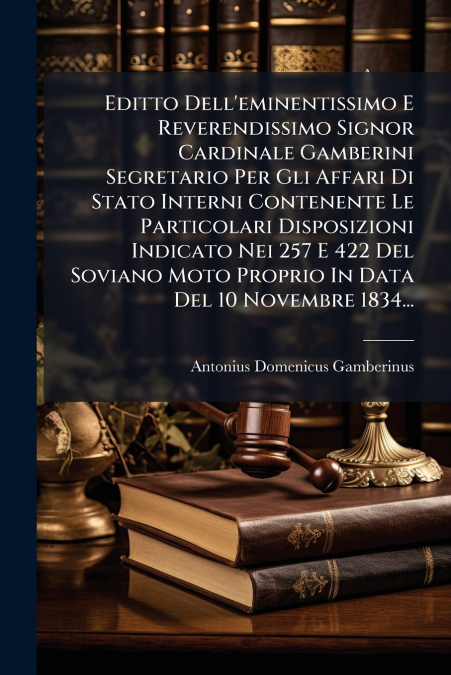
L’Editto Dell’eminentissimo E Reverendissimo Signor Cardinale Gamberini contiene disposizioni specifiche indicate nei numeri 257 e 422 del Soviano Moto Proprio del 10 Novembre 1834. Questo editto rappresenta una fonte primaria preziosa per lo studio del diritto e della politica negli Stati Pontifici durante il XIX secolo. Esso offre una finestra sulle preoccupazioni e le priorità del governo papale in un’epoca di cambiamenti significativi in Italia e in Europa. Il documento è di particolare interesse per gli studiosi di storia legale, storia italiana e storia della Chiesa. La figura del Cardinale Gamberini, Segretario per gli Affari di Stato Interni, è centrale per comprendere le dinamiche del potere all’interno dello Stato Pontificio. L’editto fornisce dettagli sulle normative interne e sull’amministrazione della giustizia, offrendo una prospettiva unica sulle sfide affrontate dal governo papale nel mantenere l’ordine e l’autorità.This work has been selected by scholars as being culturally important, and is part of the knowledge base of civilization as we know it. This work was reproduced from the original artifact, and remains as true to the original work as possible. Therefore, you will see the original copyright references, library stamps (as most of these works have been housed in our most important libraries around the world), and other notations in the work.This work is in the public domain in the United States of America, and possibly other nations. Within the United States, you may freely copy and distribute this work, as no entity (individual or corporate) has a copyright on the body of the work.As a reproduction of a historical artifact, this work may contain missing or blurred pages, poor pictures, errant marks, etc. Scholars believe, and we concur, that this work is important enough to be preserved, reproduced, and made generally available to the public. We appreciate your support of the preservation process, and thank you for being an important part of keeping this knowledge alive and relevant.