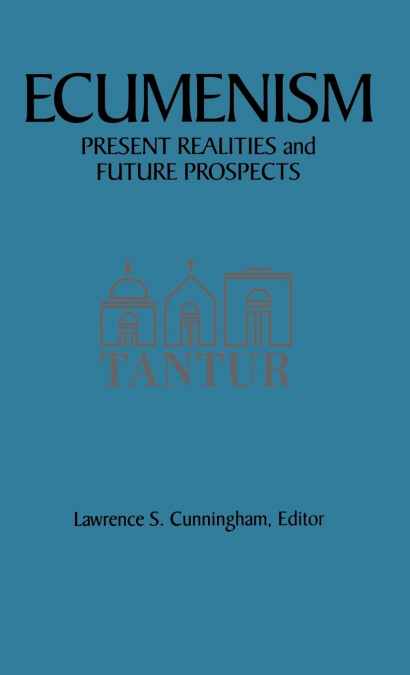

Ecumenism

Ecumenism

Ecumenism


38,24 €
IVA incluido
Consulta disponibilidad
Editorial:
Longleaf - Univ of Notre Dame du Lac
Año de edición:
1999
Materia
Ética y filosofía moral
ISBN:
9780268027520
Páginas:
48
Encuadernación:
Otros

Selecciona una librería:

  • Librería Samer Atenea
  • Librería Aciertas (Toledo)
  • Kálamo Books
  • Librería Perelló (Valencia)
  • Librería Elías (Asturias)
  • Donde los libros
  • Librería Kolima (Madrid)
  • Librería Proteo (Málaga)

In Ecological Ethics and the Human Soul: Aquinas, Whitehead, and the Metaphysics of Value, Francisco J. Benzoni addresses the pervasive and destructive view that there is a moral gulf between human beings and other creatures. Thomas Aquinas, whose metaphysics entails such a moral gulf, holds that human beings are ultimately separate from nature. Alfred North Whitehead, in contrast, maintains that human beings are continuous with the rest of nature. These different metaphysical systems demand different ethical stances toward creation. Benzoni analyzes and challenges Thomas’s understanding of the human soul, his primary justification for the moral separation, arguing that it is finally philosophically untenable. The author finds promising the alternative metaphysics of Whitehead, for whom human beings are a part of nature-even if the highest part; all creatures have a degree of subjectivity and creativity, and thus all have intrinsic value and moral worth, independent of subjective human valuation. Further, though there is difference, there is no moral gulf between God and the world. God is truly affected by the experience of creatures. Benzoni argues that if this vision of moral worth is articulated with sufficient force and clarity, it could help heal the human relation to our planet. 'Eminently clear in concept and analysis, profound in insight, and precise in reasoning, this book not only contributes a distinguished study of Aquinas but also reshapes contemporary ecological ethics by relating it to basic issues of metaphysics. Both subsequent moral theory attentive to Aquinas and subsequent formulations of ecological ethics will be incomplete without taking account of Benzoni’s argument.'-Franklin I. Gamwell, Shailer Mathews Distinguished Service Professor of Religious Ethics, the Philosophy of Religion, and Theology, The University of Chicago Divinity School 'In the introduction and conclusion, Francisco Benzoni makes clear the broader significance of this work for the field of ecological ethics and the future well-being of the human species on this earth. One can learn a great deal about the philosophy of both Aquinas and Whitehead in working through these pages.'-Joseph Bracken, Xavier University


Artículos relacionados

  • Ka Ab Ba Building The Lighted Temple
    Dr Terri R. Nelson / Dr Terri RNelson
    The book KaAbBa Building The Lighted Temple/Metaphysical Keys to the Tree of Life draws a circle that is inclusive of the Afrikan origin of the Ancient Kemetic/Egyptian wisdom. It reveals the undeniable root and link of Ancient Africa to all the religious systems that would develop worldwide. This book is explosive in its power to convey the meaning of KaAbBa, the Medu Neter  (...
    Disponible

    37,41 €

  • Technoethics and the Evolving Knowledge Society
    Rocci Luppicini
    Recently, there has been a major push to rediscover the ethical dimension of technology across the sciences, social sciences, and humanities. Technoethics and the Evolving Knowledge Society: Ethical Issues in Technological Design, Research, Development, and Innovation examines human processes and practices connected to technology embedded within social, political, and moral sph...
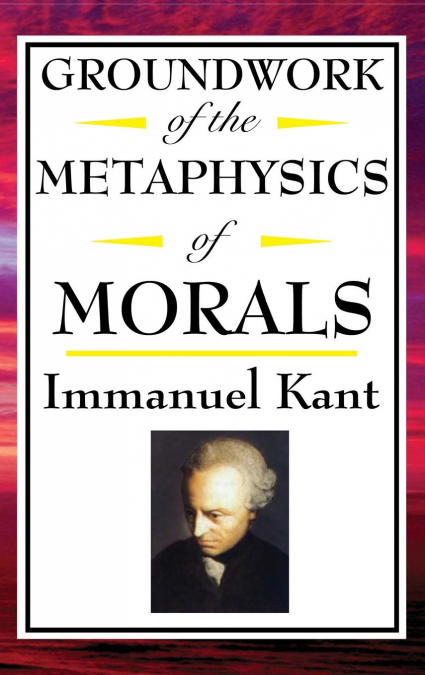
  • Kant
    Immanuel Kant
    Kant’s Groundwork of the Metaphysics of Morals is one of the most important works in modern moral philosophy. It belongs beside Plato, Aristotle, Machiavelli, and Hobbes. Here Kant sets out to articulate and defend the Categorical Imperative - the fundamental principle that underlies moral reasoning - and to lay the foundation for a comprehensive account of justice and human vi...
  • On the Duty of Civil Disobedience
    HENRY DAVID THOREAU
    Civil Disobedience argues that citizens should not permit their governments to overrule their consciences, and that they have a duty to avoid allowing their acquiescence to enable the government to make them the agents of injustice. Thoreau was motivated in part by his disgust with slavery and the Mexican-American War, but the sentiments he expresses here are just as pertinent ...
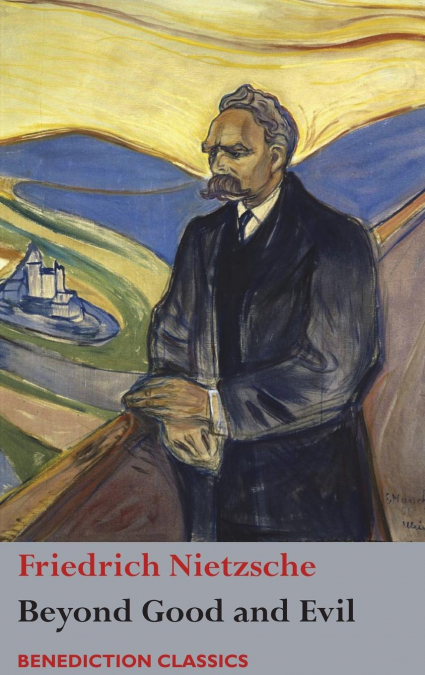
  • Beyond Good and Evil
    Friedrich Nietzsche
    Nietzsche, though primarily a philosopher, wrote widely on art, philology, history, religion, tragedy, culture, and science.  In 1886, at the height of his powers, he published Beyond Good and Evil.  Here he examines much of the best of human thought--dogmatic philosophy, Judeo-Christian morality, science and democracy – and finds it lacking.  Rejecting “slave-morality” he pres...
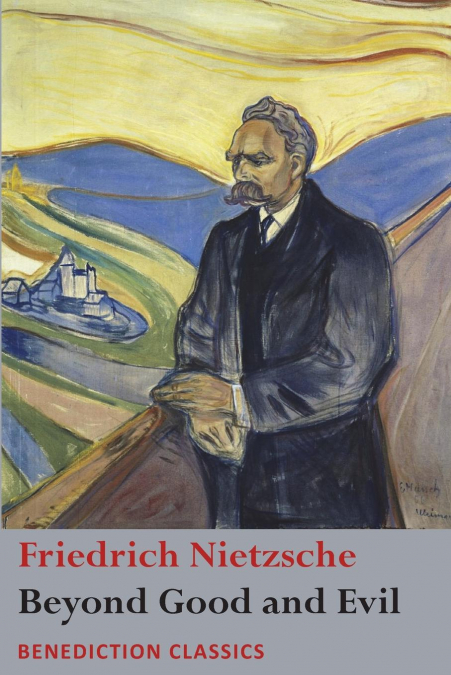
  • Beyond Good and Evil
    Friedrich Nietzsche
    Nietzsche, though primarily a philosopher, wrote widely on art, philology, history, religion, tragedy, culture, and science.  In 1886, at the height of his powers, he published Beyond Good and Evil.  Here he examines much of the best of human thought--dogmatic philosophy, Judeo-Christian morality, science and democracy – and finds it lacking.  Rejecting “slave-morality” he pres...
    Disponible

    9,99 €