
Inicio > Sociedad y ciencias sociales > Política y gobierno > Gobierno central > Políticas del Gobierno central > Economics and the Interpretation and Application of U.S. and E.U. Antitrust Law
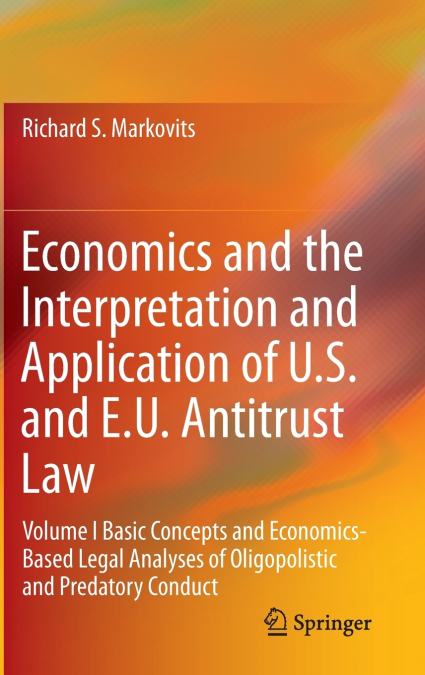
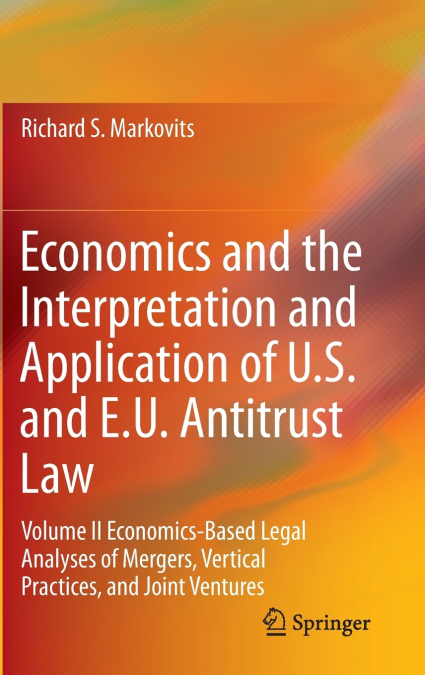
Economics and the Interpretation and Application of U.S. and E.U. Antitrust Law

Economics and the Interpretation and Application of U.S. and E.U. Antitrust Law

Richard Markovits

155,06 €
IVA incluido
Consulta disponibilidad
Editorial:
Springer Nature B.V.
Año de edición:
2014
Materia
Políticas del Gobierno central
ISBN:
9783642243127

Selecciona una librería:

  • Librería Samer Atenea
  • Librería Aciertas (Toledo)
  • Kálamo Books
  • Librería Perelló (Valencia)
  • Librería Elías (Asturias)
  • Donde los libros
  • Librería Kolima (Madrid)
  • Librería Proteo (Málaga)

Volume 2 uses the economic and legal concepts/theories of Volume 1 to (1) analyze the U.S. and E.U. antitrust legality of  mergers, joint ventures, and the pricing-technique and contractual/sales-policy distributor-control surrogates for vertical integration and (2) assess related positions of scholars and U.S. and E.U. antitrust officials. Its analysis of horizontal mergers (1) delineates non-market-oriented protocols for determining whether they manifest specific anticompetitive intent, would lessen competition, or are rendered lawful by the efficiencies they would generate, (2) criticizes the U.S. courts’ traditional market-share/market-concentration protocol, the HHI-oriented protocols of the 1992 U.S. DOJ/FTC Guidelines and the European Commission (EC) Guidelines, and the various non-market-oriented protocols the DOJ/FTC have increasingly been using, (3) argues that, although the 2010 U.S. Guidelines and DOJ/FTC officials discuss market definition as if it matters, those Guidelines actually reject market-oriented approaches, and (4) reviews the relevant U.S. and E.U. case-law. Its analysis of conglomerate mergers (1) shows that they can perform the same legitimate and competition-increasing functions as horizontal mergers and can yield illegitimate profits and lessen competition by increasing contrived oligopolistic pricing and retaliation barriers to investment, (2) analyzes the determinants of all these effects, and (3) assesses limit-price theory, the toe-hold-merger doctrine, and U.S. and E.U. case-law. Its analysis of vertical conduct (1) examines the legitimate functions of each type of such conduct, (2) delineates the conditions under which each manifests specific anticompetitive intent and/or lessens competition, and (3) assesses related U.S. and E.U. case-law and DOJ/FTC and EC positions.  Its analysis of joint ventures (1) explains that they violate U.S. law only when they manifest specific anticompetitive intent while they violate E.U. law either for this reason or because they lessen competition,  (2) discusses the meaning of an 'ancillary restraint' and demonstrates that whether a joint-venture agreement would be illegal if it imposed no restraints and whether any restraints imposed are ancillary can be determined only through case-by-case analysis, (3) explains why scholars and officials overestimate the economic efficiency of R&D joint ventures, and (4) discusses related U.S. and E.U. case-law and DOJ/FTC and EC positions.  The study’s Conclusion (1) reviews how its analyses justify its innovative conceptual systems and (2) compares U.S. and E.U. antitrust law as written and as applied.

Artículos relacionados

  • Managing E-Government Projects
    Stephen Kwamena Aikins
    E-government promises efficient communication, streamlined operations, citizen involvement, improved services, and increased transparency. However, despite huge investments in e-government, evidence suggests numerous e-government projects are late, over budget, and inadequate. Managing E-Government Projects: Concepts, Issues, and Best Practices collects the work of some of the ...
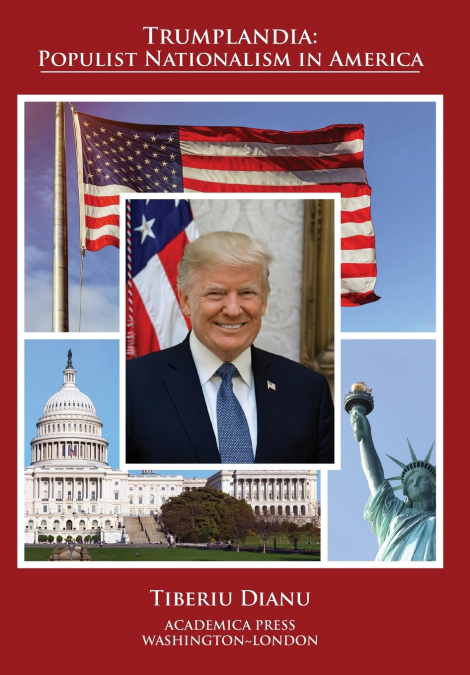
  • Trumplandia
    Tiberiu Dianu
    Trumplandia: Populist Nationalism in America is a collection of essays about the transformation of America, which has turned from a united nation to one more divided than ever under the presidency of Donald Trump. Some pundits predict that if things don’t change another civil war could occur. Have we reached a point of no return? Author and attorney Tiberiu Dianu writes in the ...
  • STRATEGIC CURRENTS
    JAMES CHAR BERNARD F W LOO / LOO BERNARD F W
    The advent of the 4th Industrial Revolution amidst the increasingly intensified global competition between the United States and China promises to be a major inflection point in human history. The authors assembled in this volume provide a sober assessment of this techno-nationalist contest and their implications for the rest of the world. ...
  • At a Turning Point
    Australia is at a much-needed turning point in work, care and family policy. Australian women, families and communities are struggling to manage the complex demands of work and care.Rapid social and demographic change, alongside new workplace, labour market trends and the aftermath of the COVID-19 pandemic, requires a policy revamp that will allow all Australians to work, care ...
    Disponible

    25,96 €

  • Shadows of Catastrophe
    Richard Skiba
    This book explores the concept of S-Risks, or suffering risks, and delves into their significance, distinguishing them from conspiracy theories and alarmism. It categorizes S-Risks into agential, natural, and incidental types, discussing the disjunctive nature and various factors influencing them. Examining technological progress, the existence of powerful agents, and unintende...
    Disponible

    22,35 €

  • The Economic Theory of Eminent Domain
    Thomas J. Miceli
    ...
    Disponible

    47,12 €

Otros libros del autor

  • Economics and the Interpretation and Application of U.S. and E.U. Antitrust Law
    Richard Markovits
    This volume (1) defines the specific-anticompetitive-intent, lessening-competition, distorting-competition, and exploitative-abuse tests of illegality promulgated by U.S. and/or  E.U. antitrust law, (2) compares the efficiency defenses promulgated by U.S. and E.U. antitrust law, (3) compares the conduct-coverage of the various U.S. and E.U. antitrust ...