 Librería Samer Atenea
 Kálamo Books
 Librería Elías (Asturias)
 Librería Kolima (Madrid)
 Librería Proteo (Málaga)
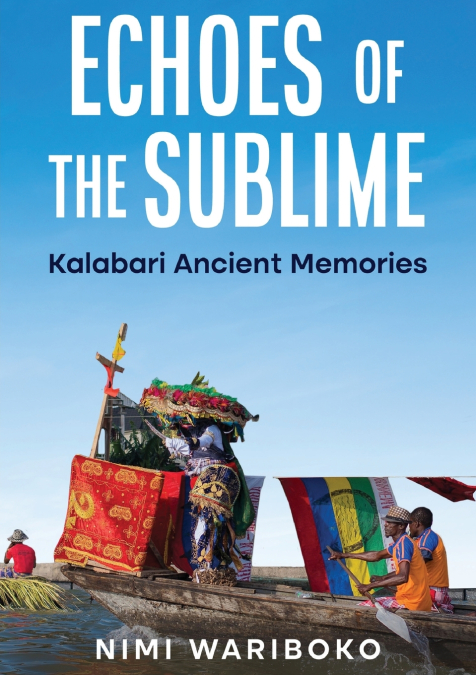
In Echoes of the Sublime, Nimi Wariboko enters the sacred imagination of Kalabari culture. Across fifty-one vivid poems, he transforms ancient memories, historical encounters, sacred rituals, childhood wonder, ecological loss, and religious upheaval into a compelling poetic universe. Lyrical, playful, elegiac, intimate, haunting, and metaphysically daring, the collection makes endangered cultural memory newly alive as a poetry of wonder, survival, and renewal. This brilliant collection is at once an archive of endangered memories and a sustained poetic meditation on the persistence of ancient African ways of knowing and being.[This] is a work of art, a poetically created revelation of the Kalabari people. I love 'The Abonnema Drummer' and 'Alele’s Infinite Dance' for their acoustic, passionate, and compelling rhythm. The poems in the 'Dance' section remind me of J.P. Clark’s poetry based on his recollections of traditional Ijo/Urhobo rhythms. Wariboko is learned, articulate, measured, passionate, and fulfilling in these poems. Pick a copy of the book and read it!-Tanure Ojaide, Ph.D., NNOM, the Frank Porter Graham Professor of Africana Studies, University of North Carolina, Charlotte.Nimi Wariboko’s Echoes of the Sublime is a thrilling gathering of poem-songs that speak of the delta, where the drums come alive, the songs dance to the feverish rhythm of those who have seen terror and the joy of living. These are poems that speak to us, that remind us of our humanity and they are rendered with the expertise and empathy of a poet who knows, a poet who has seen things.'-Ikhide R. Ikheloa, literary and cultural critic.In Echoes of the Sublime, Wariboko salvages fragments of Kalabari sacred knowledge and precious memories from the ravages of time and synthesizes them into beautiful, coherent poetic form, inviting the reader into the lyrical outbursts of initiates, as they feast, dance joyfully, chant the ethereal beauty of the celebrated Alele (Venus). The collection becomes, indeed, an unending, refreshing fruitful dialogue with the Cosmos and the Kalabari ethos.-Adiyi-Martin T. Bestman, Professor of French Literature, poet, and literary critic, University of Port Harcourt.This collection is a trailblazer, and with such uncommon fluidity in the way Nimi has mastered language, unearthing cultures, belief systems, and ecological concerns, communal grace, it will set a new stage for robust conversations around the post-colonial African and their worldviews.-Tares Oburumu, winner of the 2022 Sillerman First Book Prize for African poetry.