Early Utilitarians

Early Utilitarians

Ken Binmore

36,42 €
IVA incluido
Disponible
Editorial:
Springer Nature B.V.
Año de edición:
2021
Materia
Psicología
ISBN:
9783030745820
36,42 €
IVA incluido
Disponible

Selecciona una librería:

  • Librería Samer Atenea
  • Librería Aciertas (Toledo)
  • Kálamo Books
  • Librería Perelló (Valencia)
  • Librería Elías (Asturias)
  • Donde los libros
  • Librería Kolima (Madrid)
  • Librería Proteo (Málaga)

People who put the public good before their own self interest have been admired throughout history. But what is the public good? Sages and prophets who think they know better what is good for us than we know ourselves held sway on this subject for more than two thousand years. The world had to wait for the Enlightenment that burst upon the world in the eighteenth century for an account of the public good free from the prejudices of the privileged classes. Utilitarianism is our name for this new way of thinking about morality. Francis Hutcheson encapsulated its aims by inventing its catchphrase 'The greatest happiness for the greatest number' fifty years before Jeremy Bentham, to whom the slogan is usually attributed.  But what is happiness? Why did Jeremy Bentham and John Stuart Mill prefer to speak of utility? How did economists develop this notion?  Does it really make sense to compare the utilities of different people? Bob may complain more than Alice in the dentist’s chair, but is he really suffering more? Why should I put the sum of everybody’s utility before my own utility? This short book asks how such questions arose from the social and political realities of the times in which the early utilitarians lived. Nobody need fear being crushed by heavy metaphysical reasoning or incomprehensible algebra when this story is told. This book argues that the answers to all the questions that the early utilitarians found so difficult are transparent when we stand upon their shoulders to look back upon their work.  The problem for the early utilitarians was to free themselves from the prejudices of their time. The lesson for us is perhaps that we too need to free ourselves from the prejudices of our own time.

Artículos relacionados

  • Drinkers of Infinity
    Arthur Koestler
    This selection of essays, book-reviews, broadcast talks and papers delivered to learned societies reflects the extraordinary breadth of Arthur Koestler’s interests. From the trial of Galileo to the pleasures of canoeing down the Loire, from a detailed examination of the ‘memory’ of flatworms to an equally detailed examination of the futility of quarantining dogs, the author wri...
    Disponible

    17,24 €

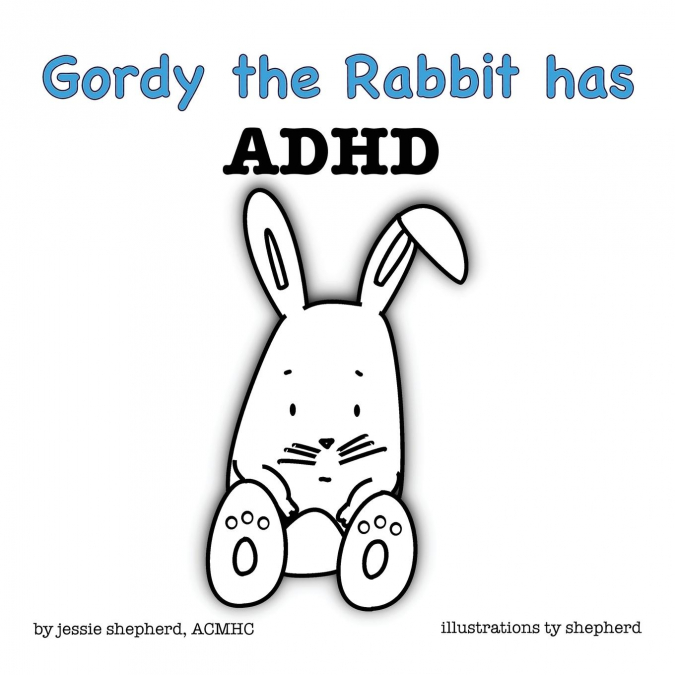
  • Gordy the Rabbit has ADHD
    Jessie Shepherd
    Often when people are given a mental health disorder diagnosis the weaknesses are clear and overwhelmingly emphasized, while the strengths are ignored or forgotten. The mental health children's book series 'What Mental Disorder?' challenges the stigma against therapy and diagnosis. It enlists the reader to view the character as a whole being and not as a mental issu...
    Disponible

    16,30 €

  • The Paradoxical Ego
    Eugene Halliday / Zhu Kabere
    Three particular themes are basic to this study. First, that the human race and its environment are involved in a slowly progressive process of revelation and understanding of its inherent features; and that we are all participating in this ongoing evolutionary cycle. Second, and closely related to the first tenet, man is not separable from his environment. We all share in this...
    Disponible

    14,56 €

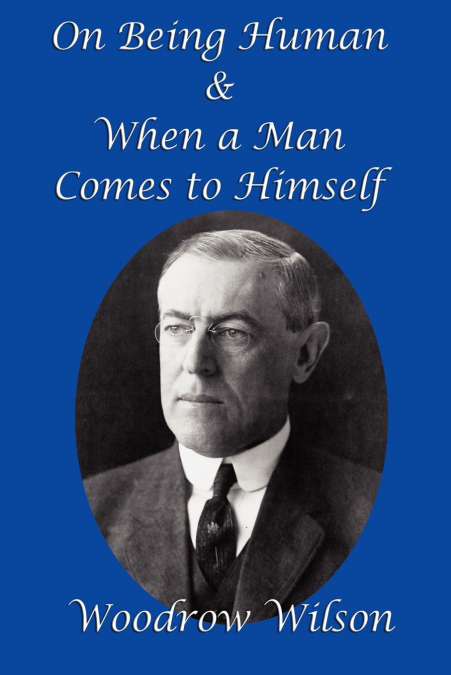
  • On Being Human and When a Man Comes to Himself
    Woodrow Wilson
    Before he became the 28th President of the United States (1913-21), the 34th Governor of New Jersey (1911-13), or even the 13th President of Princeton University (1902-10), Woodrow Wilson (1856-1924) was a scholar and professor. In 1885, he received his Ph.D. in history and political science from Johns Hopkins University, and in 1897, he was granted tenure at Princeton Universi...
    Disponible

    6,28 €

  • Bridge Over The River Why
    David Cooper / Deborah Cooper
    'In Bridge Over the River Why, the Coopers have succeeded in a dual task documenting their own journey through the grief of losing their son Eli by suicide, while at the same time providing a valuable resource for anyone who has had to face the same terrible tragedy. They start with the premise that 'doing and feeling' are the key components of moving forward and have a core me...
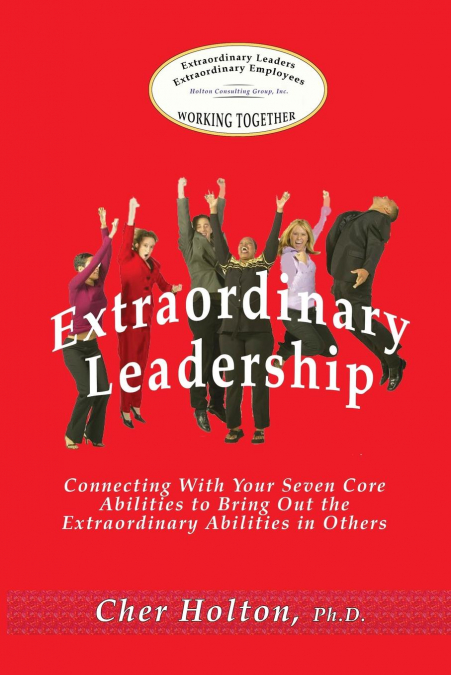
  • Extraordinary Leadership
    Cher Holton
    This transformational leadership book, grounded in state-of-the-art research and proven by real-life application in the trenches, moves beyond traditional leadership theories to introduce you to seven incredible Core Abilities and shows you how to connect with them to become an Extraordinary Leader who can bring out the very best in your people.All the techniques in the world w...
    Disponible

    23,85 €

Otros libros del autor

  • Crooked Thinking or Straight Talk?
    Ken Binmore
    Why can’t we think straight about the big issues that face our society? Why are we taken in by the phony arguments of populists and scammers? Where are the philosophers hiding when we need them to tell us what makes sense?They are hiding because they have nothing to say. The airy-fairy answers offered by writers of footnotes to Plato were wrong two thousand years ago, and they ...
    Disponible

    36,24 €

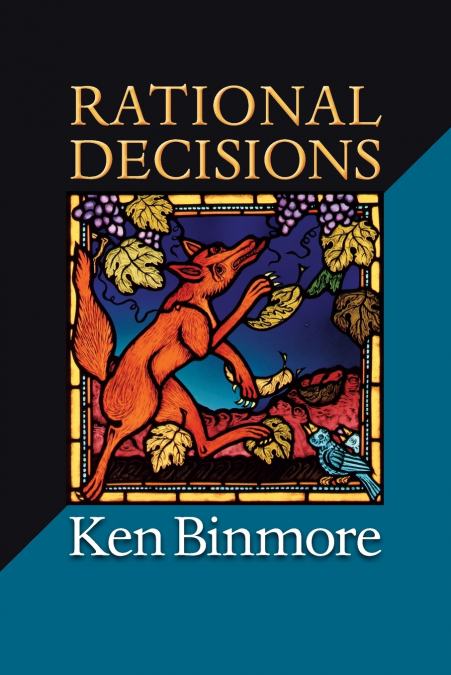
  • Rational Decisions
    Ken Binmore
    It is widely held that Bayesian decision theory is the final word on how a rational person should make decisions. However, Leonard Savage--the inventor of Bayesian decision theory--argued that it would be ridiculous to use his theory outside the kind of small world in which it is always possible to 'look before you leap.' If taken seriously, this view makes Bayesian decision th...
    Disponible

    50,37 €

  • Natural Justice
    Ken Binmore
    ...
    Disponible

    68,14 €

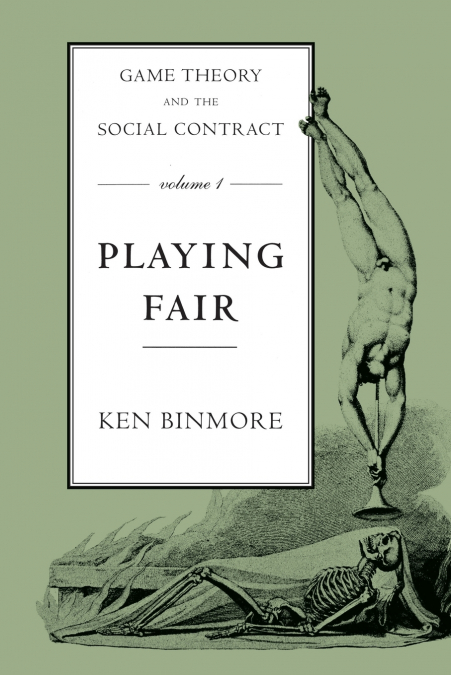
  • Game Theory and the Social Contract, Volume 1
    Ken Binmore
    ...
    Disponible

    38,15 €