

 Librería Samer Atenea
 Kálamo Books
 Librería Elías (Asturias)
 Librería Kolima (Madrid)
 Librería Proteo (Málaga)
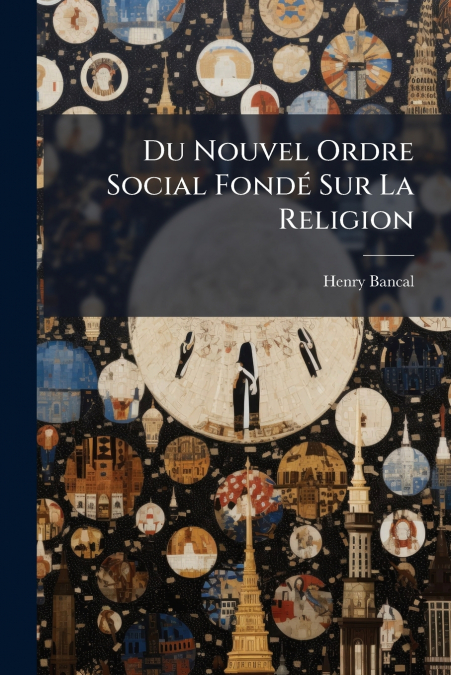
Du Nouvel Ordre Social Fondé Sur La Religion, written by Henry Bancal, explores the concept of a new social order rooted in religion. Published during the tumultuous period of Vendémiaire, the book delves into the intricate relationship between faith and societal structure in post-revolutionary France. Bancal’s work offers a unique perspective on the role of religion in shaping political and social ideologies. It invites readers to consider the potential for religious principles to foster a more harmonious and just society.This treatise provides valuable insights into the intellectual debates of its time, making it an essential read for anyone interested in the intersection of religion, politics, and social philosophy during a pivotal era in European history. Bancal’s arguments remain relevant, prompting ongoing discussions about the foundations of social order and the enduring influence of religious thought.This work has been selected by scholars as being culturally important, and is part of the knowledge base of civilization as we know it. This work was reproduced from the original artifact, and remains as true to the original work as possible. Therefore, you will see the original copyright references, library stamps (as most of these works have been housed in our most important libraries around the world), and other notations in the work.This work is in the public domain in the United States of America, and possibly other nations. Within the United States, you may freely copy and distribute this work, as no entity (individual or corporate) has a copyright on the body of the work.As a reproduction of a historical artifact, this work may contain missing or blurred pages, poor pictures, errant marks, etc. Scholars believe, and we concur, that this work is important enough to be preserved, reproduced, and made generally available to the public. We appreciate your support of the preservation process, and thank you for being an important part of keeping this knowledge alive and relevant.





