
Inicio > Medicina > Medicina clínica e interna > Neurología y neurofisiología clínicas > Downward Causation and the Neurobiology of Free Will
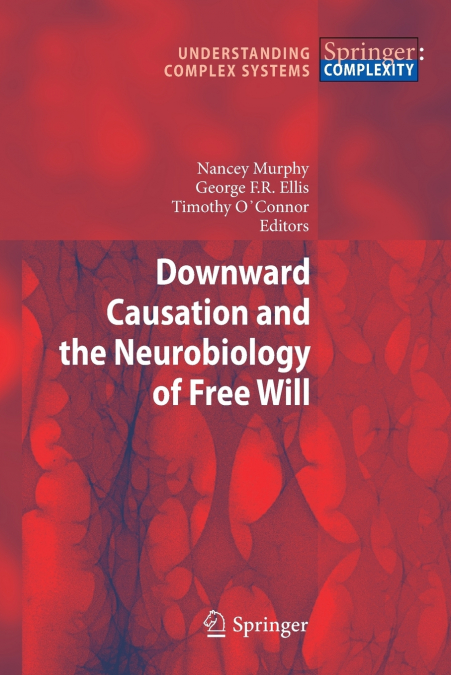
Downward Causation and the Neurobiology of Free Will

Downward Causation and the Neurobiology of Free Will


271,55 €
IVA incluido
Disponible
Editorial:
Springer Nature B.V.
Año de edición:
2012
Materia
Neurología y neurofisiología clínicas
ISBN:
9783642260445
271,55 €
IVA incluido
Disponible

Selecciona una librería:

  • Librería Samer Atenea
  • Librería Aciertas (Toledo)
  • Kálamo Books
  • Librería Perelló (Valencia)
  • Librería Elías (Asturias)
  • Donde los libros
  • Librería Kolima (Madrid)
  • Librería Proteo (Málaga)

How is free will possible in the light of the physical and chemical underpinnings of brain activity and recent neurobiological experiments? How can the emergence of complexity in hierarchical systems such as the brain, based at the lower levels in physical interactions, lead to something like genuine free will? The nature of our understanding of free will in the light of present-day neuroscience is becoming increasingly important because of remarkable discoveries on the topic being made by neuroscientists at the present time, on the one hand, and its crucial importance for the way we view ourselves as human beings, on the other. A key tool in understanding how free will may arise in this context is the idea of downward causation in complex systems, happening coterminously with bottom up causation, to form an integral whole. Top-down causation is usually neglected, and is therefore emphasized in the other part of the book’s title. The concept is explored in depth, as are the ethical and legal implications of our understanding of free will. This book arises out of a workshop held in California in April of 2007, which was chaired by Dr. Christof Koch. It was unusual in terms of the breadth of people involved: they included physicists, neuroscientists, psychiatrists, philosophers, and theologians. This enabled the meeting, and hence the resulting book, to attain a rather broader perspective on the issue than is often attained at academic symposia. The book includes contributions by Sarah-Jayne Blakemore, George F. R. Ellis , Christopher D. Frith, Mark Hallett, David Hodgson, Owen D. Jones, Alicia Juarrero, J. A. Scott Kelso, Christof Koch, Hans Küng, Hakwan C. Lau, Dean Mobbs, Nancey Murphy, William Newsome, Timothy O’Connor, Sean A.. Spence, and Evan Thompson.
Artículos relacionados

  • Handbook of Research on Innovations in the Diagnosis and Treatment of Dementia
    Ionnis Tarnanas / Leontios Hadjileontiadis / Panagiotis D Bamidis
    Technology is playing an increasing role in the lives of the elderly. One of the most prevalent developments for the aging population is the use of technological innovations for intervention and treatment of individuals with mental impairments. The Handbook of Research on Innovations in the Diagnosis and Treatment of Dementia offers empirical research and theoretical analyses o...
  • Biomedical Engineering and Cognitive Neuroscience for Healthcare
    Jinglong Wu
    New developments in medical technology have paved the way for the ongoing studies of cognitive neuroscience and biomedical engineering for healthcare. Their different but interconnected aspects of science and technology seek to provide new solutions for difficult healthcare problems and impact the future of the quality of life. Biomedical Engineering and Cognitive Neuroscience ...
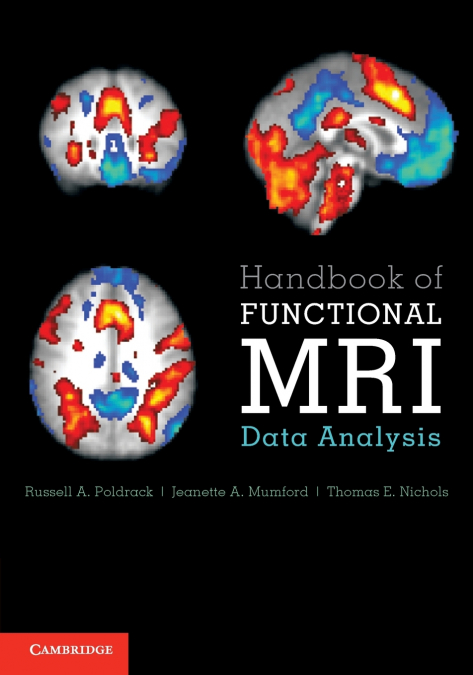
  • Handbook of Functional MRI Data Analysis
    Jeanette A. Mumford / Russell A. Poldrack / Thomas E. Nichols
    ...
    Disponible

    63,88 €

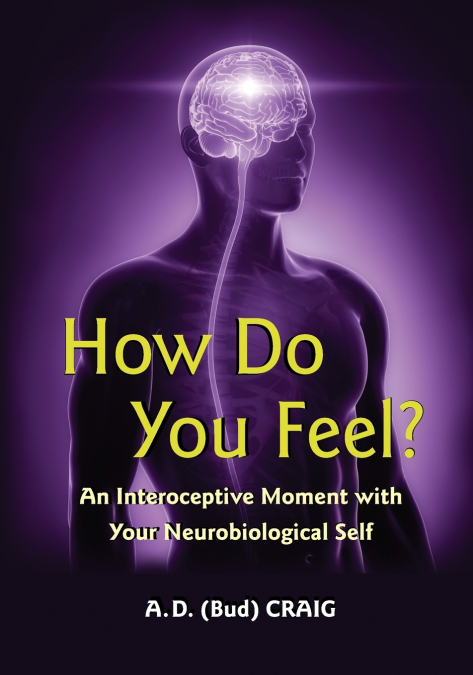
  • How Do You Feel?
    A. D. Craig
    A book that fundamentally changes how neuroscientists and psychologists categorize sensations and understand the origins and significance of human feelingsHow Do You Feel? brings together startling evidence from neuroscience, psychology, and psychiatry to present revolutionary new insights into how our brains enable us to experience the range of sensations and mental states kno...
    Disponible

    47,73 €

  • Deep Learning Approaches for Early Diagnosis of Neurodegenerative Diseases
    Within the context of global health challenges posed by intractable neurodegenerative diseases like Alzheimer’s and Parkinson’s, the significance of early diagnosis is critical for effective intervention, and scientists continue to discover new methods of detection. However, actual diagnosis goes beyond detection to include a significant analysis of combined data for many cases...
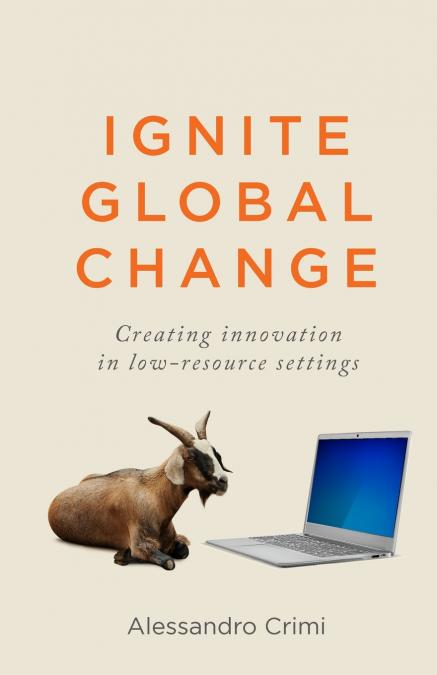
  • Ignite Global Change
    Alessandro Crimi
    Your essential guide to global entrepreneurship and activism. From Accra and Mumbai to Milan and New York, a vibrant new generation of activist entrepreneurs turn visionary ideas into impactful realities. Ignite Global Change offers a roadmap for crafting wealth from minimal resources, from ideation to implementation. Its practical, real-world approach provides strategies that ...
    Disponible

    23,34 €