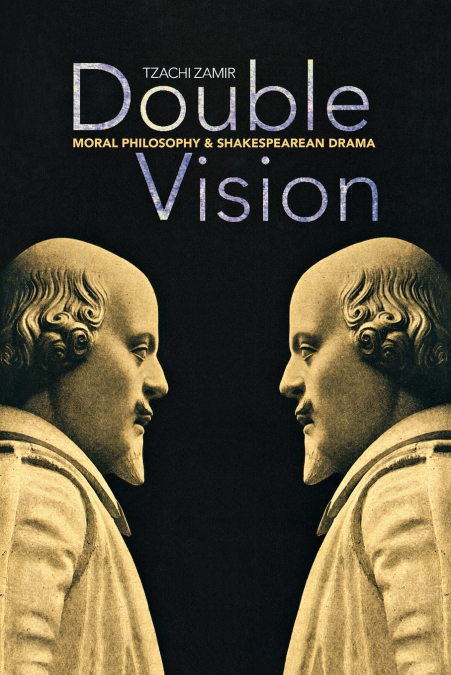

Double Vision

Double Vision

Tzachi Zamir

45,90 €
IVA incluido
Disponible
Editorial:
Princeton University Press
Año de edición:
2012
Materia
Ética y filosofía moral
ISBN:
9780691155456
45,90 €
IVA incluido
Disponible

Selecciona una librería:

  • Librería Samer Atenea
  • Librería Aciertas (Toledo)
  • Kálamo Books
  • Librería Perelló (Valencia)
  • Librería Elías (Asturias)
  • Donde los libros
  • Librería Kolima (Madrid)
  • Librería Proteo (Málaga)

Hamlet tells Horatio that there are more things in heaven and earth than are dreamt of in his philosophy. In Double Vision, philosopher and literary critic Tzachi Zamir argues that there are more things in Hamlet than are dreamt of--or at least conceded--by most philosophers. Making an original and persuasive case for the philosophical value of literature, Zamir suggests that certain important philosophical insights can be gained only through literature. But such insights cannot be reached if literature is deployed merely as an aesthetic sugaring of a conceptual pill. Philosophical knowledge is not opposed to, but is consonant with, the literariness of literature. By focusing on the experience of reading literature as literature and not philosophy, Zamir sets a theoretical framework for a philosophically oriented literary criticism that will appeal both to philosophers and literary critics. Double Vision is concerned with the philosophical understanding induced by the aesthetic experience of literature. Literary works can function as credible philosophical arguments--not ones in which claims are conclusively demonstrated, but in which claims are made plausible. Such claims, Zamir argues, are embedded within an experiential structure that is itself a crucial dimension of knowing. Developing an account of literature’s relation to knowledge, morality, and rhetoric, and advancing philosophical-literary readings of Richard III, Macbeth, Romeo and Juliet, Othello, Antony and Cleopatra, Hamlet, and King Lear, Zamir shows how his approach can open up familiar texts in surprising and rewarding ways.
Artículos relacionados

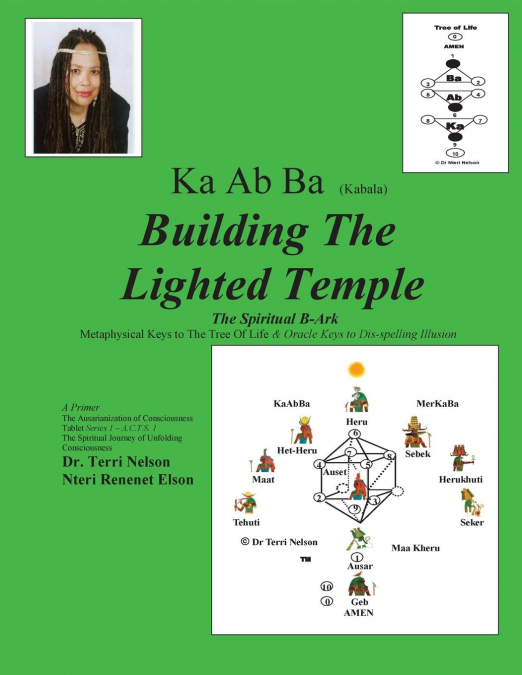
  • Ka Ab Ba Building The Lighted Temple
    Dr Terri R. Nelson / Dr Terri RNelson
    The book KaAbBa Building The Lighted Temple/Metaphysical Keys to the Tree of Life draws a circle that is inclusive of the Afrikan origin of the Ancient Kemetic/Egyptian wisdom. It reveals the undeniable root and link of Ancient Africa to all the religious systems that would develop worldwide. This book is explosive in its power to convey the meaning of KaAbBa, the Medu Neter  (...
    Disponible

    37,41 €

  • Technoethics and the Evolving Knowledge Society
    Rocci Luppicini
    Recently, there has been a major push to rediscover the ethical dimension of technology across the sciences, social sciences, and humanities. Technoethics and the Evolving Knowledge Society: Ethical Issues in Technological Design, Research, Development, and Innovation examines human processes and practices connected to technology embedded within social, political, and moral sph...
  • Kant
    Immanuel Kant
    Kant’s Groundwork of the Metaphysics of Morals is one of the most important works in modern moral philosophy. It belongs beside Plato, Aristotle, Machiavelli, and Hobbes. Here Kant sets out to articulate and defend the Categorical Imperative - the fundamental principle that underlies moral reasoning - and to lay the foundation for a comprehensive account of justice and human vi...
  • On the Duty of Civil Disobedience
    HENRY DAVID THOREAU
    Civil Disobedience argues that citizens should not permit their governments to overrule their consciences, and that they have a duty to avoid allowing their acquiescence to enable the government to make them the agents of injustice. Thoreau was motivated in part by his disgust with slavery and the Mexican-American War, but the sentiments he expresses here are just as pertinent ...
  • Beyond Good and Evil
    Friedrich Nietzsche
    Nietzsche, though primarily a philosopher, wrote widely on art, philology, history, religion, tragedy, culture, and science.  In 1886, at the height of his powers, he published Beyond Good and Evil.  Here he examines much of the best of human thought--dogmatic philosophy, Judeo-Christian morality, science and democracy – and finds it lacking.  Rejecting “slave-morality” he pres...
  • Beyond Good and Evil
    Friedrich Nietzsche
    Nietzsche, though primarily a philosopher, wrote widely on art, philology, history, religion, tragedy, culture, and science.  In 1886, at the height of his powers, he published Beyond Good and Evil.  Here he examines much of the best of human thought--dogmatic philosophy, Judeo-Christian morality, science and democracy – and finds it lacking.  Rejecting “slave-morality” he pres...
    Disponible

    9,99 €

Otros libros del autor

  • Just Literature
    Tzachi Zamir
    In Just Literature, Tzachi Zamir introduces the idea of ’Philosophical Criticism’ as an innovative approach to interpreting literary texts. Offering an inventive twist on an established dynamic, this book is essential reading for any student or scholar of Literature or Philosophy. ...
  • Shakespeare’s Hamlet
    Tzachi Zamir
    Does philosophy gain or lose when it is embedded within literature or embodied by drama? Does literary criticism gain or lose when it turns to literary works as occasions for abstract reflection? Leading literary scholars and philosophers interrogate philosophical dimensions of Shakespeare's Hamlet with these urgent questions in view.Scholars probe Hamlet's own insights...
    Disponible

    61,56 €

  • Ascent
    Tzachi Zamir
    Paradise Lost has never received a substantial, book-length reading by a philosopher. This, however should surprise no one, for Milton himself despised philosophers. He associated philosophy with deceit in his theological writings, and made philosophizing into one of the activities of fallen angels in hell. Yet, in this book, philosopher and literary critic Tzachi Zamir argues ...
  • Ethics and the Beast
    Tzachi Zamir
    Many people think that animal liberation would require a fundamental transformation of basic beliefs. We would have to give up 'speciesism' and start viewing animals as our equals, with rights and moral status. And we would have to apply these beliefs in an all-or-nothing way. But in Ethics and the Beast, Tzachi Zamir makes the radical argument that animal liberation doesn’t re...
    Disponible

    36,69 €