Don Catrin de La Fachenda

Don Catrin de La Fachenda

Don Catrin de La Fachenda

Jose Joaquin Fernandez De Lizardi

23,84 €
IVA incluido
Disponible
Editorial:
Stockcero
Año de edición:
2009
Materia
Ficción moderna y contemporánea
ISBN:
9781934768297
23,84 €
IVA incluido
Disponible

Selecciona una librería:

  • Librería Samer Atenea
  • Librería Aciertas (Toledo)
  • Kálamo Books
  • Librería Perelló (Valencia)
  • Librería Elías (Asturias)
  • Donde los libros
  • Librería Kolima (Madrid)
  • Librería Proteo (Málaga)

Completed in 1819 and approved by the censorship in 1820, 'Don Catrín de la Fachenda' was the last novel written by José J. Fernández de Lizardi, and the only one that remained unpublished until 1832, five years after the death of its author. At first glance, the novel does not seem -at least morally- to doubt: bad characters die, 'catrinismo' is sensationally defeated and the truth left standing is monopolized by the clergy, military, and nobility. Perhaps dazzled by the canonization process that Fernández de Lizardi underwent at the hands of liberal historiography towards the end of the 19th century, critics tend to read 'Don Catrín de la Fachenda' as the representative of a colonial order that an emergent Mexican nation must destroy in order to advance, free from those elements that halt progress, toward the promising period of liberal modernization. However, one can also trace in the protagonist the signs of the anxiety Lizardi experienced due to the development of a revolution that sooner rather than later would impose what he perceives as a materialist and bourgeois social code. This is probably why all political expectations in the novel rely on those redeemer-characters that form part of a colonial apparatus that Lizardi seems committed to modernize at all costs: clergymen that quote Rousseau, military officials who declare their loyalty to the king and the law, creole-aristocrats that do not speak of a nobility based on blood but of a nobility of virtues, and lettered men who fervently trust in the power of religion, education and work. Displaying what could be classified as a monarchical-constitutional reformism, Lizardi expects such privileged agents to carry out, without violence, the political and social changes needed in New Spain at the beginning of the 19th Century. Far from being in line with a view of Lizardi as revolutionary and liberal, the results of the clash of discourses that occurs within 'Don Catrín de la Fachenda' seems to confirm the author’s nostalgia for a colonial order in which eternal truth, honor and authority prevail as bastions of the church, the army and the nobility. In the current edition, María Eugenia Mudrovcic undertakes the analysis of Lizardi’s last novel as well as provides notes that facilitate an in depth understanding of a text that though entertaining, is complex and contradictory.

Artículos relacionados

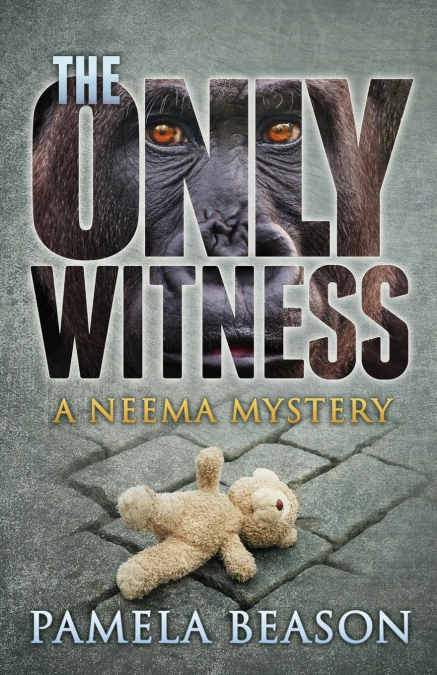
  • The Only Witness
    Pamela Beason / TBD
    A MISSING BABYSeventeen-year-old Brittany Morgan dashed into the store for just a minute, leaving her sleeping baby in the car. Now Ivy's gone and half the town believes Brittany murdered her daughter.A HAUNTED DETECTIVEDetective Matthew Finn, a big-city fish out of water in small-town Evansburg, Washington, struggles with his wife's betrayal as he investigates Ivy Morg...
    Disponible

    20,64 €

  • The Gender of Inanimate Objects and Other Stories
    Laura Marello
    In the phosphorescent title novella of Laura Marello's collection, an enigmatic drifter pursues her circuitous path through the intricate cultural terrain of Sweetwater County, California, a patchwork of communities where "everyone speaks the wrong language." Through subtle, disciplined prose inflected with the deep colors and clear lines of ancient Mykonos and the northern...
    Disponible

    15,29 €

  • What's the Word?
    Lawrence Gordon
    This is a work of non-fiction. The events penned herein reflect real life situations; great times and terrible times; which my family, my friends, and I endured.      This work will reflect the spiritual aspects of my family. I was born and raised in our family church. The name of the church was God’s Universal House of Prayer and my Uncle, James Henderson was the Pastor until...
    Disponible

    7,19 €

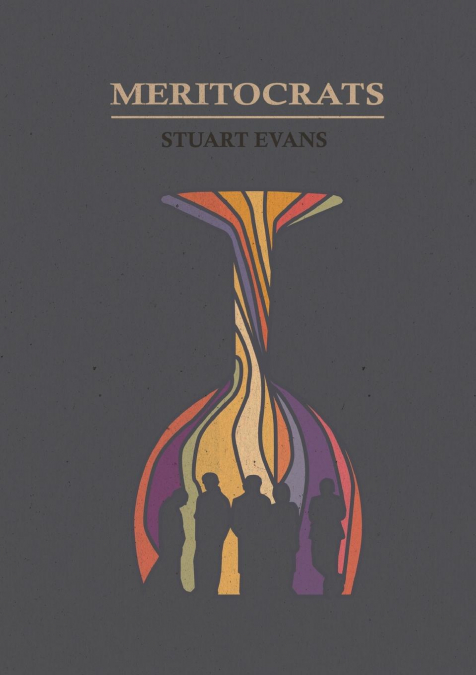
  • Meritocrats
    Stuart Evans
    Stuart Evans’s first novel is a comedy-of-ill-manners set in a nouveau riche milieu: a fantastic satirical performance and hyper-referential homage to masters past and present. Paul Keller is the Stephen Dedalus of the piece, the son of Robert and Sylvie, whose internal monologue is spliced into the action, and whose incestuous feelings for his sister lead to an increase in his...
    Disponible

    19,71 €

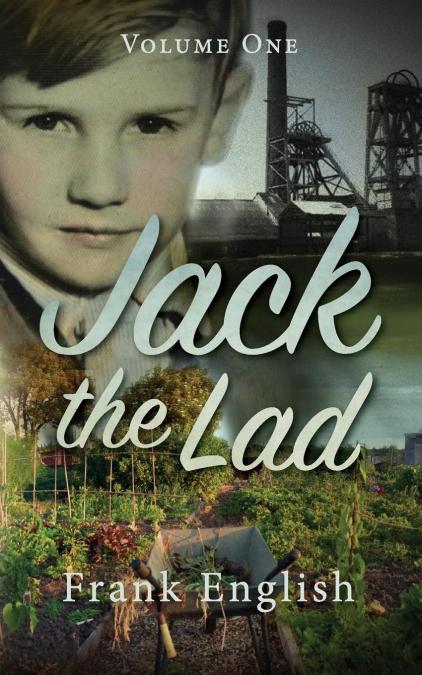
  • Jack the Lad
    Frank English
    A tale based loosely in reality, this story traces the fortunes of the Ingles family in the West Riding coal fields around Wakefield. Theirs is a saga that could be replicated time after time in an area where scratching a living wasn't easy, and where coal, drink, and occasional infidelity played integral parts in the life of the community. Their story starts in the mid-194...
    Disponible

    13,53 €

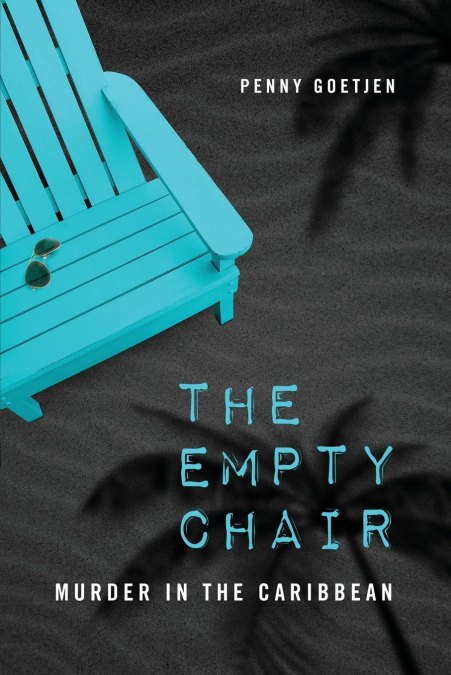
  • The Empty Chair
    Penny Goetjen
    o A steamy Caribbean islando A missing female photographero A daughter’s relentless search and her entanglement in the island’s twisted subculture Don’t expect an umbrella in your drink when you escape to the Virgin Islands in this heart-pounding suspense novel as young Olivia Benning desperately searches for her photographer mother who has gone missing during a covert assignme...
    Disponible

    12,62 €

Otros libros del autor

  • Constitución de una república imaginaria
    José Joaquín Fernández de Lizardi
    La Constitución de los Estados Unidos Mexicanos fue aprobada el 3 de octubre de 1824, y fue publicada el 5 de ese mismo mes. Unos meses después apareció Constitución de una república imaginaria, de Lizardi.José Joaquín Fernández de Lizardi, consideró que la Carta magna de los mexicanos no se ocupaba de cuestiones de enorme relevancia como la religión y la situación de los cléri...
  • Antología
    José Joaquín Fernández de Lizardi
    José Joaquín Fernández de Lizardi es el autor de El Periquillo Sarniento (1816), la que se considera, en rigor, la primera novela hispanoamericana. Sin embargo, también se acercó al teatro, ya sea para hacer crítica o escribiendo obras donde asume los principios neoclasicistas, previsibles en un ilustrado convencido.La presente Antología de José Joaquín Fernández de Lizardi con...
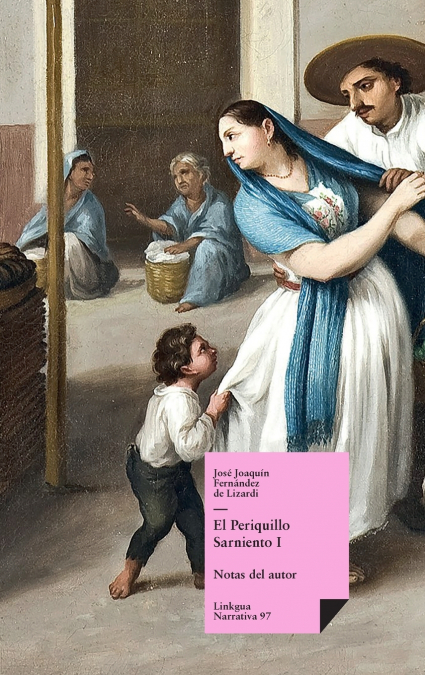
  • El Periquillo Sarniento
    José Joaquín Fernández de Lizardi
    Vida y hechos de Periquillo Sarniento redactada por él y para sus hijos era el nombre original de la novela cuando se publicó en el año 1816 en una versión de tres tomos, escrita por José Joaquín Fernández de Lizardi. Hay un cuarto tomo que fue censurado por criticar la esclavitud. No se publicaron completos bajo el título El periquillo Sarniento hasta 1830, ya muerto Lizardi....
  • El Periquillo Sarniento
    José Joaquín Fernández de Lizardi
    Vida y hechos de Periquillo Sarniento redactada por él y para sus hijos era el nombre original de la novela cuando se publicó en el año 1816 en una versión de tres tomos, escrita por José Joaquín Fernández de Lizardi. Hay un cuarto tomo que fue censurado por criticar la esclavitud. No se publicaron completos bajo el título El periquillo Sarniento hasta 1830, ya muerto Lizardi....
  • El Periquillo Sarniento
    José Joaquín Fernández de Lizardi
    Vida y hechos de Periquillo Sarniento redactada por él y para sus hijos era el nombre original de la novela cuando se publicó en el año 1816 en una versión de tres tomos, escrita por José Joaquín Fernández de Lizardi. Hay un cuarto tomo que fue censurado por criticar la esclavitud. No se publicaron completos bajo el título El periquillo Sarniento  hasta 1830, ya muerto Lizardi....
  • El Periquillo Sarniento
    José Joaquín Fernández de Lizardi
    Vida y hechos de Periquillo Sarniento redactada por él y para sus hijos era el nombre original de la novela cuando se publicó en el año 1816 en una versión de tres tomos, escrita por José Joaquín Fernández de Lizardi. Hay un cuarto tomo que fue censurado por criticar la esclavitud. No se publicaron completos bajo el título El periquillo Sarniento  hasta 1830, ya muerto Lizardi....