

 Librería Samer Atenea
 Kálamo Books
 Librería Elías (Asturias)
 Librería Kolima (Madrid)
 Librería Proteo (Málaga)
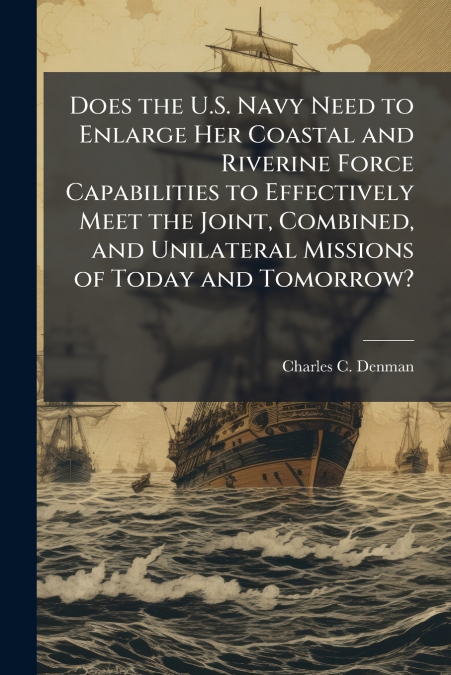
This study examines the coastal and riverine force structure required to support the U.S. Navy’s operations in the littoral environment, The White Paper 'Forward...From the Sea' reveals the Navy’s support to the strategic ends, ways, and means outlined in the 'National Security Strategy', emphasizing operations in the littoral environment. This study examines the brown water force structure needed to respond adequately to missions identified in the 'National Security Strategy' and 'National Military Strategy', in the regions specified in these two documents where littoral operations might be the appropriate response. The impetus for this research was to respond to a question similar to the thesis posed by the Naval Doctrine Command. This study established baseline force requirements for riverine patrol and coastal interdiction operations by analyzing the Vietnam War. The figures for the number of boats required to patrol a given length of river or coast line are then used to determine the size of the brown water force required to respond adequately to the regions of potential conflict. This study determined that the current brown water force structure was adequate to meet the requirements of the most demanding major regional conflict. The brown water force sturcture was not adequate to support two major regional conflicts at the same time. If the 'National Security Strategy’s' requirement that the armed forces be prepared to fight two nearly simultaneous major regional conflicts is interpreted to allow the brown water force to be deployed sequentially between conflicts, then the current brown water force structure meets the needs of the Navy’s littoral strategy and the ends, ways, and means of the 'National Security Strategy' and the 'National Military Strategy'.This work has been selected by scholars as being culturally important, and is part of the knowledge base of civilization as we know it. This work was reproduced from the original artifact, and remains as true to the original work as possible. Therefore, you will see the original copyright references, library stamps (as most of these works have been housed in our most important libraries around the world), and other notations in the work.This work is in the public domain in the United States of America, and possibly other nations. Within the United States, you may freely copy and distribute this work, as no entity (individual or corporate) has a copyright on the body of the work.As a reproduction of a historical artifact, this work may contain missing or blurred pages, poor pictures, errant marks, etc. Scholars believe, and we concur, that this work is important enough to be preserved, reproduced, and made generally available to the public. We appreciate your support of the preservation process, and thank you for being an important part of keeping this knowledge alive and relevant.





