

 Librería Samer Atenea
 Kálamo Books
 Librería Elías (Asturias)
 Librería Kolima (Madrid)
 Librería Proteo (Málaga)
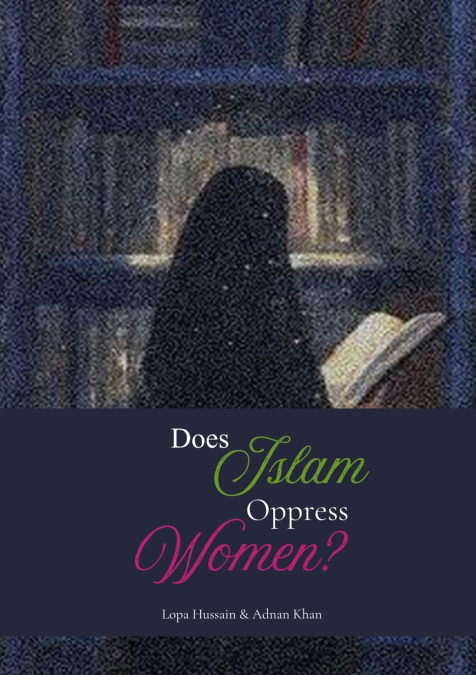
Does Islam Oppress Women? An Examination of Islamic Social Jurisprudence and Gender RelationsWhat principles govern the relationship between men and women in Islamic law, and how do these principles differ from the assumptions underlying modern Western conceptions of equality?In Does Islam Oppress Women, Adnan Khan and Lopa Hussain examine these questions through a comparative study of Islamic social principles, Western intellectual history, and the legal responsibilities assigned to men and women within the Sharīʿah.Beginning with the historical development of women’s rights in Western societies, the authors consider the influence of European religious thought, the Enlightenment, industrialisation, and modern feminist philosophy upon prevailing understandings of equality, individual freedom, and social participation.Against this historical background, the book presents the Islamic conception of social organisation, examining how religious obligations, family responsibilities, and legal distinctions are understood within a framework derived from the Qur’ān and Sunnah.Principal Themes ExaminedIslamic Law and Human Responsibility: The relationship between divine commandments, individual accountability, and the responsibilities shared by men and women.Equality and Legal Distinction: An examination of the authors’ argument that Islamic legal rulings address particular human actions and circumstances rather than applying equality as an independent legislative principle.Family and Social Organisation: The responsibilities associated with marriage, parenthood, financial maintenance, education, employment, and participation in society.Women’s Rights in Islamic Jurisprudence: Discussion of property ownership, education, professional activity, marriage, divorce, and legal accountability.Modesty and Public Conduct: A textual examination of the rules concerning ʿawrah, ḥijāb, jilbāb, and tabarruj, including the distinction between bodily covering and prescribed public attire.Islamic and Western Social Thought: A comparison of the principles governing gender relations, individual freedom, and social responsibility within the two frameworks discussed by the authors.Drawing upon Qur’ānic passages, Prophetic traditions, historical references, and selected modern writings, the authors develop an interpretive account of the Islamic social framework while challenging assumptions concerning women’s status in Muslim societies.The work is particularly relevant to readers examining Islamic social jurisprudence, comparative religious ethics, the historical development of gender concepts, and the relationship between religious obligations and social organisation.Intended for students of Islamic studies, researchers, academic libraries, and readers interested in the legal and intellectual foundations of gender relations in Islam, this concise volume offers a focused presentation of the authors’ understanding of women’s rights and responsibilities within the Sharīʿah.Its significance lies in presenting an Islamic legal perspective on social relations alongside a historical critique of Western conceptions of equality, providing material for the comparative study of religion, jurisprudence, and social thought.





