

 Librería Samer Atenea
 Kálamo Books
 Librería Elías (Asturias)
 Librería Kolima (Madrid)
 Librería Proteo (Málaga)
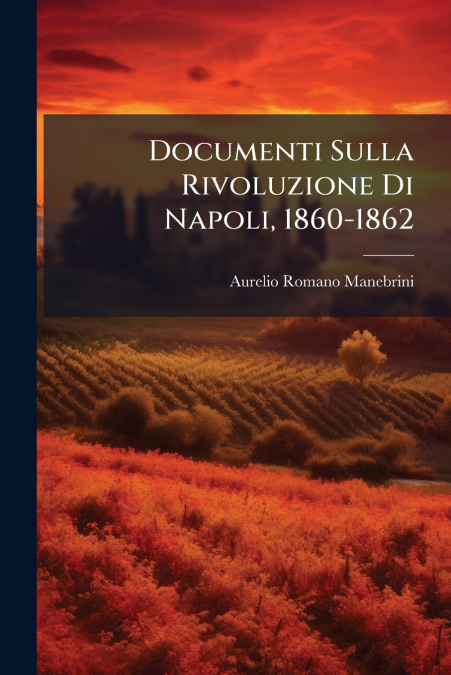
Documenti Sulla Rivoluzione Di Napoli, 1860-1862, a cura di Aurelio Romano-Manebrini, offre una prospettiva dettagliata e di prima mano sugli eventi cruciali che hanno segnato la rivoluzione di Napoli durante il Risorgimento. Questo volume raccoglie una serie di documenti storici che illuminano le dinamiche politiche, sociali e militari che hanno portato all’annessione del Regno delle Due Sicilie al Regno d’Italia. Attraverso una selezione accurata di lettere, proclami, rapporti e altri materiali d’archivio, il libro permette al lettore di immergersi nel clima effervescente e tumultuoso di quegli anni. I documenti testimoniano le speranze, le paure e le aspirazioni dei protagonisti di questa fase storica, offrendo un quadro vivido e complesso della Rivoluzione di Napoli. Un’opera fondamentale per chiunque voglia approfondire la conoscenza del processo di unificazione italiana e delle sue implicazioni nel contesto napoletano.This work has been selected by scholars as being culturally important, and is part of the knowledge base of civilization as we know it. This work was reproduced from the original artifact, and remains as true to the original work as possible. Therefore, you will see the original copyright references, library stamps (as most of these works have been housed in our most important libraries around the world), and other notations in the work.This work is in the public domain in the United States of America, and possibly other nations. Within the United States, you may freely copy and distribute this work, as no entity (individual or corporate) has a copyright on the body of the work.As a reproduction of a historical artifact, this work may contain missing or blurred pages, poor pictures, errant marks, etc. Scholars believe, and we concur, that this work is important enough to be preserved, reproduced, and made generally available to the public. We appreciate your support of the preservation process, and thank you for being an important part of keeping this knowledge alive and relevant.





