Doctrine of Double Effect, The

Doctrine of Double Effect, The


42,52 €
IVA incluido
Disponible
Editorial:
Longleaf - Univ of Notre Dame du Lac
Año de edición:
2001
Materia
Ética y filosofía moral
ISBN:
9780268008970
42,52 €
IVA incluido
Disponible

Selecciona una librería:

  • Librería Samer Atenea
  • Librería Aciertas (Toledo)
  • Kálamo Books
  • Librería Perelló (Valencia)
  • Librería Elías (Asturias)
  • Donde los libros
  • Librería Kolima (Madrid)
  • Librería Proteo (Málaga)

This anthology of philosophical essays, gathered from numerous sources, provides a convenient, in-depth introduction to the Doctrine of Double Effect. A number of important philosophers and intellectual perspectives are represented in what constitutes a debate over the doctrine and the various concerns it raises. Philosophers represented in these readings include Joseph M. Boyle, Jr., Warren Quinn, G. E. M. Anscombe, Thomas Nagel, Phillippa Foot, Jonathan Bennett, Nancy Davis, Donald Marquis, and many others. The Doctrine of Double Effect is a principle of reasoning well known to moral philosophers. The standard formulation of the doctrine states that it is 'licit to posit a cause which is either good or indifferent from which there follows a twofold effect, one good, the other evil, if a proportionally grave reason is present, and if the end of the agent is honorable.' According to this doctrine, an effect that would be considered morally wrong if it were the intentional outcome of an act could be morally permissible if it were the unintended effect of that act, even if it had been foreseen. As a method of drawing moral distinctions between the intentional and unintentional production of evil, the doctrine has had a long history. It has often been employed, for example, in debates about 'just war' and the kinds of acts that are permissible in war. The first section of this collection offers an introduction to the doctrine, its purpose, its claims, and the issues it raises for moral philosophers. Sections two and three take the form of a debate by several influential thinkers about the validity of the doctrine and the many problems surrounding it. The authors in section two defend the doctrine; those in section three oppose it. Sections four and five focus on applications, concrete and theoretical, of the doctrine, showing its possible uses and misuses. This book will be valuable to teachers and students of philosophy as well as others interested in a clear understanding of this controversial doctrine.Contributors: G. E. M. Anscombe, Greg Beabout, Jonathan Bennett, Joseph M. Boyle, Jr., William Cooney, David Copp, Nancy Davis, Stanislaus J. Dundon, John Martin Fischer, Philippa Foot, Jeff Jordan, Donald B. Marquis, Robert M. Martin, Thomas Nagel, Warren S. Quinn, Mark Ravizza, Michael Walzer, and P. A. Woodward. 
Artículos relacionados

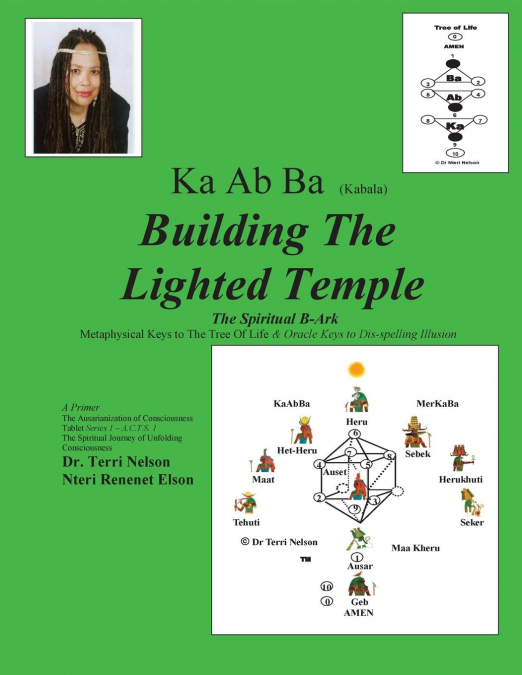
  • Ka Ab Ba Building The Lighted Temple
    Dr Terri R. Nelson / Dr Terri RNelson
    The book KaAbBa Building The Lighted Temple/Metaphysical Keys to the Tree of Life draws a circle that is inclusive of the Afrikan origin of the Ancient Kemetic/Egyptian wisdom. It reveals the undeniable root and link of Ancient Africa to all the religious systems that would develop worldwide. This book is explosive in its power to convey the meaning of KaAbBa, the Medu Neter  (...
    Disponible

    37,41 €

  • Technoethics and the Evolving Knowledge Society
    Rocci Luppicini
    Recently, there has been a major push to rediscover the ethical dimension of technology across the sciences, social sciences, and humanities. Technoethics and the Evolving Knowledge Society: Ethical Issues in Technological Design, Research, Development, and Innovation examines human processes and practices connected to technology embedded within social, political, and moral sph...
  • Kant
    Immanuel Kant
    Kant’s Groundwork of the Metaphysics of Morals is one of the most important works in modern moral philosophy. It belongs beside Plato, Aristotle, Machiavelli, and Hobbes. Here Kant sets out to articulate and defend the Categorical Imperative - the fundamental principle that underlies moral reasoning - and to lay the foundation for a comprehensive account of justice and human vi...
  • On the Duty of Civil Disobedience
    HENRY DAVID THOREAU
    Civil Disobedience argues that citizens should not permit their governments to overrule their consciences, and that they have a duty to avoid allowing their acquiescence to enable the government to make them the agents of injustice. Thoreau was motivated in part by his disgust with slavery and the Mexican-American War, but the sentiments he expresses here are just as pertinent ...
  • Beyond Good and Evil
    Friedrich Nietzsche
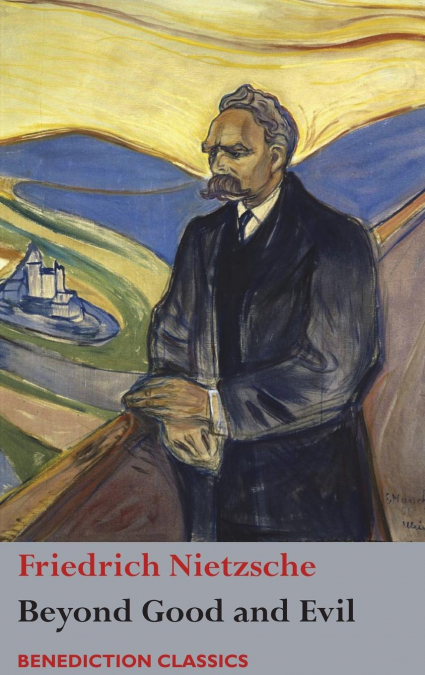
    Nietzsche, though primarily a philosopher, wrote widely on art, philology, history, religion, tragedy, culture, and science.  In 1886, at the height of his powers, he published Beyond Good and Evil.  Here he examines much of the best of human thought--dogmatic philosophy, Judeo-Christian morality, science and democracy – and finds it lacking.  Rejecting “slave-morality” he pres...
  • Beyond Good and Evil
    Friedrich Nietzsche
    Nietzsche, though primarily a philosopher, wrote widely on art, philology, history, religion, tragedy, culture, and science.  In 1886, at the height of his powers, he published Beyond Good and Evil.  Here he examines much of the best of human thought--dogmatic philosophy, Judeo-Christian morality, science and democracy – and finds it lacking.  Rejecting “slave-morality” he pres...
    Disponible

    9,99 €