Diva’s Gift to the Shakespearean Stage

Diva’s Gift to the Shakespearean Stage

Pamela Allen Brown

134,43 €
IVA incluido
Consulta disponibilidad
Editorial:
Oxford University Press
Año de edición:
2022
Materia
Estudios literarios: obras de teatro y dramaturgos
ISBN:
9780198867838

Selecciona una librería:

  • Librería Samer Atenea
  • Librería Aciertas (Toledo)
  • Kálamo Books
  • Librería Perelló (Valencia)
  • Librería Elías (Asturias)
  • Donde los libros
  • Librería Kolima (Madrid)
  • Librería Proteo (Málaga)

The Diva’s Gift traces the far-reaching impact of the first female stars on the playwrights and players of the all-male stage. When Shakespeare entered the scene, women had been acting in Italian troupes for two decades, traveling in Italy and beyond and performing in all genres, including tragedy. The ambitious actress reinvented the innamorata, making her more charismatic and autonomous, thrilling audiences with her skills. Despite fervent attacks, some actresses became the first international stars, winning royal and noble patrons and literary admirers in France and Spain. After Elizabeth and her court caught wind of their success in Paris, Italian troupes with actresses crossed the Channel to perform. The Italians’ repeat visits and growing fame posed a radical challenge to English professionals just as they were building their first paying theaters. Some writers treated the actress as a whorish threat to their stage, which had long minimized female roles. Others saw a vital new model full of promise. Lyly, Marlowe, and Kyd endowed innamorata parts with hot-blooded, racialized passions, but made them self-aware agents, not counters traded between men. Shakespeare, Jonson, Webster and others followed, ringing changes on the new type in comedy, tragedy, and romance. Like the comici they recycled actress-linked theatergrams and star scenes, such as cross-dressing, the mad scene, and the sung lament. In this way, the diva’s prodigious virtuosity and stardom altered the horizons of playmaking even on the womanless stage. Capitalizing on the talents of boyplayers, the best playwrights created bold new roles endowed with her alien glamour, such as Lyly’s Sapho and Pandora, Marlowe’s Dido, Kyd’s Bel-Imperia, Webster’s Vittoria, and Shakespeare’s Beatrice, Viola, Portia, Juliet, and Ophelia. Cleopatra is not alone in her superb theatricality and dazzling strangeness. As this book demonstrates, the diva’s gifts mark them all.
Artículos relacionados

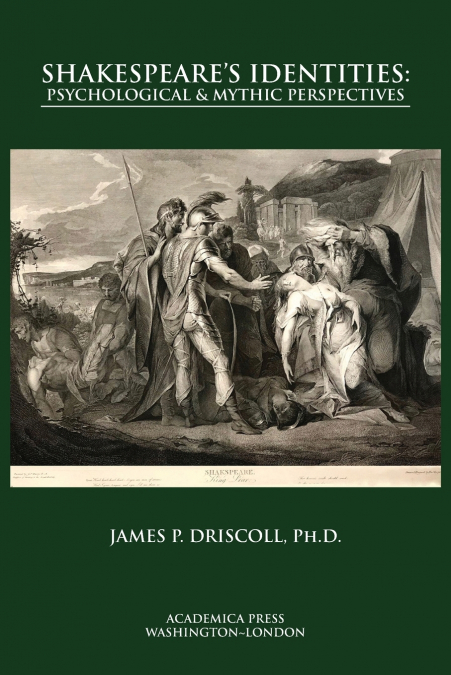
  • Shakespeare’s identities
    James Driscoll
    No dramatist has treated identity in as many ways and in such depth as William Shakespeare. In Shakespeare’s Identities, James P. Driscoll shows how the Bard used history, comedy, tragedy, and romance to develop comprehensive treatments of personal identity.Driscoll’s innovative study examines four aspects of identity: the conscious, social, real, and ideal. Drawing on Jungian ...
    Disponible

    45,23 €

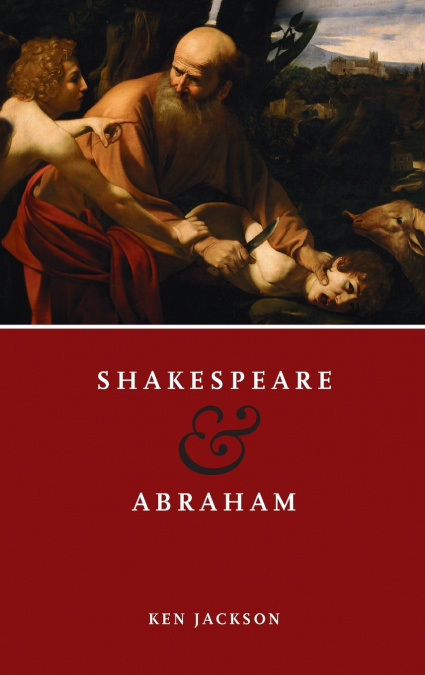
  • Shakespeare and Abraham
    Ken Jackson
    Shakespeare and Abraham shows how Shakespeare’s engagement with the biblical narrative of Abraham’s sacrifice of Isaac manifests in his plays. ...
  • William Shakespeare, Richard Barnfield, and the Sixth Earl of Derby
    Leo Daugherty
    This book is the first to argue that the Rival Poet of Shakespeare’s Sonnets is the well-known young Elizabethan writer Richard Barnfield (1574-1620), long suspected to have been one of Shakespeare’s 'private friends' (as they were termed by Francis Meres in 1598), with whom (as Meres also tells us) Shakespeare shared some of his sonnets. This is also the first book to argue th...
  • Shakespeare and the Dawn of Modern Science
    Peter D. Usher
    In Shakespeare and the Dawn of Modern Science, renowned astronomy expert Peter Usher expands upon his allegorical interpretation of Hamlet and analyzes four more plays, Love’s Labour’s Lost, Cymbeline, The Merchant of Venice, and The Winter’s Tale. With painstaking thoroughness, he dissects the plays and reveals that, contrary to current belief, Shakespeare was well aware of th...
  • The Comic Matrix of Shakespeare’s Tragedies
    Susan Snyder
    Comic elements in Shakespeare’s tragedies have often been noted, but while most critics have tended to concentrate on humorous interludes or on a single play, Susan Snyder seeks a more comprehensive understanding of how Shakespeare used the conventions, structures, and assumptions of comedy in his tragic writing. She argues that Shakespeare’s early mastery of romantic comedy de...
    Disponible

    47,54 €

  • Hamlet in Purgatory
    Stephen Greenblatt
    In Hamlet in Purgatory, renowned literary scholar Stephen Greenblatt delves into his longtime fascination with the ghost of Hamlet’s father, and his daring and ultimately gratifying journey takes him through surprising intellectual territory. It yields an extraordinary account of the rise and fall of Purgatory as both a belief and a lucrative institution--as well as a capacious...
    Disponible

    27,63 €