Distributed Manipulation

Distributed Manipulation

Howie Choset / Karl F. Bohringer

132,63 €
IVA incluido
Consulta disponibilidad
Editorial:
Springer Nature B.V.
Año de edición:
2000
ISBN:
9780792377283

Selecciona una librería:

  • Librería Samer Atenea
  • Librería Aciertas (Toledo)
  • Kálamo Books
  • Librería Perelló (Valencia)
  • Librería Elías (Asturias)
  • Donde los libros
  • Librería Kolima (Madrid)
  • Librería Proteo (Málaga)

Distributed manipulation effects motion on objects through a large number of points of contact. The primary benefit of distributed manipulators is that many small inexpensive mechanisms can move and transport large heavy objects. In fact, each individual component is simple, but their combined effect is quite powerful. Furthermore, distributed manipulators are fault-tolerant because if one component breaks, the other components can compensate for the failure and the whole system can still perform its task. Finally, distributed manipulators can perform a variety of tasks in parallel. Distributed manipulation can be performed by many types of mechanisms at different scales. Due to the recent advances of MEMS (micro-electro-mechanical system) technology, it has become feasible to quickly manufacture distributed micro-manipulators at low cost. One such system is an actuator array where hundreds of micro-scaled actuators transport and manipulate small objects that rest on them. Macroscopic versions of the actuator array have also been developed and analyzed. Another form of distributed manipulation is derived from a vibrating plate, and teams of mobile robots have been used to herd large objects into desired locations. There are many fundamental issues involved in distributed manipulation. Since a distributed manipulator has many actuators, distributed control strategies must be considered to effectively manipulate objects. A basic understanding of contact analysis between the actuators and object must also be considered. When each actuator in the array has a sensor, distributed sensing presents some basic research challenges. Distributed computation and communication are key issues to enable the successful deployment of distributed manipulators into use. Finally, the trade-off in centralized and de-centralized approaches in all of these algorithms must be investigated.


Artículos relacionados

  • Artificial Intelligence for Robotics - Second Edition
    Francis X III Govers / Francis X. Govers III
    Let an AI and robotics expert help you apply AI, systems engineering, and ML concepts to create smart robots capable of interacting with their environment and users, making decisions, and navigating autonomouslyKey Features- Gain a holistic understanding of robot design, systems engineering, and task analysis- Implement AI/ML techniques to detect and manipulate objects and navi...
    Disponible

    74,56 €

  • Drone Development from Concept to Flight
    Sumit Sharma
    Learn and apply the principles behind building and flying drones using components like BLDC motors and speed controllers, AeroGCS ground software, Ardupilot and PX4 open-source flight stacksalong with examples and best practices Key Features:- Get to grips with multicopter physics (roll, pitch, and yaw) and 3D dynamics for defining a drone’s flight- Optimize drone performance w...
    Disponible

    73,28 €

  • Disaster Robotics
    Robin R. Murphy
    ...
    Disponible

    34,03 €

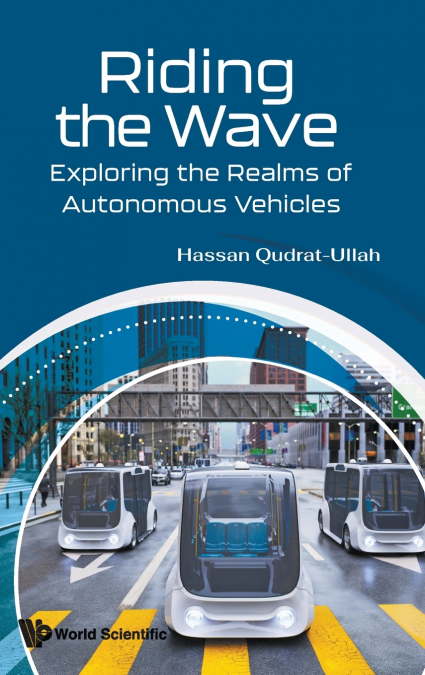
  • RIDING THE WAVE
    Hassan Qudrat-Ullah / QUDRAT-ULLAH HASSAN
    This authoritative volume offers a thought-provoking and comprehensive examination of the present and future of autonomous vehicles (AVs), providing readers with a robust understanding of the transformative forces shaping the automotive landscape..Riding the Wave: Exploring the Realms of Autonomous Vehicles navigates through the historical evolution of AVs, untangling the intri...
  • A Roadmap for the Uptake of Cyber-Physical Systems for Facilities Management
    Chimay J Anumba / Clinton Aigbavboa / Matthew Ikuabe
    This is the first book to conceptualise and develop a roadmap for the adoption of Cyber-Physical Systems (CPS) for facilities management in developing countries. ...
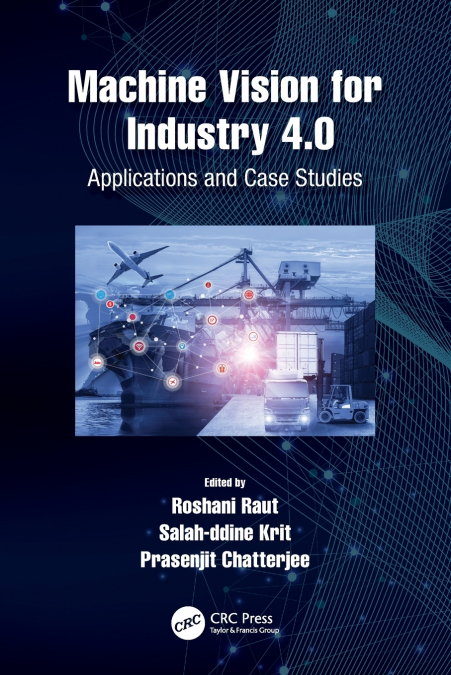
  • Machine Vision for Industry 4.0
    This book discusses the use of machine vision and technologies in specific engineering case studies and focuses on how machine vision techniques are impacting every step of industrial processes and how smart sensors and cognitive big data analytics are supporting the automation processes in Industry 4.0 applications. ...
    Disponible

    87,78 €