
Discourse on Ethics

Discourse on Ethics

Paul O’Hara

16,45 €
IVA incluido
Disponible
Editorial:
Xlibris AU
Año de edición:
2019
Materia
Ética y filosofía moral
ISBN:
9781796004168
16,45 €
IVA incluido
Disponible

Selecciona una librería:

  • Librería Samer Atenea
  • Librería Aciertas (Toledo)
  • Kálamo Books
  • Librería Perelló (Valencia)
  • Librería Elías (Asturias)
  • Donde los libros
  • Librería Kolima (Madrid)
  • Librería Proteo (Málaga)

There are two ways for approaching the question of truth: first, by adopting an approach that is wholly objective and second, by adopting a partly subjective approach. As far as the former is concerned, we are quite familiar with the physical sciences-that is, the question 'From whence does something originate or of what does it consist?' As far as the latter is concerned, the question becomes 'How do we appraise something according to a certain set of standards, norms, or rules?'Aesthetics deals with the objects, in this case perceptual or audible, that we call beautiful or ugly. Logic deals with the objects, in this case statements or arguments, that we call true or false. And ethics deals with the objects, in this case the conduct of men, that we call good or bad. What distinguishes the normative from the descriptive also concerns the validity or propriety with which we judge, instead of merely stating it, that such and such is the case. An anthropologist is someone who may record the different mores and customs that exist in different societies, but it is not the job of an anthropologist to say whether they are good or bad or to identify which ones are better and which are worse. The same goes for a botanist who classifies various plants or a psychologist who classifies various mental states.
Artículos relacionados

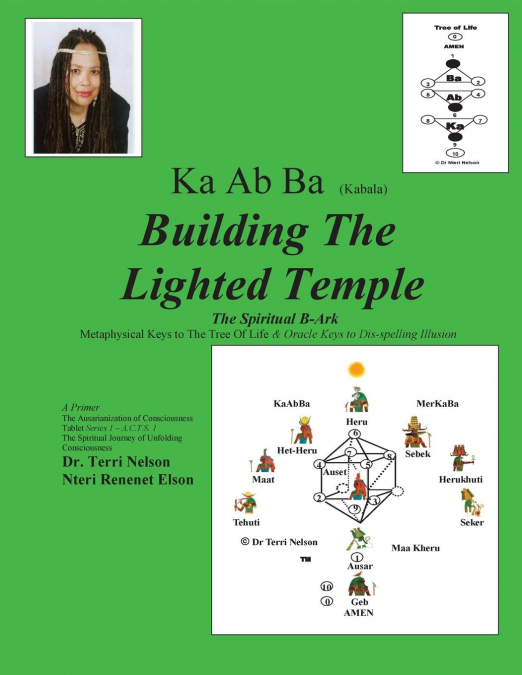
  • Ka Ab Ba Building The Lighted Temple
    Dr Terri R. Nelson / Dr Terri RNelson
    The book KaAbBa Building The Lighted Temple/Metaphysical Keys to the Tree of Life draws a circle that is inclusive of the Afrikan origin of the Ancient Kemetic/Egyptian wisdom. It reveals the undeniable root and link of Ancient Africa to all the religious systems that would develop worldwide. This book is explosive in its power to convey the meaning of KaAbBa, the Medu Neter  (...
    Disponible

    37,41 €

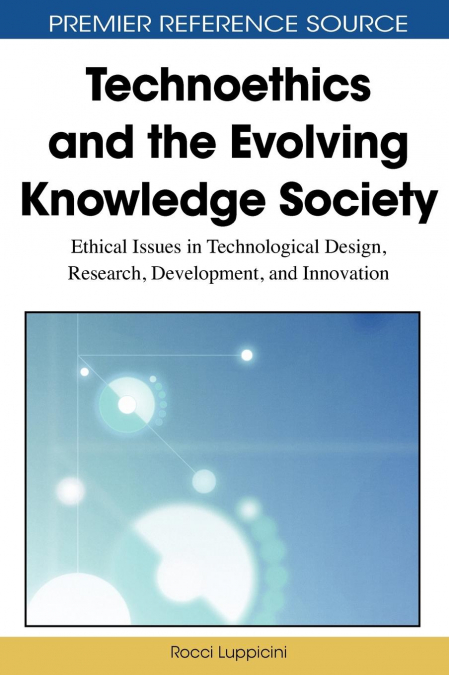
  • Technoethics and the Evolving Knowledge Society
    Rocci Luppicini
    Recently, there has been a major push to rediscover the ethical dimension of technology across the sciences, social sciences, and humanities. Technoethics and the Evolving Knowledge Society: Ethical Issues in Technological Design, Research, Development, and Innovation examines human processes and practices connected to technology embedded within social, political, and moral sph...
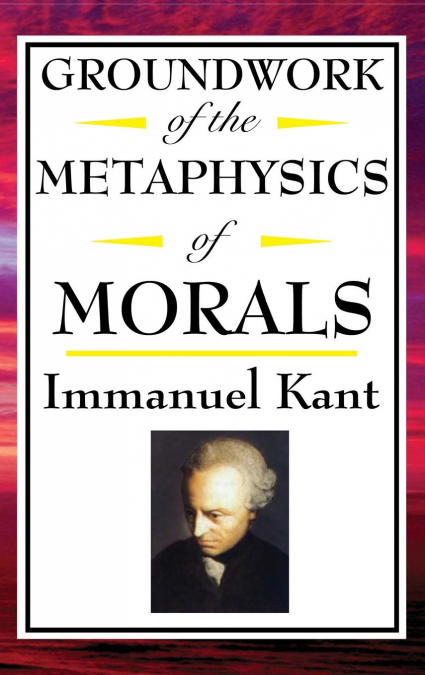
  • Kant
    Immanuel Kant
    Kant’s Groundwork of the Metaphysics of Morals is one of the most important works in modern moral philosophy. It belongs beside Plato, Aristotle, Machiavelli, and Hobbes. Here Kant sets out to articulate and defend the Categorical Imperative - the fundamental principle that underlies moral reasoning - and to lay the foundation for a comprehensive account of justice and human vi...
  • On the Duty of Civil Disobedience
    HENRY DAVID THOREAU
    Civil Disobedience argues that citizens should not permit their governments to overrule their consciences, and that they have a duty to avoid allowing their acquiescence to enable the government to make them the agents of injustice. Thoreau was motivated in part by his disgust with slavery and the Mexican-American War, but the sentiments he expresses here are just as pertinent ...
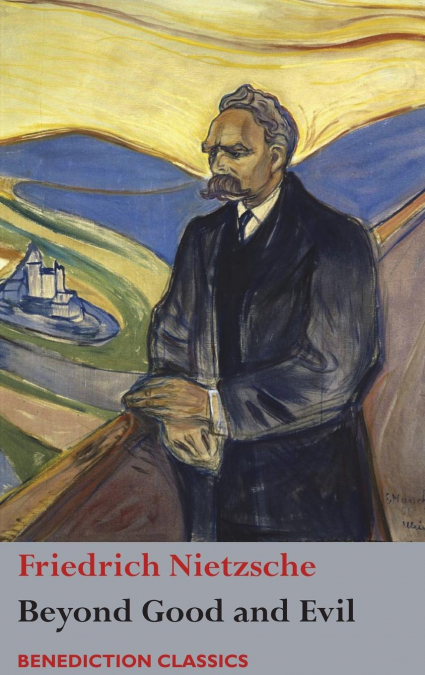
  • Beyond Good and Evil
    Friedrich Nietzsche
    Nietzsche, though primarily a philosopher, wrote widely on art, philology, history, religion, tragedy, culture, and science.  In 1886, at the height of his powers, he published Beyond Good and Evil.  Here he examines much of the best of human thought--dogmatic philosophy, Judeo-Christian morality, science and democracy – and finds it lacking.  Rejecting “slave-morality” he pres...
  • Beyond Good and Evil
    Friedrich Nietzsche
    Nietzsche, though primarily a philosopher, wrote widely on art, philology, history, religion, tragedy, culture, and science.  In 1886, at the height of his powers, he published Beyond Good and Evil.  Here he examines much of the best of human thought--dogmatic philosophy, Judeo-Christian morality, science and democracy – and finds it lacking.  Rejecting “slave-morality” he pres...
    Disponible

    9,99 €

Otros libros del autor

  • The Limits of Knowledge
    Paul O’Hara
    This book is an exploration of various themes common to the broad tradition of Western philosophy. What do we mean by a relation? Is a relation a transcendental object or something only operative in the world of concrete things? What is the difference between universal and particular? Is there clarity in the way we represent an object or is clarity only in the way a thing is co...
    Disponible

    16,45 €

  • Liberty, Justice and the State
    Paul O’Hara
    Politics could be described as a kind of bartering that enables us to overcome the discontinuities in our lives by resolving conflicts in a peaceful, rather than unruly, manner and seeking a sphere in which there is some common or general accord. It is thus the art of compromise, conciliation, and negotiation rather than brute or naked force where it concerns meaningful and eff...
    Disponible

    16,35 €