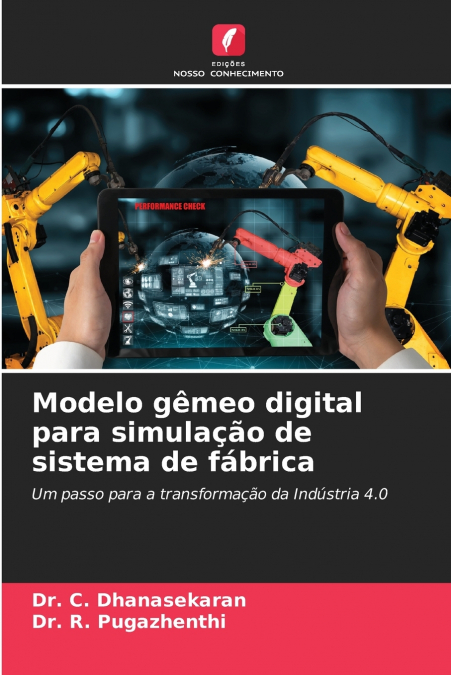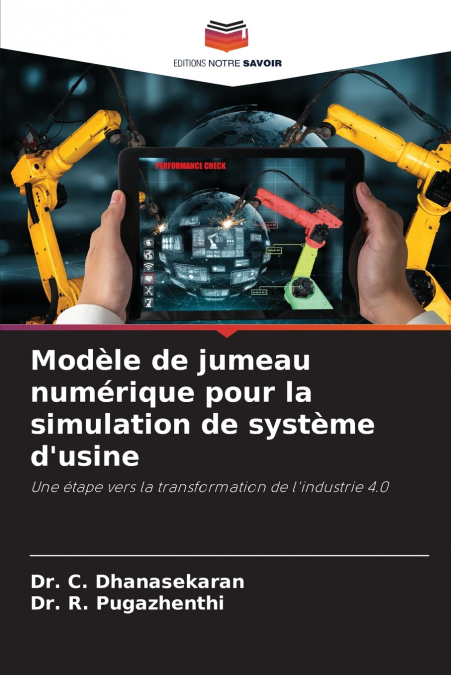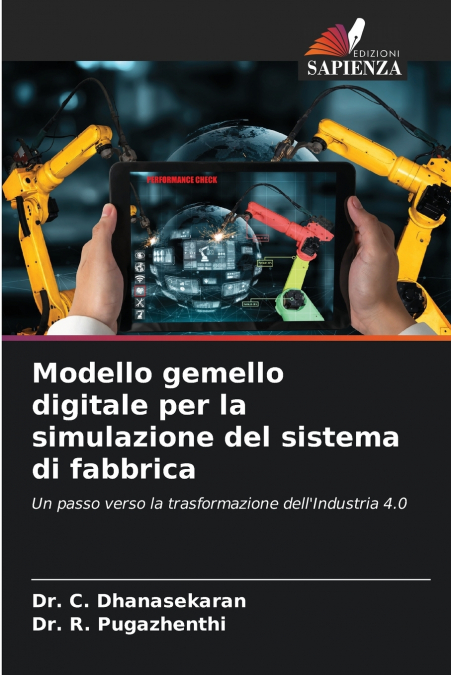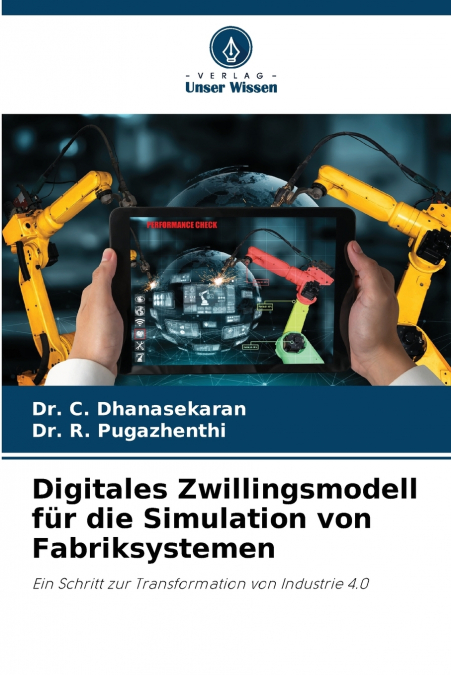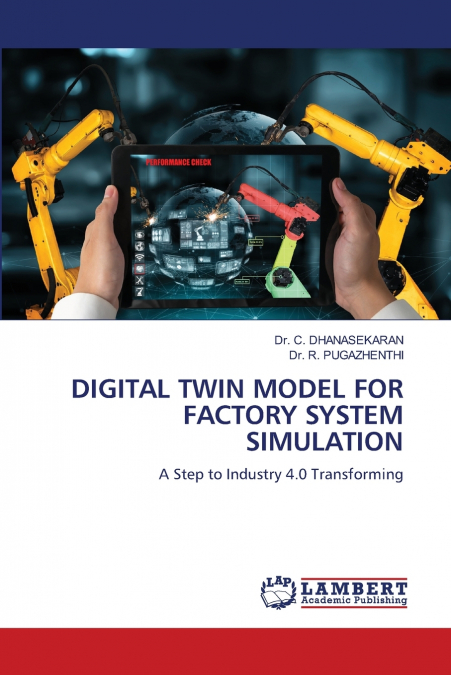
DIGITAL TWIN MODEL FOR FACTORY SYSTEM SIMULATION

DIGITAL TWIN MODEL FOR FACTORY SYSTEM SIMULATION

Dr. C. DHANASEKARAN / Dr. R. PUGAZHENTHI

60,44 €
IVA incluido
Consulta disponibilidad
Editorial:
KS OmniScriptum Publishing
Año de edición:
2023
ISBN:
9786206144274

Selecciona una librería:

  • Librería Desdémona
  • Librería Samer Atenea
  • Librería Aciertas (Toledo)
  • Kálamo Books
  • Librería Perelló (Valencia)
  • Librería Elías (Asturias)
  • Donde los libros
  • Librería Kolima (Madrid)
  • Librería Proteo (Málaga)

This book suggests a methodology to apply Digital Twin to manufacturing facilities for keeping the model updated and simulated in real time. Real-Time Location Sensing (RTLS) technology with transmitter tags, receiver nodes, and gateways (IOT) deployed at the facility. Manage transformation matrix for each asset in Digital manufacturing facility at PLM/CAD software. Discrete Event Simulation tools integrated into PLM to run model directly from PLM in real-time. Tags attached to each physical asset send the signal to the receiver when asset movement or orientation occurs at the physical facility, Tags attached to each asset send the signal to the receiver. The receiver sends pre-processed information to the gateway, which acts as an edge device to process and convert those signals as transformation matric, which is synchronized to the PLM system. Now digital manufacturing facility is up-to-date. Any facility change requirement can be done in this digital model and simulated in real-time for the quickest decision.

Artículos relacionados

  • Why Companies Do Not Pursue Attractive Mergers and Acquisitions
    Richard B. Connell
    There are substantial bodies of literature that advance theory about why merger and acquisition candidates are found to be unattractive, why negotiations are not concluded, and why the benefits of companies that are acquired are not realised. Little, if any, research identifies why merger and acquisition opportunities are not pursued in the period after candidates are analysed ...
  • Bataille des priorités
    Aristote Onassis BABETA
    Le projet de construction du port en eaux profondes de Banana en République Démocratique du Congo (RDC) est confronté au projet du Pont Route-Rail reliant Kinshasa (RDC) et Brazzaville (République du Congo). Bien que les deux projets aient des impacts politiques, économiques, environnementaux et sociaux, l’analyse développée dans cet ouvrage soutient la priorité du port de Bana...
  • Production allégée
    Babu Baskaran
    'Production allégée: Atteindre l’excellence opérationnelle' est un ouvrage perspicace qui constitue un guide complet des principes et pratiques de la production allégée. Rédigé par des experts en la matière, cet ouvrage se penche sur la philosophie inaugurée par Toyota, qui met l’accent sur l’élimination des déchets, l’amélioration continue et la recherche constante de la valeu...
  • AUSWIRKUNGEN DES PROTOKOLLS ÜBER DEN GEMEINSAMEN OSTAFRIKANISCHEN MARKT
    Dr. KUNDU PHANUS NALONDO
    Das Protokoll zur Errichtung des Ostafrikanischen Gemeinsamen Marktes trat am 1. Juli 2010 nach der Ratifizierung durch alle fünf Partnerstaaten, nämlich Burundi, Kenia, Ruanda, Tansania und Uganda, in Kraft. Das Protokoll wurde am 20. November 2009 von den Staatsoberhäuptern unterzeichnet, zeitgleich mit den Feierlichkeiten zum 10. Jahrestag der wiederbelebten Gemeinschaft. Da...
  • IMPACT DU PROTOCOLE SUR LE MARCHÉ COMMUN DE L’AFRIQUE DE L’EST
    Dr. KUNDU PHANUS NALONDO
    Le protocole sur l’établissement du marché commun de l’Afrique de l’Est est entré en vigueur le 1er juillet 2010, après sa ratification par les cinq États partenaires, à savoir le Burundi, le Kenya, le Rwanda, la Tanzanie et l’Ouganda : Burundi, Kenya, Rwanda, Tanzanie et Ouganda. Le protocole a été signé par les chefs d’État le 20 novembre 2009, coïncidant avec les célébration...
  • IMPATTO DEL PROTOCOLLO DEL MERCATO COMUNE DELL’AFRICA ORIENTALE
    Dr. KUNDU PHANUS NALONDO
    Il Protocollo sull’istituzione del Mercato comune dell’Africa orientale è entrato in vigore il 1° luglio 2010, dopo la ratifica da parte di tutti e cinque gli Stati partner, ossia Burundi, Kenya, Ruanda, Tanzania e Uganda: Burundi, Kenya, Ruanda, Tanzania e Uganda. Il Protocollo è stato firmato dai Capi di Stato il 20 novembre 2009, in concomitanza con le celebrazioni del 10° a...

Otros libros del autor

  • Modelo gêmeo digital para simulação de sistema de fábrica
    Dr. C. DHANASEKARAN / Dr. R. PUGAZHENTHI
    Este livro sugere uma metodologia para aplicar o Gémeo Digital às instalações de fabrico para manter o modelo actualizado e simulado em tempo real. Tecnologia Real-Time Location Sensing (RTLS) com etiquetas emissoras, nós receptores, e gateways (IOT) implantados nas instalações. Gerir a matriz de transformação para cada activo nas instalações de fabrico Digital em software PLM/...
  • Modèle de jumeau numérique pour la simulation de système d’usine
    Dr. C. DHANASEKARAN / Dr. R. PUGAZHENTHI
    Ce livre propose une méthodologie pour appliquer le jumeau numérique aux installations de fabrication afin de maintenir le modèle à jour et de le simuler en temps réel. Technologie de localisation en temps réel (RTLS) avec des étiquettes émettrices, des nœuds récepteurs et des passerelles (IOT) déployés dans l’installation. Gestion de la matrice de transformation pour chaque ac...
  • Modello gemello digitale per la simulazione del sistema di fabbrica
    Dr. C. DHANASEKARAN / Dr. R. PUGAZHENTHI
    Questo libro propone una metodologia per applicare il Digital Twin agli impianti di produzione per mantenere il modello aggiornato e simulato in tempo reale. Tecnologia RTLS (Real-Time Location Sensing) con tag trasmettitori, nodi ricevitori e gateway (IOT) distribuiti nell’impianto. Gestione della matrice di trasformazione per ogni asset dell’impianto di produzione digitale ne...
  • Digitales Zwillingsmodell für die Simulation von Fabriksystemen
    Dr. C. DHANASEKARAN / Dr. R. PUGAZHENTHI
    In diesem Buch wird eine Methode zur Anwendung des Digitalen Zwillings auf Fertigungsanlagen vorgeschlagen, um das Modell in Echtzeit zu aktualisieren und zu simulieren. Real-Time Location Sensing (RTLS)-Technologie mit Sender-Tags, Empfängerknoten und Gateways (IOT), die in der Anlage eingesetzt werden. Verwalten der Transformationsmatrix für jedes Asset in der digitalen Ferti...