Inicio > Sociedad y ciencias sociales > Política y gobierno > Relaciones internacionales > Die WTO, transnationale Konzerne und Nachhaltigkeit
Die WTO, transnationale Konzerne und Nachhaltigkeit

Die WTO, transnationale Konzerne und Nachhaltigkeit

Dirk Brockmeyer

19,82 €
IVA incluido
Disponible
Editorial:
GRIN Verlag
Año de edición:
2007
Materia
Relaciones internacionales
ISBN:
9783638750196
19,82 €
IVA incluido
Disponible

Selecciona una librería:

  • Librería Samer Atenea
  • Librería Aciertas (Toledo)
  • Kálamo Books
  • Librería Perelló (Valencia)
  • Librería Elías (Asturias)
  • Donde los libros
  • Librería Kolima (Madrid)
  • Librería Proteo (Málaga)

Studienarbeit aus dem Jahr 2004 im Fachbereich Politik - Internationale Politik - Thema: Int. Organisationen u. Verbände, Note: 1,7, Universität Osnabrück, Sprache: Deutsch, Abstract: Die Welthandelsorganisation (WTO) steht immer häufiger im Mittelpunkt des öffentlichen Interesses. Von der Seite der Nichtregierungsorganisationen (NGOs) wird oftmals der Vorwurf laut, sie, bzw. die entscheidenden Staaten, fördere die weltweite Ungerechtigkeit, die Ausbeutung des Ökosystems und die Zerstörung von Kulturen. Auf der anderen Seite stehen ihre Befürworter, die hoffen in dem WTO - System die Liberalisierung vorantreiben zu können und um auf diesem Wege dieselben Ziele wie die NGOs verwirklichen zu können. Und damit befinden wir uns auch schon mitten im Thema. Nachhaltigkeit. Nachhaltigkeit wird in diesem Kontext als eine Entwicklung, bzw. das Streben danach, verstanden, die mehr umfasst als nur die wirtschaftliche Dimension, sondern darüber hinaus auch sämtliche andere Bereiche des menschlichen Daseins positiv verändern soll. So beinhaltet Nachhaltigkeit ökologische Verträglichkeit, die Minimierung sozialer Ungleichheit, die Gestaltung eines politischen Rahmens in dem positiver Frieden möglich ist und das Bewahren der kulturellen Vielfalt. In dieser Arbeit wird untersucht, inwiefern die WTO im Sinne dieser Definition nachhaltig handelt und vor allem auch welche Rolle den transnationalen Konzernen (TNCs) in diesem Kontext zufällt. Es wird vor allem auf die Frage eingegangen, ob die TNCs, die in ihrer derzeitigen Form eine Erscheinung der jüngeren Moderne sind, durch die WTO einen Machtgewinn verbuchen konnten und welche Möglichkeiten sich ihnen im Rahmen der durch die WTO vorangetriebenen Liberalisierungsmaßnahmen bieten.

Artículos relacionados

  • Realism in Practice
    The purpose of this book is to appraise the current relevance and validity of realism as an interpretative tool in contemporary International Relations. All chapters of the book are animated by a theoretical effort to define the conceptual aspects of realism and attempt to establish whether the tradition still provides the necessary conceptual tools to scholars.The chapters add...
    Disponible

    20,36 €

  • Predicting gender violence in India
    Shritha K Vasudevan
    In this provocative new book, Shritha Vasudevan argues that feminist international relations (IR) theory has inadvertently resulted in a biased worldview, the very opposite of what feminist IR set out to try to rectify. This book contests theoretical presumptions of Western feminist IR and attempts to reformulate it in contexts of non-Western cultures. Vasudevan deftly utilizes...
  • Contemporary security issues in Africa
    Isiaka Alani Badmus / Lere Amusan
    In volume, an emerging generation of African scholars examines specific states in Africa where instability is the order of the day. Considerations of African instability are highly relevant in today’s world, where one examines the types of regimes that were put in place after the Cold War and their effects on Africa. Multiparty systems introduced in Africa, rather than bringing...
  • Chronicles of the first and second chechen wars
    Ilya Milyukov
    Presented by Russian author and attorney Ilya Milyukov, Chronicles of the First and Second Chechen War presents the main events of the First (1994-1996) and Second (1999-2009) Wars in Chechnya, Russia’s deadliest conflicts since World War II. The First War began in December 1994 and lasted for one year and nine months, ending in August 1996. There were two major urban battles -...
  • Political instability in Africa
    Isiaka Alani Badmus / Lere Amusan
    This book offers broad-gauged analyses of the causes, nature, and changing patterns of armed conflict in Africa as well as the reasons for these patterns. It also situates conflicts that have been haunting the African continent since the time of decolonization within the various theoretical schools such as 'new war,' 'economic war,' 'neo-patrimonial,' and 'globalization.' It be...
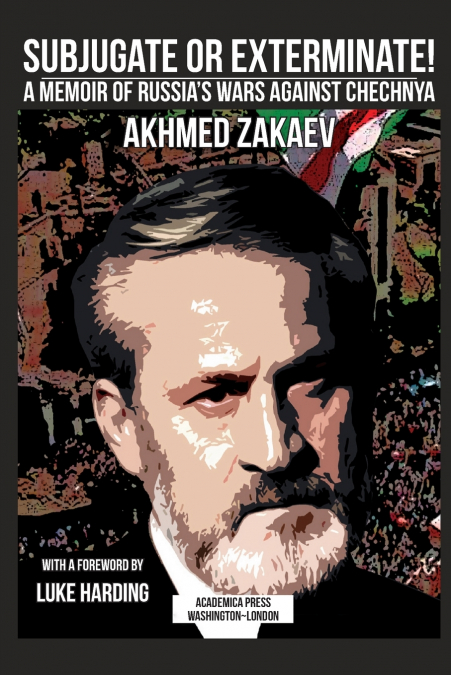
  • Subjugate or exterminate!
    Akhmed Zakaev / Arch Tait
    Foreword by Luke HardingAkhmed Zakaev is a symbol of the indomitable will of the Chechen nation. In this important memoir, he tells the story of the Chechen struggle as he experienced it, describing the conflict in human terms and providing a detailed documentary record of little known or badly understood events that will be of benefit to historians for generations to come.- Da...
    Disponible

    41,63 €