 Librería Samer Atenea
 Kálamo Books
 Librería Elías (Asturias)
 Librería Kolima (Madrid)
 Librería Proteo (Málaga)
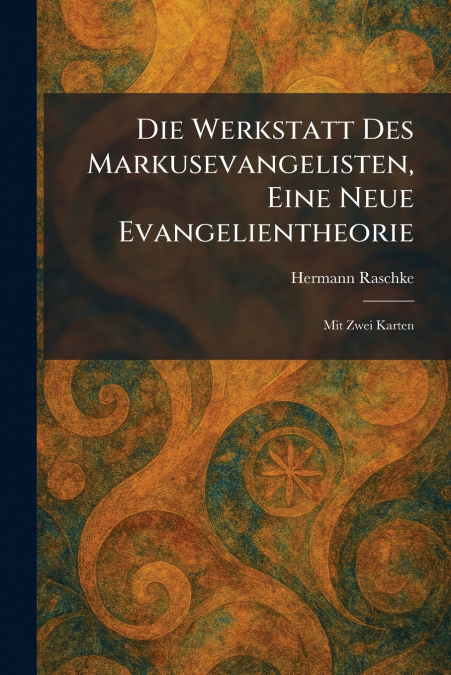
'Die Werkstatt Des Markusevangelisten' bietet eine tiefgreifende Untersuchung zur Entstehung des ältesten Evangeliums des Neuen Testaments. Hermann Raschke entwirft in diesem Werk eine neue Evangelientheorie, die die literarische Konstruktion und die theologische Intention hinter dem Text des Markus beleuchtet. Das Werk analysiert detailliert die Arbeitsweise des Evangelisten und versucht, die methodischen Schritte nachzuvollziehen, die zur Formung der christlichen Ãberlieferung führten. Durch eine kritische Betrachtung der Quellen und der inneren Struktur des Textes eröffnet Raschke neue Perspektiven auf die biblische Exegese und die historische Kritik des frühen 20. Jahrhunderts. Diese wissenschaftliche Abhandlung ist ein bedeutendes Dokument der neutestamentlichen Forschung und richtet sich an Theologen, Religionswissenschaftler und Historiker. Es verdeutlicht die Komplexität der frühchristlichen Literaturproduktion und bleibt ein wertvoller Beitrag zum Verständnis darüber, wie die Berichte über das Leben Jesu ihre kanonische Form erhielten.This work has been selected by scholars as being culturally important, and is part of the knowledge base of civilization as we know it. This work was reproduced from the original artifact, and remains as true to the original work as possible. Therefore, you may see the original copyright references, library stamps (as most of these works have been housed in our most important libraries around the world), and other notations in the work.This work is in the public domain in the United States of America, and possibly other nations. Within the United States, you may freely copy and distribute this work, as no entity (individual or corporate) has a copyright on the body of the work.As a reproduction of a historical artifact, this work may contain missing or blurred pages, poor pictures, errant marks, etc. Scholars believe, and we concur, that this work is important enough to be preserved, reproduced, and made generally available to the public. We appreciate your support of the preservation process, and thank you for being an important part of keeping this knowledge alive and relevant.