 Librería Samer Atenea
 Kálamo Books
 Librería Elías (Asturias)
 Librería Kolima (Madrid)
 Librería Proteo (Málaga)
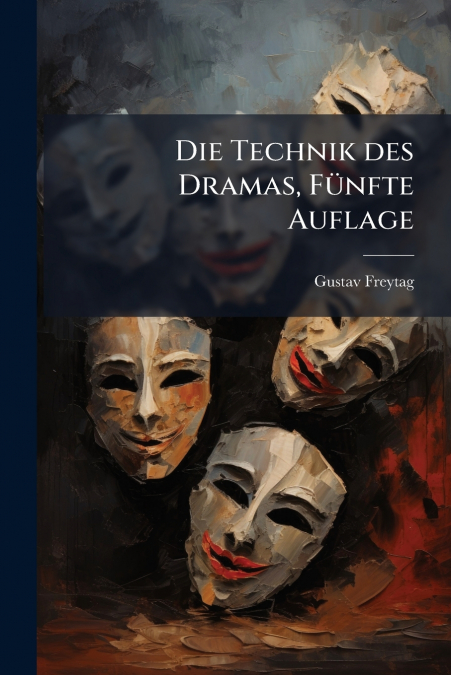
'Die Technik des Dramas' by Gustav Freytag, now in its fifth edition, remains a seminal work on dramatic theory and structure. Originally published in 1863, this influential study provides a comprehensive analysis of the elements that constitute effective dramatic writing. Freytag explores the essential components of tragedy and comedy, offering insights into plot development, character construction, and the overall architecture of a successful play. Drawing upon examples from classical and contemporary drama, Freytag formulates his famous pyramid structure, a model that outlines the typical progression of a play’s action. This work is invaluable for students, scholars, and practitioners of dramatic arts seeking a deeper understanding of the principles underpinning compelling storytelling on stage. This edition offers readers a chance to engage with the enduring wisdom of a master playwright and critic.This work has been selected by scholars as being culturally important, and is part of the knowledge base of civilization as we know it. This work was reproduced from the original artifact, and remains as true to the original work as possible. Therefore, you will see the original copyright references, library stamps (as most of these works have been housed in our most important libraries around the world), and other notations in the work.This work is in the public domain in the United States of America, and possibly other nations. Within the United States, you may freely copy and distribute this work, as no entity (individual or corporate) has a copyright on the body of the work.As a reproduction of a historical artifact, this work may contain missing or blurred pages, poor pictures, errant marks, etc. Scholars believe, and we concur, that this work is important enough to be preserved, reproduced, and made generally available to the public. We appreciate your support of the preservation process, and thank you for being an important part of keeping this knowledge alive and relevant.