

 Librería Samer Atenea
 Kálamo Books
 Librería Elías (Asturias)
 Librería Kolima (Madrid)
 Librería Proteo (Málaga)
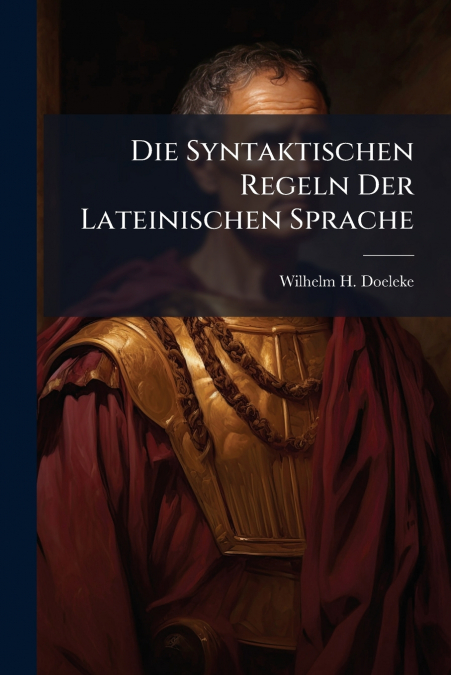
'Die Syntaktischen Regeln Der Lateinischen Sprache: Erster Cursus...' bietet eine umfassende Einführung in die lateinische Syntax. Geschrieben von Wilhelm H. Doeleke, richtet sich dieses Werk an Lernende, die ein fundiertes Verständnis der grammatikalischen Strukturen des Lateinischen erwerben möchten. Der Fokus liegt auf den syntaktischen Regeln, die detailliert und systematisch erklärt werden, um den Schülern ein solides Fundament für ihre weiteren Studien zu bieten. Das Buch ist als erster Kurs konzipiert und eignet sich sowohl für den Einsatz im Klassenzimmer als auch für das Selbststudium. Doelekes Ansatz zielt darauf ab, die oft als komplex wahrgenommene lateinische Sprache zugänglich und verständlich zu machen, indem er klare Erklärungen mit praktischen Beispielen kombiniert. Ein unverzichtbarer Leitfaden für alle, die sich ernsthaft mit der lateinischen Sprache auseinandersetzen wollen.This work has been selected by scholars as being culturally important, and is part of the knowledge base of civilization as we know it. This work was reproduced from the original artifact, and remains as true to the original work as possible. Therefore, you will see the original copyright references, library stamps (as most of these works have been housed in our most important libraries around the world), and other notations in the work.This work is in the public domain in the United States of America, and possibly other nations. Within the United States, you may freely copy and distribute this work, as no entity (individual or corporate) has a copyright on the body of the work.As a reproduction of a historical artifact, this work may contain missing or blurred pages, poor pictures, errant marks, etc. Scholars believe, and we concur, that this work is important enough to be preserved, reproduced, and made generally available to the public. We appreciate your support of the preservation process, and thank you for being an important part of keeping this knowledge alive and relevant.





