
Die Stalinisierung der SED

Die Stalinisierung der SED

Harold Hurwitz

83,65 €
IVA incluido
Disponible
Editorial:
Springer Nature B.V.
Año de edición:
1997
Materia
Partidos políticos
ISBN:
9783531127729
83,65 €
IVA incluido
Disponible

Selecciona una librería:

  • Librería Samer Atenea
  • Librería Aciertas (Toledo)
  • Kálamo Books
  • Librería Perelló (Valencia)
  • Librería Elías (Asturias)
  • Donde los libros
  • Librería Kolima (Madrid)
  • Librería Proteo (Málaga)

Die Stalinisierung der SED begann nicht, wie oft angenommen, im Jahre 1948 als Reaktion auf den Kalten Krieg. Freiräume zum relativ offenen Diskurs in den paritätisch besetzten Führungsgremien wurden in einem komplexen Vier-Phasen-Prozeß zuerst eingeschränkt, dann schrittweise eliminiert. Die Parteiführung verließ sich immer mehr auf zentral gesteuerte Disziplinierungs- und Gleichschaltungsmaßnahmen, nachdem ab Herbst 1946 zunehmend erkennbar wurde, daß die SED als 'Russenpartei' in der Sowjetzone freie Wahlen nicht gewinnen würde und sich die 'Einheitspartei' mit andauernden Fraktionskämpfen, Resignation und Passivität an der Basis in einer Krise befand. Der 'internationale Klassenkampf' beschleunigte den Stalinisierungsprozeß. Neun Monate vor der erklärten Wandlung zur 'Partei neuen Typs' war der Weg dahin organisatorisch und ideologisch bereits beschritten. All das geschah nicht ohne Stunden der Wahrheit und Momente der Abwehr seitens derer aus beiden Lagern, die sich einen demokratischen Neubeginn mit der SED erhofft hatten. '(...) Mit seinem Buch leistet Hurwitz selbst einen wichtigen Beitrag zur Aufarbeitung, weil er darin mit wissenschaftlich differenzierter Sicht die Anfänge und Veränderungen der SED erhellt.' Die Zeit, 25.07.1997


Artículos relacionados

  • Gender Identities in Italy in the First Millennium BC
    This book includes papers from a conference held at the Institute of Classical Studies, London, in June 2006.                         ...
    Disponible

    77,26 €

  • Crossing the catwalk
    Laura Cherrie Beaney
    In the 1930s, Freud observed that 'when you meet a human being, the first distinction you make is ’male or female?’ and you are accustomed to make the distinction with unhesitating certainty.' As Freud suggests, society is divisible by gender. We are taken to be either 'male' or 'female.' This notion seems to be fixed within our culture and is often unquestioned. In this dynami...
  • Crossing the catwalk
    Laura Cherrie Beaney
    In the 1930s, Freud observed that 'when you meet a human being, the first distinction you make is ’male or female?’ and you are accustomed to make the distinction with unhesitating certainty.' As Freud suggests, society is divisible by gender. We are taken to be either 'male' or 'female.' This notion seems to be fixed within our culture and is often unquestioned. In this dynami...
    Disponible

    51,44 €

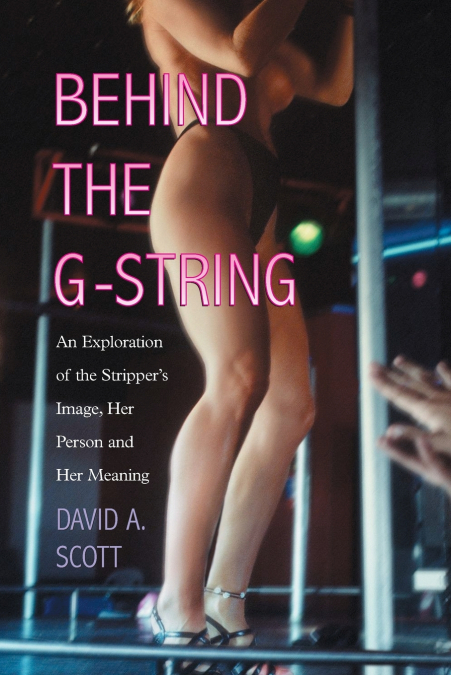
  • Behind the G-String
    David A. Scott
    In recent years, the number of strip clubs in the United States has increased dramatically. Dressed up with terms such as 'gentlemen’s clubs,' they often feature valet parking, limousines, executive dining rooms, extravagant menus-and, of course, topless or nude women dancing on stage. Stripping has become a big business, with over 3.5 million people, primarily men, attendin...
    Disponible

    42,71 €

  • A Genealogy of the Wives of the American Presidents and Their First Two Generations of Descent
    Craig Hart
    From Martha Washington to Laura Bush, the wife of each U.S. president has found her place in history, often setting trends and doing important work for the nation. This reference work traces the lineage of all presidents’ wives, arranged alphabetically from Abigail Adams to Jane Wyman. Genealogy reveals that some of the women are connected to one another through common anc...
    Disponible

    71,73 €

  • Stereotypes of Women in Power
    Barbara Garlick / Suzanne Dixon
    ...