 Librería Samer Atenea
 Kálamo Books
 Librería Elías (Asturias)
 Librería Kolima (Madrid)
 Librería Proteo (Málaga)
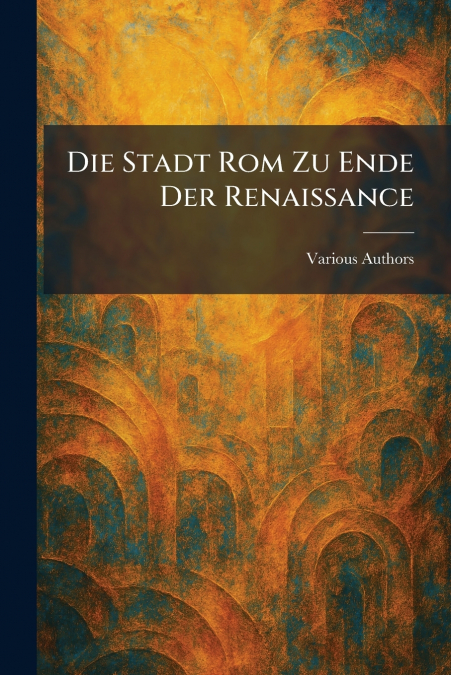
'Die Stadt Rom Zu Ende Der Renaissance' bietet eine faszinierende Untersuchung der Ewigen Stadt an einem entscheidenden Wendepunkt ihrer Geschichte. Das Werk beleuchtet die architektonische, künstlerische und gesellschaftliche Transformation Roms während der Spätrenaissance, einer Ãra, in der monumentale Bauprojekte und kulturelle Erneuerungen das Stadtbild für Jahrhunderte prägten.Durch detaillierte Analysen der städtebaulichen Entwicklungen und der Einflüsse bedeutender Persönlichkeiten dieser Zeit wird ein lebendiges Bild einer Metropole im Wandel gezeichnet. Das Buch widmet sich nicht nur den prächtigen Palästen und Kirchen, sondern auch den sozialen Strukturen und dem spirituellen Zentrum der Christenheit. Für Historiker, Kunstliebhaber und Architekturinteressierte stellt diese Sammlung wertvolle Einblicke in die Verbindung von Macht, Religion und Ãsthetik dar. 'Die Stadt Rom Zu Ende Der Renaissance' ist ein essentielles Dokument für das Verständnis der kulturellen Identität Italiens und der europäischen Kunstgeschichte.This work has been selected by scholars as being culturally important, and is part of the knowledge base of civilization as we know it. This work was reproduced from the original artifact, and remains as true to the original work as possible. Therefore, you may see the original copyright references, library stamps (as most of these works have been housed in our most important libraries around the world), and other notations in the work.This work is in the public domain in the United States of America, and possibly other nations. Within the United States, you may freely copy and distribute this work, as no entity (individual or corporate) has a copyright on the body of the work.As a reproduction of a historical artifact, this work may contain missing or blurred pages, poor pictures, errant marks, etc. Scholars believe, and we concur, that this work is important enough to be preserved, reproduced, and made generally available to the public. We appreciate your support of the preservation process, and thank you for being an important part of keeping this knowledge alive and relevant.