
Inicio > Derecho > Derecho internacional > Die seewärtige Grenze des Festlandsockels
Die seewärtige Grenze des Festlandsockels

Die seewärtige Grenze des Festlandsockels

U.-D. Klemm

84,61 €
IVA incluido
Disponible
Editorial:
Springer Nature B.V.
Año de edición:
2012
Materia
Derecho internacional
ISBN:
9783642454912
84,61 €
IVA incluido
Disponible

Selecciona una librería:

  • Librería Samer Atenea
  • Librería Aciertas (Toledo)
  • Kálamo Books
  • Librería Perelló (Valencia)
  • Librería Elías (Asturias)
  • Donde los libros
  • Librería Kolima (Madrid)
  • Librería Proteo (Málaga)

Im inner space 1 tauchen ebenso wie im Weltraum, dem outer space, schwie­ rige Abgrenzungsprobleme auf. Fast so umstritten wie die seewärtige Fest­ landsockelgrenze ist die Grenze zwischen nationalem Luftraum und dem Weltraum 2. Während aber hier die Probleme aus praktischen Gründen weni­ ger dringend erscheinen, wird die seewärtige Festlandsockelbegrenzung von den verschiedensten Seiten als Angelpunkt einer zukünftigen Seerechtsord­ nung bezeichnet. Die leidige Grenzfrage droht großartige wie nüchtern bescheidene Vorstellungen von der künftigen rechtlichen Ordnung der Meere in den Bereich des Spekulativen zu rücken. Die mit Enthusiasmus eingeleite­ ten Bemühungen im Rahmen der UN zur Internationalisierung des Meeres­ bodens hängen ohne Lösung dieser Frage in der Luft. Die von allen Staaten geteilte Auffassung, daß es jenseits der nationalen Unterwassergebiete Be­ reiche gäbe, die das 'common heritage of mankind' seien, erscheint so lange belanglos, wie nicht geklärt ist, wo dieser Bereich beginnt. Die Entwicklung im Rahmen des UN-Meeresbodenausschusses schien eine Lösung anzudeuten: das Aufgehen des Festlandsockels im Konzept der 200 sm-Wirtschaftszone. Diese Zone, die in jeder ihrer vorgeschlagenen Aus­ gestaltungen weite Teile des Meeresbodens und der Wassersäule unter die Kontrolle der Küstenstaaten stellt, hätte der Preis für die fehlende Be­ stimmtheit der nationalen seewärtigen Grenze sein können. Es zeigte sich jedoch schon vor der 3. UN-Seerechtskonferenz, daß Staaten, die meinten, durch die FSK weitergehende Rechte erworben zu haben, nicht bereit sind, darauf zu verzichten.
Artículos relacionados

  • Comparative regulation, economic analysis, and applications of private equity in the united states and european union
    Irini Liakopoulou
    The present work examines the economics and legal doctrine of private equity. After a consideration of private equity’s origins, the book will explore the evolution of private equity in the United States and Europe. The reference economic model then will be reconstructed, with particular attention to financial flows to and from private equity firms and funds. This reconstructio...
  • Complicity in International Law
    Dimitris Liakopoulous
    Complicity in International Law aims to analyze questions arising from a state’s complicity in conflict with another state or an international organization. On the basis of international legal provisions, a state that assists the illicit fact of another state or an international organization in turn commits an offense if it is aware of the main fact and is bound by the same obl...
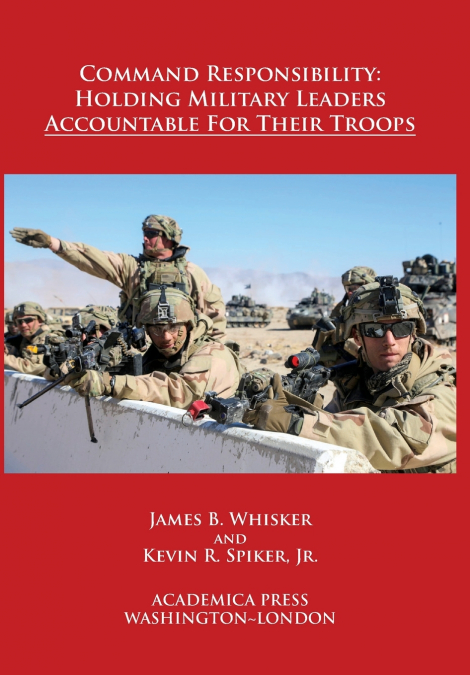
  • Command responsibility
    James B Whisker / Kevin R Spiker
    Command responsibility, or executive accountability, assumes that leaders are responsible for the actions of their subordinates. If subordinates misbehave, violate basic moral laws, transgress international law, or thwart international standards of behavior, their leader may be called before to justice. Standards that set the boundaries of human action have been evolving for ma...
  • International Organizations and Reparations
    Dimitris Liakopoulos
    In the first part of this book, noted legal scholar Dimtris Liakopoulos deals with reconstructing the legal regulatory framework governing human rights violations in the activities of organizations. After identifying rules that are generally applicable to organizations’ offenses and govern the profile of reparations, this study assesses primary rules that guarantee the right to...
  • International Organizations and Legal Sanctions Against Governments
    Dimitris Liakopoulos
    This book examines the relationship between governments and international organizations under international law. After surveying the policing powers of international organizations under international law, it illustrates some normative aspects of law that distinguish regulation from enforcement via study of recent legal cases before international judicial bodies. According to Di...
  • The EU Foreign Subsidies Regulation
    Andreas Reindl / Isabelle Van Damme
    'The EU Foreign Subsidies Regulation' is a pioneering manual authored by legal experts Andreas Reindl and Isabelle Van Damme. This essential guide, the first of its kind, is tailored for legal practitioners, offering a thorough exploration of the tools and mechanisms embedded within this novel European regulatory framework. The authors meticulously dissect the EU Foreign Subsid...