Grun James / Werfel Collection / Hans Erich 1869-1949 Pfitzner
 Librería Samer Atenea
 Kálamo Books
 Librería Elías (Asturias)
 Librería Kolima (Madrid)
 Librería Proteo (Málaga)
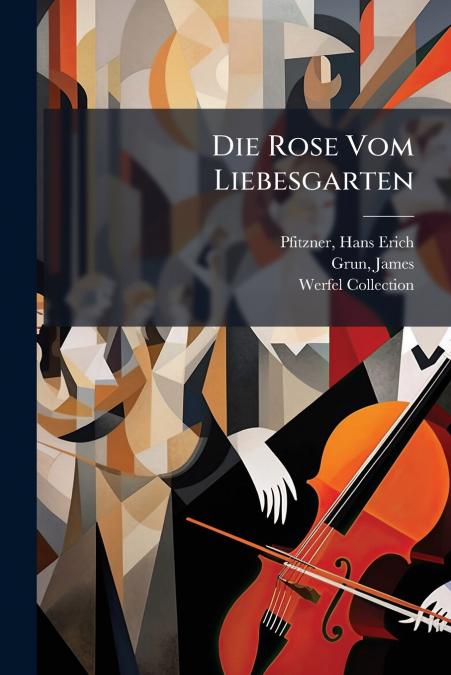
Die Rose vom Liebesgarten (The Rose from the Love Garden) is an early opera in two acts with a prelude and postlude by the German composer Hans Pfitzner. First performed in 1901, the opera blends elements of Romanticism and early modernism. This edition preserves the original German libretto, offering readers and scholars an opportunity to delve into Pfitzner’s evocative score and the dramatic narrative crafted by James Grun. The opera tells a tale of love, sacrifice, and the search for happiness, set against a backdrop of mythical and symbolic imagery. Pfitzner’s lush orchestration and Grun’s lyrical text create a powerful and moving experience. This work remains a significant example of early 20th-century German opera, showcasing Pfitzner’s distinctive musical voice and his contribution to the operatic tradition.This work has been selected by scholars as being culturally important, and is part of the knowledge base of civilization as we know it. This work was reproduced from the original artifact, and remains as true to the original work as possible. Therefore, you will see the original copyright references, library stamps (as most of these works have been housed in our most important libraries around the world), and other notations in the work.This work is in the public domain in the United States of America, and possibly other nations. Within the United States, you may freely copy and distribute this work, as no entity (individual or corporate) has a copyright on the body of the work.As a reproduction of a historical artifact, this work may contain missing or blurred pages, poor pictures, errant marks, etc. Scholars believe, and we concur, that this work is important enough to be preserved, reproduced, and made generally available to the public. We appreciate your support of the preservation process, and thank you for being an important part of keeping this knowledge alive and relevant.