 Librería Samer Atenea
 Kálamo Books
 Librería Elías (Asturias)
 Librería Kolima (Madrid)
 Librería Proteo (Málaga)
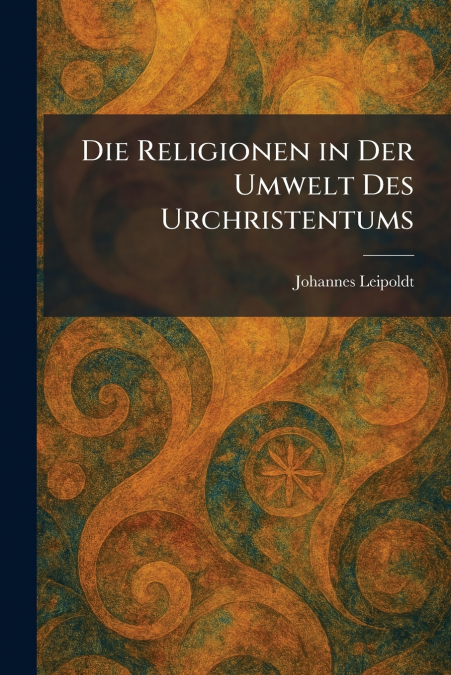
'Die Religionen in Der Umwelt Des Urchristentums' bietet eine tiefgreifende Untersuchung der religiösen und kulturellen Strömungen, die die Entstehung und frühe Entwicklung des Christentums prägten. Johannes Leipoldt analysiert in diesem wissenschaftlichen Standardwerk die vielfältigen Einflüsse der antiken Welt, von den Mysterienkulten und der Gnosis bis hin zu den philosophischen Schulen des Hellenismus und den Traditionen des römischen Reiches.Das Werk beleuchtet detailliert, wie das frühe Christentum in einem komplexen Geflecht aus Konkurrenz, Abgrenzung und Austausch mit anderen Glaubenssystemen seiner Zeit stand. Durch die fundierte Betrachtung historischer Quellen vermittelt das Buch ein umfassendes Verständnis der religionsgeschichtlichen Hintergründe, vor denen sich die christliche Lehre entfaltete. Es ist eine essentielle Ressource für Studierende der Theologie und Religionswissenschaft sowie für alle Leser, die sich für die spirituelle und kulturelle Dynamik der Spätantike interessieren. Die sachliche Darstellung macht deutlich, dass das Urchristentum ein integraler Bestandteil der vielschichtigen religiösen Landschaft des Mittelmeerraums war.This work has been selected by scholars as being culturally important, and is part of the knowledge base of civilization as we know it. This work was reproduced from the original artifact, and remains as true to the original work as possible. Therefore, you may see the original copyright references, library stamps (as most of these works have been housed in our most important libraries around the world), and other notations in the work.This work is in the public domain in the United States of America, and possibly other nations. Within the United States, you may freely copy and distribute this work, as no entity (individual or corporate) has a copyright on the body of the work.As a reproduction of a historical artifact, this work may contain missing or blurred pages, poor pictures, errant marks, etc. Scholars believe, and we concur, that this work is important enough to be preserved, reproduced, and made generally available to the public. We appreciate your support of the preservation process, and thank you for being an important part of keeping this knowledge alive and relevant.