 Librería Samer Atenea
 Kálamo Books
 Librería Elías (Asturias)
 Librería Kolima (Madrid)
 Librería Proteo (Málaga)
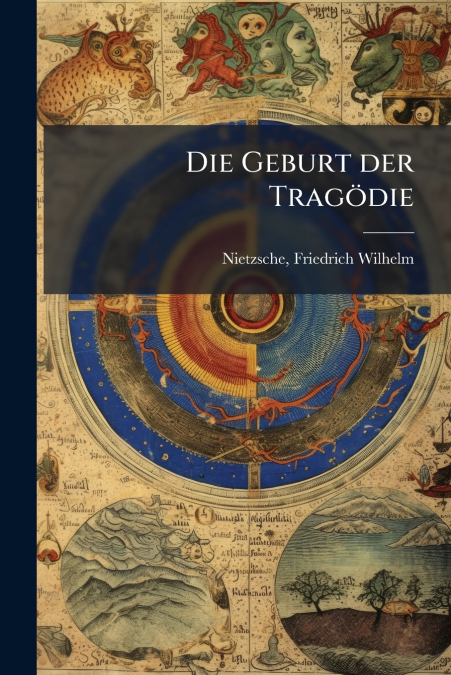
Die Geburt der Tragödie (The Birth of Tragedy), subtitled Oder, Griechenthum und Pessimismus (Or, Hellenism and Pessimism), is an 1872 work of dramatic theory by Friedrich Nietzsche. It argues that Greek tragedy is born of the fusion of Apollonian and Dionysian elements. Nietzsche discusses the evolution of Greek tragedy from its origins in Dionysian festivals to its later forms, shaped by figures such as Aeschylus and Sophocles. He explores the role of music, myth, and the chorus in tragedy, and analyzes the contrast between the Apollonian values of reason and order and the Dionysian impulses of ecstasy and chaos. He critiques the influence of Socratic rationalism on the decline of tragedy, arguing that it suppressed the vital, irrational forces that gave rise to its power. This work explores themes of aesthetics, the nature of art, and the tension between opposing forces in human experience. Die Geburt der Tragödie remains a seminal work in Nietzsche’s oeuvre, offering insights into his philosophical and artistic vision.This work has been selected by scholars as being culturally important, and is part of the knowledge base of civilization as we know it. This work was reproduced from the original artifact, and remains as true to the original work as possible. Therefore, you will see the original copyright references, library stamps (as most of these works have been housed in our most important libraries around the world), and other notations in the work.This work is in the public domain in the United States of America, and possibly other nations. Within the United States, you may freely copy and distribute this work, as no entity (individual or corporate) has a copyright on the body of the work.As a reproduction of a historical artifact, this work may contain missing or blurred pages, poor pictures, errant marks, etc. Scholars believe, and we concur, that this work is important enough to be preserved, reproduced, and made generally available to the public. We appreciate your support of the preservation process, and thank you for being an important part of keeping this knowledge alive and relevant.