Christoph Martin Wieland / Johann Karl August Musäus
 Librería Samer Atenea
 Kálamo Books
 Librería Elías (Asturias)
 Librería Kolima (Madrid)
 Librería Proteo (Málaga)
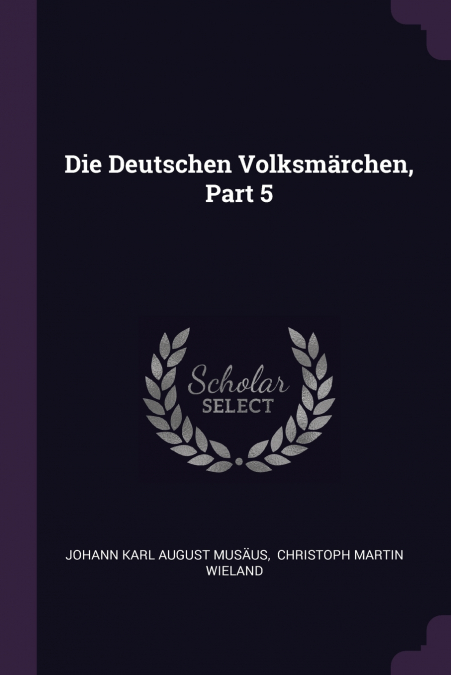
'Die Deutschen Volksmärchen, Part 4' is a collection of German folk tales compiled by Johann Karl August Musäus and Christoph Martin Wieland. This volume presents a selection of traditional stories, reflecting the rich cultural heritage and imaginative storytelling of the German people. These tales offer a glimpse into the beliefs, values, and everyday life of past generations. The collection showcases a variety of narrative styles and themes, from moral lessons and cautionary tales to stories of magic, adventure, and romance. Readers will encounter memorable characters, fantastical creatures, and timeless motifs that have resonated through centuries. This work is of interest to scholars of folklore, literature, and cultural history, as well as general readers who enjoy fairy tales and folk legends.This work has been selected by scholars as being culturally important, and is part of the knowledge base of civilization as we know it. This work was reproduced from the original artifact, and remains as true to the original work as possible. Therefore, you will see the original copyright references, library stamps (as most of these works have been housed in our most important libraries around the world), and other notations in the work.This work is in the public domain in the United States of America, and possibly other nations. Within the United States, you may freely copy and distribute this work, as no entity (individual or corporate) has a copyright on the body of the work.As a reproduction of a historical artifact, this work may contain missing or blurred pages, poor pictures, errant marks, etc. Scholars believe, and we concur, that this work is important enough to be preserved, reproduced, and made generally available to the public. We appreciate your support of the preservation process, and thank you for being an important part of keeping this knowledge alive and relevant.