 Librería Samer Atenea
 Kálamo Books
 Librería Elías (Asturias)
 Librería Kolima (Madrid)
 Librería Proteo (Málaga)
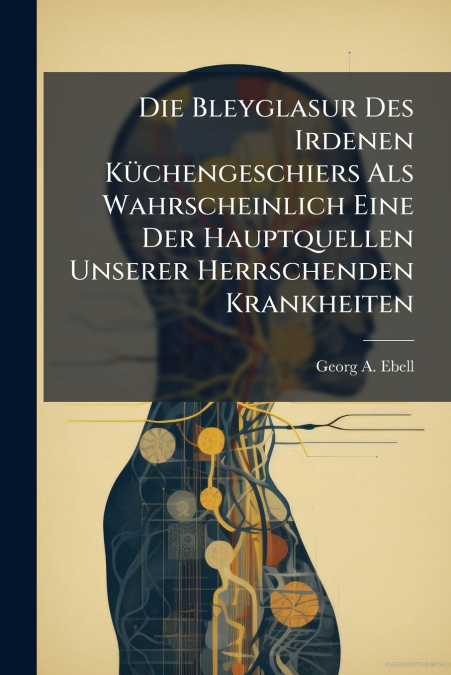
'Die Bleyglasur Des Irdenen Küchengeschiers Als Wahrscheinlich Eine Der Hauptquellen Unserer Herrschenden Krankheiten' (The Lead Glaze of Earthen Kitchenware as Probably One of the Main Sources of Our Prevailing Diseases) explores the dangers of lead glaze in earthenware used for cooking. Authored by Georg A. Ebell, this work delves into the potential health risks associated with the leaching of lead from glazed kitchenware into food. It investigates the historical context of this issue, examining how such glazes may have contributed to widespread illnesses. The book offers insights into the intersection of culinary practices, material science, and public health, providing a valuable resource for those interested in the history of medicine and food safety. This title remains relevant for its exploration of the unintended consequences of technological advancements and the importance of understanding the materials we use in our daily lives.This work has been selected by scholars as being culturally important, and is part of the knowledge base of civilization as we know it. This work was reproduced from the original artifact, and remains as true to the original work as possible. Therefore, you will see the original copyright references, library stamps (as most of these works have been housed in our most important libraries around the world), and other notations in the work.This work is in the public domain in the United States of America, and possibly other nations. Within the United States, you may freely copy and distribute this work, as no entity (individual or corporate) has a copyright on the body of the work.As a reproduction of a historical artifact, this work may contain missing or blurred pages, poor pictures, errant marks, etc. Scholars believe, and we concur, that this work is important enough to be preserved, reproduced, and made generally available to the public. We appreciate your support of the preservation process, and thank you for being an important part of keeping this knowledge alive and relevant.