 Librería Samer Atenea
 Kálamo Books
 Librería Elías (Asturias)
 Librería Kolima (Madrid)
 Librería Proteo (Málaga)
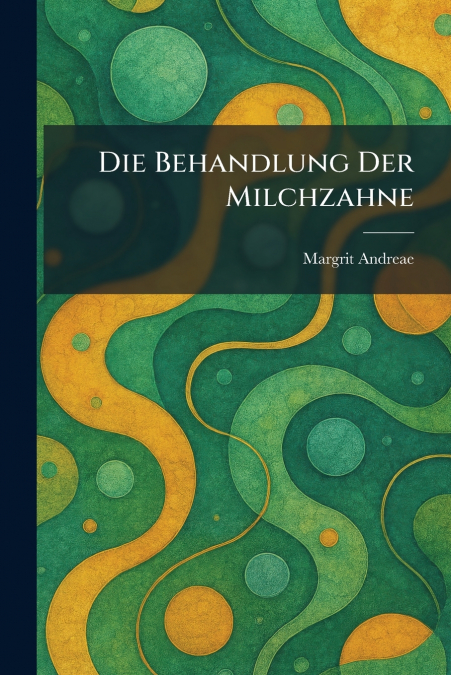
'Die Behandlung Der Milchzahne' von Margrit Andreae ist eine fundierte wissenschaftliche Untersuchung zur pädiatrischen Zahnmedizin aus dem frühen 20. Jahrhundert. Das Werk widmet sich der spezialisierten Pflege und medizinischen Versorgung von Milchzähnen und betont deren essenzielle Rolle für die allgemeine körperliche Entwicklung und die spätere Zahngesundheit von Kindern.In dieser Abhandlung werden verschiedene Behandlungsmethoden, die Anatomie des kindlichen Kiefers sowie präventive MaÃnahmen gegen Karies und Entzündungen detailliert beschrieben. Die Autorin kombiniert klinische Beobachtungen mit praxisnahen Empfehlungen für die zahnärztliche Praxis jener Zeit. Dabei wird deutlich, wie früh bereits die Bedeutung der dentalen Prophylaxe im Kindesalter erkannt und systematisch aufgearbeitet wurde.Dieses Werk stellt ein bedeutendes historisches Dokument der Zahnheilkunde dar und bietet wertvolle Einblicke in die Entwicklung medizinischer Standards in der Weimarer Republik. Es ist eine unverzichtbare Quelle für Medizinhistoriker und Fachleute, die sich für die Ursprünge der modernen Kinderzahnheilkunde und die historische Entwicklung der Mundhygiene interessieren.This work has been selected by scholars as being culturally important, and is part of the knowledge base of civilization as we know it. This work was reproduced from the original artifact, and remains as true to the original work as possible. Therefore, you may see the original copyright references, library stamps (as most of these works have been housed in our most important libraries around the world), and other notations in the work.This work is in the public domain in the United States of America, and possibly other nations. Within the United States, you may freely copy and distribute this work, as no entity (individual or corporate) has a copyright on the body of the work.As a reproduction of a historical artifact, this work may contain missing or blurred pages, poor pictures, errant marks, etc. Scholars believe, and we concur, that this work is important enough to be preserved, reproduced, and made generally available to the public. We appreciate your support of the preservation process, and thank you for being an important part of keeping this knowledge alive and relevant.