
Inicio > Lenguas > Lingüistica > Dialogue as a Means of Collective Communication
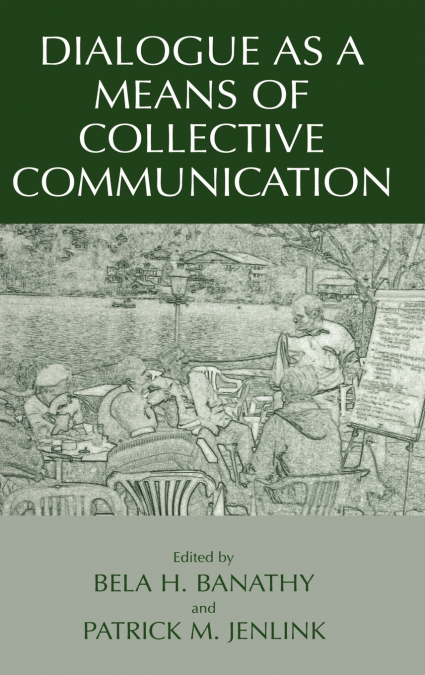
Dialogue as a Means of Collective Communication

Dialogue as a Means of Collective Communication


131,76 €
IVA incluido
Consulta disponibilidad
Editorial:
Springer Nature B.V.
Año de edición:
2004
Materia
Lingüistica
ISBN:
9780306486890

Selecciona una librería:

  • Librería Samer Atenea
  • Librería Aciertas (Toledo)
  • Kálamo Books
  • Librería Perelló (Valencia)
  • Librería Elías (Asturias)
  • Donde los libros
  • Librería Kolima (Madrid)
  • Librería Proteo (Málaga)

Dialogue as a Means of Collective Communication offers a cross-disciplinary approach to examining dialogue as a communicative medium. Presented in five parts, the book takes the reader on a journey of exploring the power and potential of dialogue as a means for communication. In particular, this volume comes at a time when the global society’s attention has been directed to creating more productive conversations in the name of world peace and harmony. It provides a unique new work on dialogue that brings the reader into a 'dialogue with dialogue', offering an opportunity to understand the communicative potential of dialogue. In the book, readers are introduced to five sections: Section I examines the historical and cultural perspectives of conversation. This examination helps to create a foundation for a deeper study of the emergent and salient aspects of conversation as it relates to cultural creativity and human systems design. Sections II offers the reader an examination of dialogue through different philosophical and theoretical perspectives as well as methodological ideas related to conversation. Section III explores different modalities of conversation and the application of design conversation within and across various types of design settings and human experiences. Section IV examines the field of practice as related to use of different forms of conversation. Here various authors will share their different approaches to conversation and their reflections and insights in using conversation in a variety of settings. Concluding the book, Section V reflectively examines the authors’ contributions to the book and provides the reader with a focus on the future.

Artículos relacionados

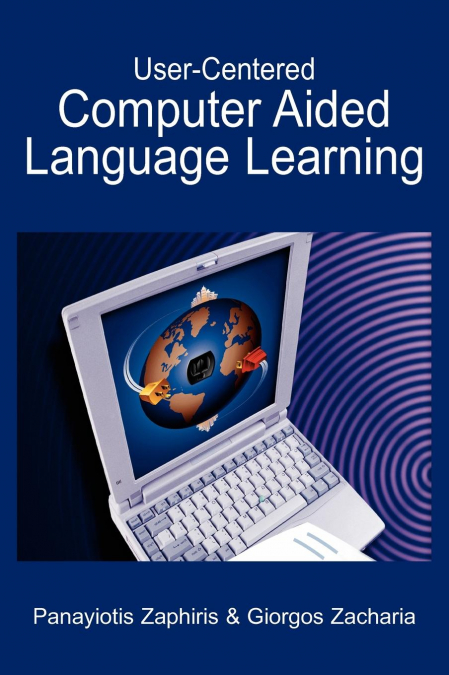
  • User-Centered Computer Aided Language Learning
    Giorgos Zacharia / Panayiotis Zaphiris
    ...
  • Deep Learning for Natural Language Processing
    Marco Antonio Valenzuela-Escárcega / Mihai Surdeanu
    ...
    Disponible

    47,60 €

  • Deep Learning for Natural Language Processing
    Marco Antonio Valenzuela-Escárcega / Mihai Surdeanu
    ...
  • Lecciones sobre espinosa medrano
    Luis Jaime Cisneros Vizquerra
    La obra de Juan de Espinosa Medrano, apodado en su tiempo «El Lunarejo» (c. 1629-1688), fue uno de los mayores focos de interés académico de Luis Jaime Cisneros (1921-2011). En 1980 aparecieron sus primeros trabajos dedicados a estudiar los textos capitales de Espinosa Medrano (el Apologético en favor de don Luis de Góngora, la Panegírica declamación por la protección de las ci...
    Disponible

    17,63 €

  • Lyre Book
    Matthew Kilbane
    Redefines modern lyric poetry at the intersection of literary and media studies.In The Lyre Book, Matthew Kilbane urges literary scholars to consider lyric not as a genre or a reading practice but as a media condition: the generative tension between writing and sound. In addition to clarifying issues central to the study of modern poetry--including its proximity to popular song...
    Disponible

    50,84 €

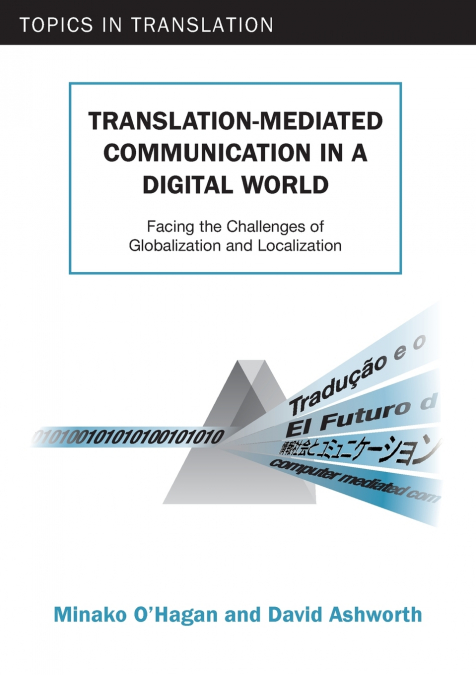
  • Translation-mediated Communication in a Digital World
    David Ashworth / Minako O’Hagan
    The Internet is accelerating globalization by exposing organizations and individuals to global audiences. This in turn is driving teletranslation and teleinterpretation, new types of multilingual support, which are functional in digital communications environments. The book describes teletranslation and teleinterpretation by exploring a number of key emerging contexts for langu...
    Disponible

    45,19 €