Dhatupatha Sanskrit Roots Indexes

Dhatupatha Sanskrit Roots Indexes

Ashwini Kumar Aggarwal / Sadhvi Hemswaroopa

28,46 €
IVA incluido
Consulta disponibilidad
Editorial:
Devotees of Sri Sri Ravi Shankar Ashram
Año de edición:
2024
Materia
Lingüística histórica y comparada
ISBN:
9789348012968

Selecciona una librería:

  • Librería Samer Atenea
  • Kálamo Books
  • Librería Elías (Asturias)
  • Librería Kolima (Madrid)
  • Librería Proteo (Málaga)

Construction of Verbs by Conjugation using Roots from the Dhatupatha is one of the most complex and involved processes in Sanskrit Grammar. It has been coded by the great grammarian Panini in an in a beautifully amazing way through the core texts, viz. The Dathupatha of Panini, The Ashtadhyayi of Panini and The Maheswar Sutras.  This book hopes to lay the coding methodology threadbare in a lucid manner for avid learners of the language, including Sanskrit scholars and Vyakarana pundits.Root + Vikarana Affix + Ting Affix = Verb, whereRoots have two major attributes, i. P A U attribute ii. सेट् अनिट् वेट् attribute.Vikarana affixes are of two types, i. Gana Vikarana Affix and ii. Vikarana Affix.A Vikarana Affix may be Sarvadhatuka or Ardhadhatuka. This affects Guna/Vriddhi.Ting affixes are of two types, i. Parasmaipada Ting Affix and ii. Atmanepada Ting Affix.Further, a Parasmaipada Ting Affix may be Sarvadhatuka or Ardhadhatuka. Similarly, an Atmanepada Ting Affix may be Sarvadhatuka or Ardhadhatuka. This affects Guna/Vriddhi.A Sarvadhatuka Ting Affix is of two types, पित् or अपित् that also affects Guna/Vriddhi.Notes:Any affix whether Vikarana or Ting is further of two types, i. Consonant beginning or ii. Vowel beginning.Additionally, Affix modifiers may also be employed.Similarly, Root modifiers may also be employed.Each Root may have a Tag Letter, that is simply a marker to serve a specific purpose and then gets dropped.Each Affix may have a Tag Letter, that is simply a marker to serve a specific purpose and then gets dropped.Dropping or Elision of certain parts of Root or Affix in certain cases.Of utmost importance is understanding that the Tenses and Moods in Sanskrit Grammar (Present Tense, Past Tense, etc.) are coded in terminations known as Ting Affixes. These Ting Affixes are of two basic types: Parasmaipada and Atmanepada, and these will only join a Root having the same attribute of Parasmaipada or Atmanepada.The Ubhayepada Ting Affixes are simply a combination of the two, so Roots that are Ubhayepada will invariably be grouped under Parasmaipada and Atmanepada both.Major Concepts include:The Ten Tenses and Moods that reflect the Verb usage.Grouping of Roots in ten Ganas for Sarvadhatuka Ting Affixes.Tag Letters and their interpretation.Guna/Vriddhi of Vowels (whether of a Root or an Affix).Use of इट् augment.Correct use of Sarvadhatuka/Ardhadhatuka Affixes.This books has been designed to look at all these grammatical concepts from the Root-point-of-View. It contains exhaustive lists of Roots that behave in a specific manner during Verb construction. Indexes and collections are based on the Dhatu Serial Number, which is unique and easily referenced in standard Dhatupathas, including Siddhanta Kaumudi. Hence locating any Root is a snap.So this book will primarily be used as a supplemental text for any standard text on Sanskrit Grammar. On its own also it can prove to be immensely useful if one wishes to master the Dhatupatha of Panini.
Artículos relacionados

  • The Language of Separation - Nationalism’s Impact on Linguistic Diversity
    PS Publishing
    'The Language of Separation' delves into the intricate relationship between nationalism and linguistic diversity. Exploring the impact of nationalist ideologies on language policies and practices, this book examines how notions of nationhood influence linguistic identity and representation. Through compelling analysis , it sheds light on the complexities of language politics an...
    Disponible

    14,22 €

  • Syntactic Change in Late Modern English
    Erik Smitterberg
    ...
    Disponible

    40,57 €

  • Third Factors in Language Variation and Change
    Elly Van Gelderen
    ...
    Disponible

    37,04 €

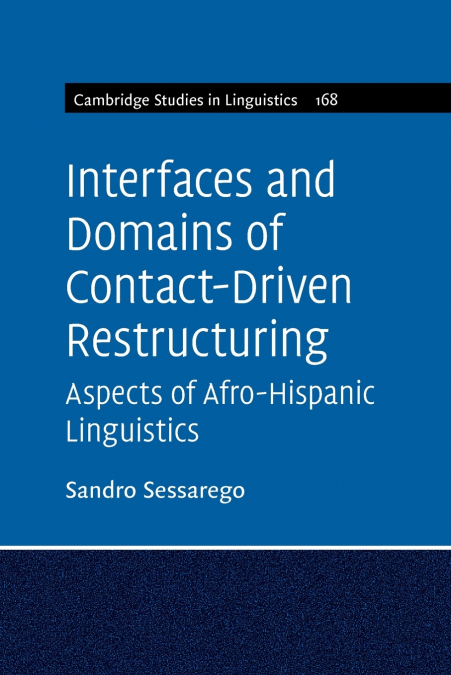
  • Interfaces and Domains of Contact-Driven Restructuring
    Sandro Sessarego
    ...
    Disponible

    37,27 €

  • New Horizons in Prescriptivism Research
    This book investigates the connections between evaluative judgements on language and the larger social, cultural, and political issues that shed light on the practice of prescriptivism. The chapters cover three main areas: language, which represents the traditional roots of the study of linguistic norms in authoritative (historical) manuals and judgemental attitudes to language...
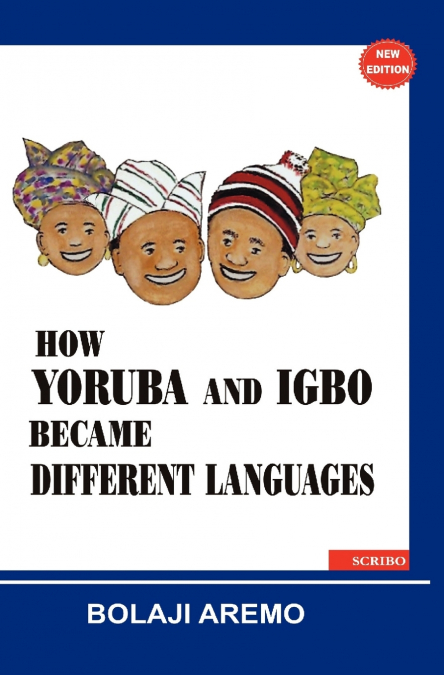
  • How Yoruba and Igbo Became Different Languages
    Bolaji Aremo
    The main objective of this study is to identify examples of genetically related Igbo and Yoruba words that might serve as further evidence in support of some linguists’ claim that the two languages developed from the same parent language. The author is a retired head of the Department of English at Obafemi Awolowo University, Nigeria. ...
    Disponible

    53,75 €

Otros libros del autor

  • Panini Grammar
    Ashwini Kumar Aggarwal / Sadhvi Hemswaroopa
    Any word in a sentence that has a direct bearing on the verb is termed as कारकः kāraka. Literally 'karaka' means the one that impels action. This is directly associated with the various cases विभक्तिः that govern the sense of nouns in a sentence. A noun in a sentence can behave as the Subject, Object, Instrument, etc. This behavior of the Noun is termed as कारकः in Sanskrit.Sin...
    Disponible

    15,14 €

  • Panini Grammar
    Ashwini Kumar Aggarwal / Sadhvi Hemswaroopa
    Reduplication is a broad term, often specialized in linguistics, referring to repeating a word or syllable, sometimes with changes, for emphasis or grammatical function.• Meaning: Repeating a word or part of a word, often with slight phonetic changes, for grammatical or semantic purposes.o In Sanskrit Linguistics: In Sanskrit Verbs, repeating a portion of the Root for the Past ...
  • Panini Grammar
    Ashwini Kumar Aggarwal / Sadhvi Hemswaroopa
    णत्व Ṇatva Rule, when ’न् n’ becomes ’ण् ṇ’In Sanskrit word formation, the Dental nasal ’न् n’ may change to the Retroflex nasal ’ण् ṇ’, in certain situations. This is known as णत्व in Sanskrit Grammar.Note: Retroflex nasal is also called Cerebral nasal.By 8.4.1 रषाभ्यां नो णः समानपदे and 8.4.2 अट्कुप्वाङ्नुम्व्यवायेऽपिThe dental nasal न् (n) automatically changes into the retr...
    Disponible

    16,40 €

  • Panini Grammar
    Ashwini Kumar Aggarwal / Sadhvi Hemswaroopa
    8.2.1 पूर्वत्रासिद्धम्' Pūrvatrāsiddham is a highly critical Adhikāra Sūtra (governing rule) in Panini’s Ashtadhyayi. It is located at the very beginning of the eighth chapter’s second quarter. In Sanskrit grammar, when two different rules apply at the same time, this rule is used to resolve conflicts and determine the exact operational sequence of the grammatical steps, to arr...
    Disponible

    14,90 €

  • Panini Grammar
    Ashwini Kumar Aggarwal / Sadhvi Hemswaroopa
    मित्  is a grammatical classification in the Dhatupatha. It applies Ashtadhyayi Sutra 6.4.92 मितां ह्रस्वः to specific Roots in Dhatupatha.7.2.116 अत उपधायाः । For Roots having penultimate अ that end in a consonant, the penultimate अ takes Vriddhi for Affixes having ञ् or ण् Tag. Note: Primary Root Verb forms for 1c - 9c Roots are unaffected. Applies only for Secondary णिजन्तः ...
    Disponible

    15,14 €

  • Panini Grammar
    Ashwini Kumar Aggarwal / Sadhvi Hemswaroopa
    मित् is a grammatical classification in the Dhatupatha. It applies Ashtadhyayi Sutra 6.4.92 मितां ह्रस्वः to specific Roots in Dhatupatha.7.2.116 अत उपधायाः । For Roots having penultimate अ that end in a consonant, the penultimate अ takes Vriddhi for Affixes having ञ् or ण् Tag. Note: Primary Root Verb forms for 1c - 9c Roots are unaffected. Applies only for Secondary णिजन्तः ...