Dhatupatha of Panini

Dhatupatha of Panini

Dhatupatha of Panini

Ashwini Kumar Aggarwal

34,87 €
IVA incluido
Consulta disponibilidad
Editorial:
Devotees of Sri Sri Ravi Shankar Ashram
Año de edición:
2017
Materia
Lingüística histórica y comparada
ISBN:
9789353008451

Selecciona una librería:

  • Librería Samer Atenea
  • Librería Aciertas (Toledo)
  • Kálamo Books
  • Librería Perelló (Valencia)
  • Librería Elías (Asturias)
  • Donde los libros
  • Librería Kolima (Madrid)
  • Librería Proteo (Málaga)

The Dhatupatha of Panini gives 1943 dhatus. These are the building blocks of Sanskrit, known as the Roots of the Language. This book gives all the 1943 roots with Accents. Alternate listing of some dhatus makes the total count as 2056. However the Dhatu Serial Number is preserved so that looking up a dhatu in another book becomes easy.The Anudata, Udata and Svarita accent on a dhatu is usually not available in printed dhatupathas, so this book is a welcome addition for the Sanskrit enthusiast. In some cases the relevant Ashtadhyayi sutra is mentioned when a dhatu is difficult to conjugate.Each Root is given the classifications of- Parasmaipada / Atmanepada / Ubhayepada P/A/U- Set / Anit / Vet- Transitive / Intransitive- the iii/1 Verb rupa(s) for Present Tense Active Voice is listed for each RootIn addition, there are the following sections to make the book useful- A short Dhatu Identity to quickly look up the relevant details of any Root- A possible English Meaning for each Root- Dhatupatha as used for Chanting/MemorizationThere are two indexes that do a complete job of locating any Root- Alphabetical Index on original dhatus as in Dhatupatha of Panini with tag letters- Standard Alphabetical Index on dhatus ready to be conjugated to Verbs stripped of tag lettersWell written Appendices containing the Maheshwar Sutras, the Devanagari Alphabet, and about Panini; make this book a sought for edition by the Academician or the Scholar.Immensely useful for graduate and post graduate students of Vyakarana or Vedanta.

Artículos relacionados

  • The Language of Separation - Nationalism’s Impact on Linguistic Diversity
    PS Publishing
    'The Language of Separation' delves into the intricate relationship between nationalism and linguistic diversity. Exploring the impact of nationalist ideologies on language policies and practices, this book examines how notions of nationhood influence linguistic identity and representation. Through compelling analysis , it sheds light on the complexities of language politics an...
    Disponible

    14,22 €

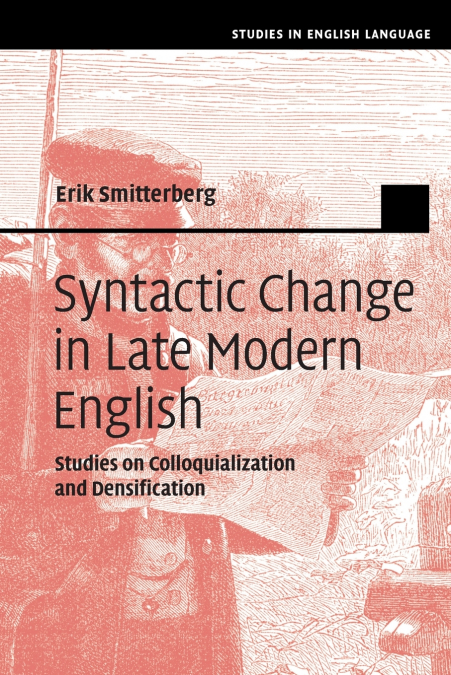
  • Syntactic Change in Late Modern English
    Erik Smitterberg
    ...
    Disponible

    38,10 €

  • Third Factors in Language Variation and Change
    Elly Van Gelderen
    ...
    Disponible

    35,80 €

  • Interfaces and Domains of Contact-Driven Restructuring
    Sandro Sessarego
    ...
    Disponible

    36,03 €

  • New Horizons in Prescriptivism Research
    This book investigates the connections between evaluative judgements on language and the larger social, cultural, and political issues that shed light on the practice of prescriptivism. The chapters cover three main areas: language, which represents the traditional roots of the study of linguistic norms in authoritative (historical) manuals and judgemental attitudes to language...
  • How Yoruba and Igbo Became Different Languages
    Bolaji Aremo
    The main objective of this study is to identify examples of genetically related Igbo and Yoruba words that might serve as further evidence in support of some linguists’ claim that the two languages developed from the same parent language. The author is a retired head of the Department of English at Obafemi Awolowo University, Nigeria. ...
    Disponible

    53,75 €

Otros libros del autor

  • Mandukya Upanishad
    Ashwini Kumar Aggarwal
    Upanishads are verses from the Vedas that have been compiled as independent and complete sets. Traditionally the verses in each Veda have been classified as Chanting portion and Analysis portion. Within the Analysis portion, a further sub-classification of verses has been done, namely Discussion, Research, Essential thought or guiding principle.This book gives a mathematical pi...
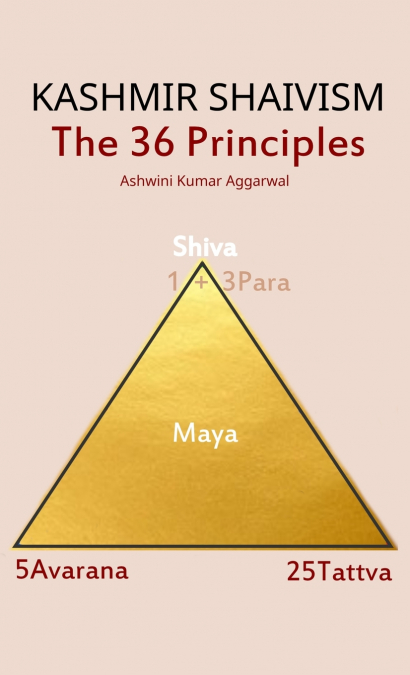
  • Kashmir Shaivism The 36 Principles
    Ashwini Kumar Aggarwal
    Kashmir Shaivism = Trika Philosophy = ThreefoldKashmir Shaivism proposes 36 discrete Principles in creation. These are categorized as Trika = the Three states of Consciousness.a) 25 gross aspects of divinity. These make up the visible spectrum of sound and light, name and form.b) 5+1 = 6 distinct aspects of divinity that have taken a subtle energy body. This form the beginning ...
  • Ayush Homa Mantras
    Ashwini Kumar Aggarwal
    Many times parents wish they could get an inkling of what happens in the temple pujas, or what the local pandit chants during a family ceremony. Parents also wish they could get a more intimate feel of the thought processes and the sacred heritage of our ancestors. Also, many hope that their children can tune in a bit as well. This book has been accordingly designed for crisp a...
    Disponible

    11,98 €

  • Ayush Homa Mantras
    Ashwini Kumar Aggarwal
    Many times parents wish they could get an inkling of what happens in the temple pujas, or what the local pandit chants during a family ceremony. Parents also wish they could get a more intimate feel of the thought processes and the sacred heritage of our ancestors. Also, many hope that their children can tune in a bit as well. This book has been accordingly designed for crisp a...
  • Nakshatra Van Celestial Garden Plantation
    Ashwini Kumar Aggarwal
    During Gurudev’s Ludhiana visit on 19th Feb, at 11:40am in Sunview office, he told us to plant a Nakshatra Van. At that time Sadhvi Hemswaroopa was present as the technical expert on such plantation, and we finally got inspired to make it.NAKSHATRA VAN = VEDIC SACRED GROVENAKSHATRA = BIRTH STAR = A Lunar Mansion, where the Moon appears each night in the sky as it waxes and wane...
  • Sanskrit Roots to Verbs VI Lring Conditional Mood
    Ashwini Kumar Aggarwal
    Roots will be conjugated similarly based on Sarvadhatuka or Ardhadhatuka Affixes. For Ardhadhatuka Tenses and Moods, लृट् लृङ् लुट् आशीर्लिङ् लिट् लुङ् the entire Dhatupatha is two groups सेट् and अनिट् । Henceसेट् Roots are conjugated similarly through the entire length of Dhatupatha.अनिट् Roots are conjugated similarly through the entire length of Dhatupatha.This book outline...