
Inicio > Medicina > Medicina preclínica: ciencias básicas > Developing a 21st Century Neuroscience Workforce
Developing a 21st Century Neuroscience Workforce

Developing a 21st Century Neuroscience Workforce

AA.VV

42,59 €
IVA incluido
Disponible
Editorial:
National Academies Press
Año de edición:
2015
Materia
Medicina preclínica: ciencias básicas
ISBN:
9780309368742
42,59 €
IVA incluido
Disponible

Selecciona una librería:

  • Librería Samer Atenea
  • Librería Aciertas (Toledo)
  • Kálamo Books
  • Librería Perelló (Valencia)
  • Librería Elías (Asturias)
  • Donde los libros
  • Librería Kolima (Madrid)
  • Librería Proteo (Málaga)

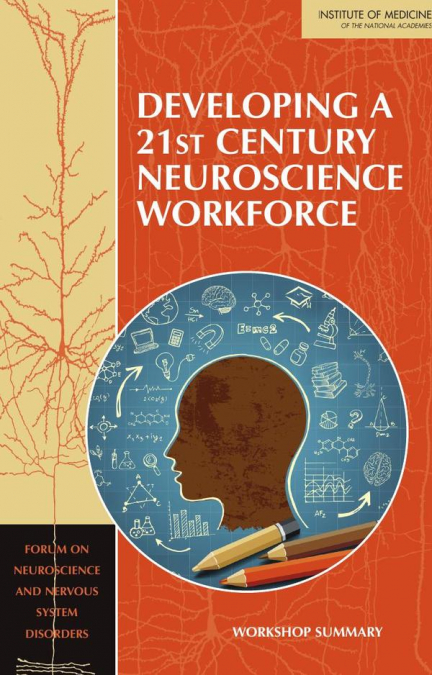
From its very beginning, neuroscience has been fundamentally interdisciplinary. As a result of rapid technological advances and the advent of large collaborative projects, however, neuroscience is expanding well beyond traditional subdisciplines and intellectual boundaries to rely on expertise from many other fields, such as engineering, computer science, and applied mathematics. This raises important questions about to how to develop and train the next generation of neuroscientists to ensure innovation in research and technology in the neurosciences. In addition, the advent of new types of data and the growing importance of large datasets raise additional questions about how to train students in approaches to data analysis and sharing. These concerns dovetail with the need to teach improved scientific practices ranging from experimental design (e.g., powering of studies and appropriate blinding) to improved sophistication in statistics. Of equal importance is the increasing need not only for basic researchers and teams that will develop the next generation of tools, but also for investigators who are able to bridge the translational gap between basic and clinical neuroscience. Developing a 21st Century Neuroscience Workforce is the summary of a workshop convened by the Institute of Medicine’s Forum on Neuroscience and Nervous System Disorders on October 28 and 29,2014, in Washington, DC, to explore future workforce needs and how these needs should inform training programs. Workshop participants considered what new subdisciplines and collaborations might be needed, including an examination of opportunities for cross-training of neuroscience research programs with other areas. In addition, current and new components of training programs were discussed to identify methods for enhancing data handling and analysis capabilities, increasing scientific accuracy, and improving research practices. This report highlights the presentation and discussion of the workshop.
Artículos relacionados

  • Biologically Inspired Networking and Sensing
    Despite their widespread impact, computer networks that provide the foundation for the World Wide Web and Internet have many limitations. These networks are vulnerable to security threats, break easily, and have a limited ability to respond to changing conditions. Recent research on overcoming these limitations has used biological systems for inspiration, resulting in the devel...
  • Systemic Approaches in Bioinformatics and Computational Systems Biology
    The convergence of biology and computer science was initially motivated by the need to organize and process a growing number of biological observations resulting from rapid advances in experimental techniques. Today, however, close collaboration between biologists, biochemists, medical researchers, and computer scientists has also generated remarkable benefits for the field of ...
  • Analytical Chemistry Essentials
    SREEKUMAR V T / V T SREEKUMAR
    Embark on a transformative journey into the captivating world of analytical chemistry with Sreekumar V T’s comprehensive guide, 'Analytical Chemistry Essentials: A Gateway to High School Mastery.' This meticulously crafted book serves as a roadmap for high school students seeking a profound understanding of analytical chemistry, bridging fundamental concepts to advanced applica...
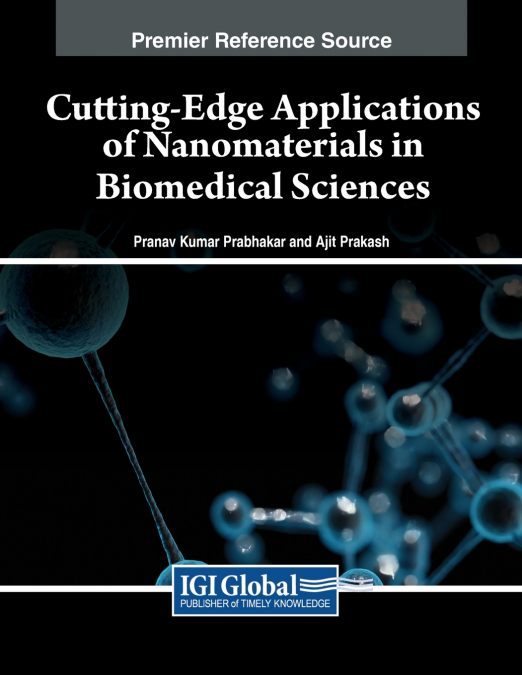
  • Cutting-Edge Applications of Nanomaterials in Biomedical Sciences
    Cutting-Edge Applications of Nanomaterials in Biomedical Sciences is a comprehensive exploration of the revolutionary impact of nanotechnology on the field of medicine. This book delves into the remarkable potential of nanomaterials in advancing medical diagnostics and therapeutics, particularly in drug delivery. It serves as an indispensable guide, presenting the latest develo...
    Disponible

    304,49 €

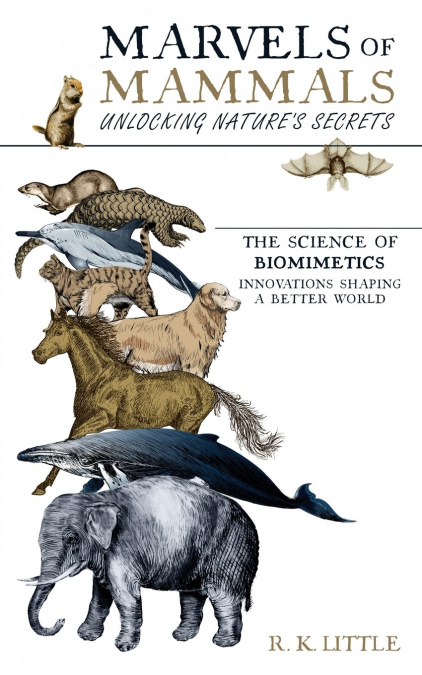
  • Marvels of Mammals
    R K Little
    Animals possess many remarkable and unique characteristics and abilities. Their agility and capabilities both educate and inspire us.This fascination has given rise to a whole field of study known as biomimetics.Inside Marvels of Mammals, you will discover how humans have been inspired to mimic the animal kingdom in the fields of robotics, aviation, nanotechnology, engineering,...
    Disponible

    16,66 €

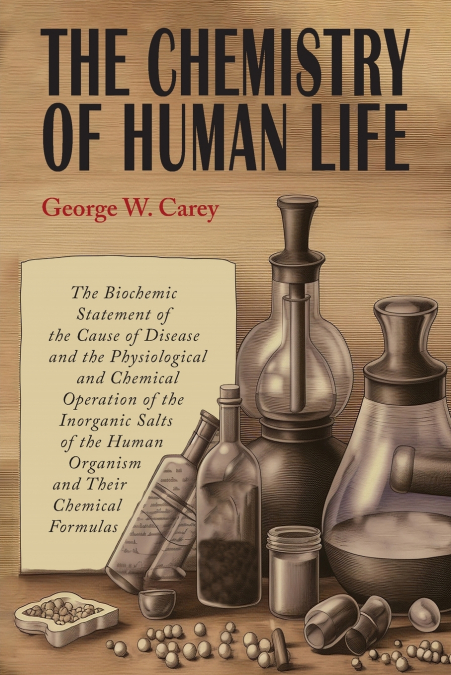
  • The Chemistry of Human Life
    George W. Carey
    2024 Reprint of the 1919 Edition.  Full facsimile of the original edition and not reproduced with Optical Recognition software.  Carey (1845 - 1924) was an American homeopath and occultist known for a number of 1910s Chemistry of Life publications, a subject which he referred to as biochemistry, and particularly for his 1919 publication, The Chemistry of Human Life. His work wa...
    Disponible

    6,95 €