 Librería Samer Atenea
 Kálamo Books
 Librería Elías (Asturias)
 Librería Kolima (Madrid)
 Librería Proteo (Málaga)
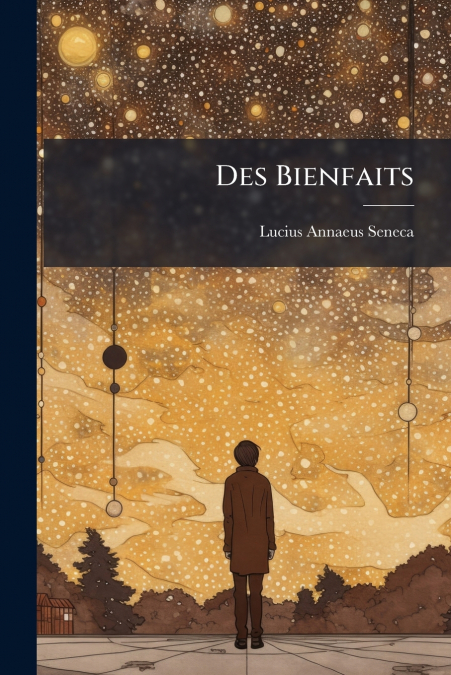
De Beneficiis (Latin for 'On Benefits') is a philosophical treatise written in Latin by Seneca the Younger. In it, Seneca explores the nature of benefits, gratitude, and the proper way to give and receive. He emphasizes the importance of intention and virtue in both giving and receiving, arguing that a benefit is only truly such when it is given with genuine goodwill and received with sincere gratitude. Seneca delves into various aspects of benefits, including their types, the motives behind them, and the effects they have on individuals and society. He stresses that the true value of a benefit lies not in its material worth, but in the moral qualities it embodies. The work provides insights into Stoic ethics and offers guidance on how to cultivate virtuous relationships through the exchange of benefits. Seneca’s reflections on gratitude highlight its significance as a social and moral virtue, essential for maintaining harmony and goodwill among people. This work has been selected by scholars as being culturally important, and is part of the knowledge base of civilization as we know it. This work was reproduced from the original artifact, and remains as true to the original work as possible. Therefore, you will see the original copyright references, library stamps (as most of these works have been housed in our most important libraries around the world), and other notations in the work.This work is in the public domain in the United States of America, and possibly other nations. Within the United States, you may freely copy and distribute this work, as no entity (individual or corporate) has a copyright on the body of the work.As a reproduction of a historical artifact, this work may contain missing or blurred pages, poor pictures, errant marks, etc. Scholars believe, and we concur, that this work is important enough to be preserved, reproduced, and made generally available to the public. We appreciate your support of the preservation process, and thank you for being an important part of keeping this knowledge alive and relevant.