Deregulating Property-Liability Insurance

Deregulating Property-Liability Insurance

J. David Cummins

36,22 €
IVA incluido
Disponible
Editorial:
Bloomsbury Publishing plc
Año de edición:
2002
ISBN:
9780815702436
36,22 €
IVA incluido
Disponible

Selecciona una librería:

  • Librería Samer Atenea
  • Librería Aciertas (Toledo)
  • Kálamo Books
  • Librería Perelló (Valencia)
  • Librería Elías (Asturias)
  • Donde los libros
  • Librería Kolima (Madrid)
  • Librería Proteo (Málaga)

'A Brookings Institution Press and American Enterprise Institute publicationOver the past two decades, the United States has successfully deregulated prices and restrictions on most previously-regulated industries, including airlines, trucking, railroads, telecommunications, and banking. Only a few industries remain regulated, the largest being the property-liability insurance business. In light of recent sweeping financial modernization legislation in other sectors of the insurance industry, this timely volume examines the basis for continued regulation of rates and forms of the U.S. property-liability insurance market.The book focuses on private passenger automobile insurance—the most important personal line of property-liability coverage, with annual premiums of about $120 billion. The authors analyze five state case studies: California, Massachusetts, and New Jersey—three of the most heavily regulated states—as well as Illinois, which has been deregulated for about 30 years, and South Carolina, which began to deregulate in 1997. The study also includes an econometric analysis based on all fifty states over a 25-year period that gauges the impact of regulation on insurance price levels, price volatility, and the proportion of automobiles insured in residual markets. The authors conclude that regulation does not significantly reduce long-run prices for consumers, and generally limits availability of coverage, reduces the quality and variety of services available in the market, inhibits productivity growth, and increases price volatility.Contributors include Dwight Jaffee (University of California, Berkeley), Thomas Russell (Santa Clara University ), Laureen Regan (Temple University), Sharon Tennyson (Cornell University), Mary Weiss (Temple University), John Worrall (Rutgers University), Stephen D'Arcy (University of Illinois, Urbana-Champaign), Martin Grace (Georgia State University), Robert Klein (Georgia State University), Richard Phillips (Georgia State University), Georges Dionne (University of Montreal), and Richard'

Artículos relacionados

  • Technological Change and the British Iron Industry, 1700-1870
    Charles K. Hyde
    This book describes technological change in an industry that played a central role in the Indsutrial Revolution. While earlier scholars have examined isolated aspects of ironmaking in the eighteenth- and nineteenth-century Britain, Charles Hyde surveys all aspects of its development. Costs, prices, profits, shrewd leaders, competition, new inventions, and productivity all figur...
    Disponible

    71,94 €

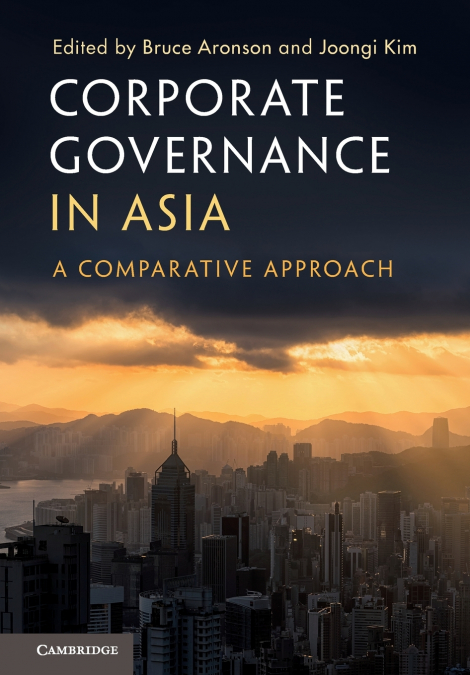
  • Corporate Governance in Asia
    ...
    Disponible

    72,99 €

  • The European Guilds
    Sheilagh Ogilvie
    A comprehensive analysis of European craft guilds through eight centuries of economic historyGuilds ruled many crafts and trades from the Middle Ages to the Industrial Revolution, and have always attracted debate and controversy. They were sometimes viewed as efficient institutions that guaranteed quality and skills. But they also excluded competitors, manipulated markets, and ...
  • Technological Change and the British Iron Industry, 1700-1870
    Charles K. Hyde
    This book describes technological change in an industry that played a central role in the Indsutrial Revolution. While earlier scholars have examined isolated aspects of ironmaking in the eighteenth- and nineteenth-century Britain, Charles Hyde surveys all aspects of its development. Costs, prices, profits, shrewd leaders, competition, new inventions, and productivity all figur...
  • Technology Differences over Space and Time
    Francesco Caselli
    Technology Differences over Space and Time looks at how countries use their productive resources-such as workers, skills, equipment and structures, and natural resources. Francesco Caselli develops methods to assess the efficiency with which productive inputs are used, and how these efficiencies vary across countries and over time.Caselli finds that richer countries use skilled...
  • Cybersecurity Measures for Logistics Industry Framework
    Global supply chains are becoming more customer-centric and sustainable thanks to next-generation logistics management technologies. Automating logistics procedures greatly increases the productivity and efficiency of the workflow. There is a need, however, to create flexible and dynamic relationships among numerous stakeholders and the transparency and traceability of the supp...

Otros libros del autor

  • Strategic Planning and Modeling in Property-Liability Insurance
    J. David Cummins
    The Geneva Association and Risk Economics The Geneva Association The Geneva Association (International Association for the Study of Insurance Economics) commenced its activities in June 1973, on the initiative of twenty-two members in eight European countries. It now has fifty-four members in sixteen countries in Europe and in the United States. The m...
    Disponible

    267,74 €

  • Strategic Planning and Modeling in Property-Liability Insurance
    J. David Cummins
    The Geneva Association and Risk Economics The Geneva Association The Geneva Association (International Association for the Study of Insurance Economics) commenced its activities in June 1973, on the initiative of twenty-two members in eight European countries. It now has fifty-four members in sixteen countries in Europe and in the United States. The m...