
Der kubanische Entwicklungsweg

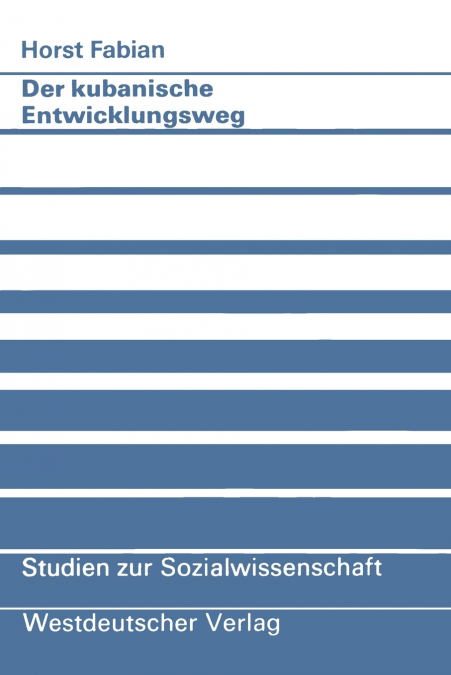
Der kubanische Entwicklungsweg

Horst Fabian

80,93 €
IVA incluido
Disponible
Editorial:
Springer Nature B.V.
Año de edición:
1981
Materia
Macroeconomía
ISBN:
9783531115528
80,93 €
IVA incluido
Disponible

Selecciona una librería:

  • Librería Samer Atenea
  • Librería Aciertas (Toledo)
  • Kálamo Books
  • Librería Perelló (Valencia)
  • Librería Elías (Asturias)
  • Donde los libros
  • Librería Kolima (Madrid)
  • Librería Proteo (Málaga)

Die zentrale Fragestellung dieser Arbeit über den postrevolu­ tionären kubanischen Entwicklungsweg war, ob, wie und warum nach 1959 die Weichen in Richtung Oberwindung der Unterent­ wicklung gestellt worden sind. In dem vorhandenen Vorverständ­ nis wurde Oberwindung der unterentwicklung nicht einfach als Erhöhung der Investitionsrate und des wirtschaftlichen t’lachstums interpretiert, sondern als strukturelle Transformation der Pro­ duktionsstruktur und Institutionen in Richtung auf eine auto­ zentrierte Volkswirtschaft, d. h. auf eine differenzierte, relativ ausgeglichene und komplette (nicht im Sinn absoluter Vollstän­ digkeit und Autarkie, sondern ohne strukturelle Defizite, so z. B. inklusive einer Kapitalgüterindustrie), integrierte Produktions­ struktur, mit Tendenz zur Oberwindung struktureller Heterogeni­ tät und zur Steigerung der nationalen Steuerungs- und Anpas­ sungsfähigkei t ~ :IvJeine ’l’hese ist, daß dies gelungen ist, ob- WUllJ. z. ’l’. auf andere Weise als zunächst in den Vorüberlegungen zu den Elementen und Bedingungen autQzentrierter Entwicklung vermutet. Während in der vorrevolutionären ausländisch dominierten Plan­ tagenökonomie die Kopplungseffekte des Zuckersektors latent blie­ oen oder extern genutzt wurden und die Diversifizierung der anderen Wirtschaft strukturell behindert wurde, fungiert der Zuckersektor im postrevolutionären Kuba in der mittelfristigen Planung als ein wirksamer Leitsektor,ohne die inkrementelle Diversi­ fizj,erung der ’i~irtschaft aus sQzioöl gesamtwirtschaftliche Erfordernisse - stimmt.
Artículos relacionados

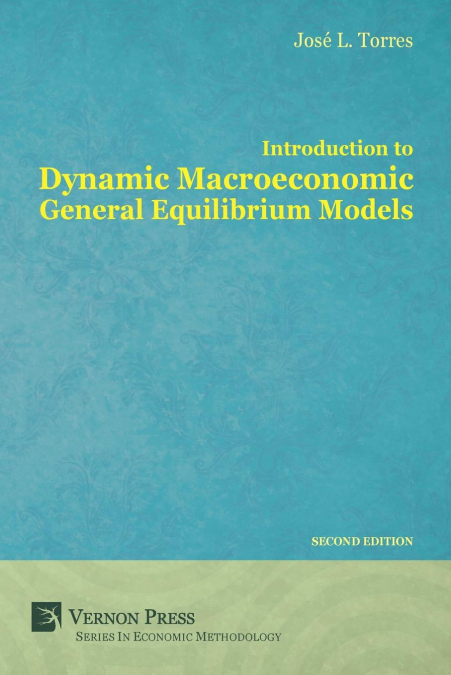
  • Introduction to Dynamic Macroeconomic General Equilibrium Models
    José Luis Torres Chacon
    This book offers an introductory step-by-step course in Dynamic Stochastic General Equilibrium modelling. Modern macroeconomic analysis is increasingly concerned with the construction, calibration and/or estimation and simulation of Dynamic General Equilibrium (DGE) models. The book is intended for graduate students as an introductory course to DGE modelling and for those econo...
    Disponible

    61,40 €

  • International Education and the Next-Generation Workforce
    Wei Wang
    Education is the first stage in developing a viable, dynamic, and long-lived global economy. Unfortunately, in times of economic hardship, educational programs, teacher salaries, and extracurricular opportunities are often the first to be cut. International Education and the Next-Generation Workforce: Competition in the Global Economy presents a detailed discussion of present e...
  • Macroeconomic Policies of Developed Democracies
    Robert J Franzese Jr
    ...
  • End Of The Road
    Louis Holder
    This book is about the mismanagement of Western economies in pursuit of political power, which resulting devastation will have to be borne by future generations. The book establishes that postponement is no longer doable and lays out the hard choices ahead causing much misery and agony.Although not fully recognized because of masking by asset bubbles, which are spun/sold as in...
    Disponible

    16,42 €

  • The Darwin Economy
    Robert H. Frank
    What Charles Darwin can teach us about building a fairer societyWho was the greater economist-Adam Smith or Charles Darwin? The question seems absurd. Darwin, after all, was a naturalist, not an economist. But Robert Frank, New York Times economics columnist and best-selling author of The Economic Naturalist, predicts that within the next century Darwin will unseat Smith as the...
    Disponible

    22,42 €

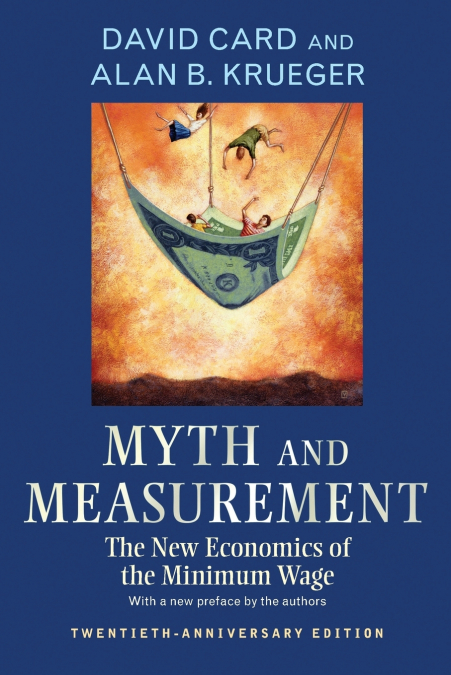
  • Myth and Measurement
    Alan B. Krueger / David Card
    From David Card, winner of the Nobel Prize in Economics, and Alan Krueger, a provocative challenge to conventional wisdom about the minimum wageDavid Card and Alan B. Krueger have already made national news with their pathbreaking research on the minimum wage. Here they present a powerful new challenge to the conventional view that higher minimum wages reduce jobs for low-wage ...
    Disponible

    39,64 €