 Librería Samer Atenea
 Kálamo Books
 Librería Elías (Asturias)
 Librería Kolima (Madrid)
 Librería Proteo (Málaga)
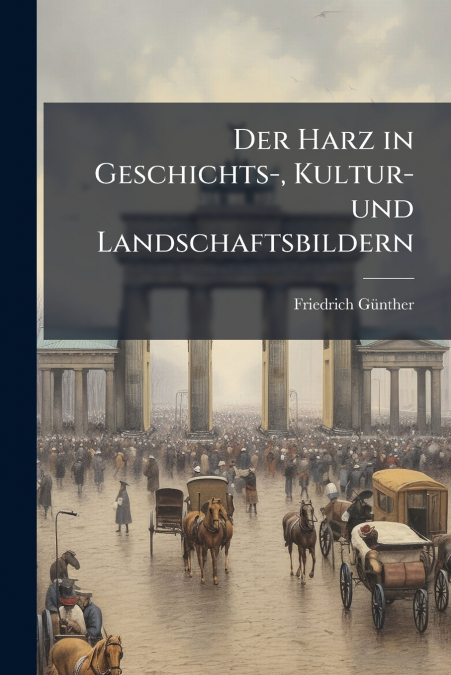
'Der Harz in Geschichts-, Kultur- und Landschaftsbildern' von Friedrich Günther ist eine umfassende Darstellung des Harzes, die Geschichte, Kultur und Landschaft dieser Region Deutschlands in den Blick nimmt. Das Buch, erstmals erschienen 1888, bietet detaillierte Einblicke in die historischen Ereignisse, die kulturellen Eigenheiten und die natürliche Schönheit des Harzes. Günther beleuchtet die Entwicklung der Region von ihren Anfängen bis ins späte 19. Jahrhundert und beschreibt detailliert die Sagen, Traditionen und Lebensweisen der Harzer Bevölkerung. Zudem widmet er sich ausführlich der Topographie und den Naturmerkmalen des Harzes, wodurch das Werk sowohl für historisch als auch für naturkundlich interessierte Leser von großem Wert ist. 'Der Harz in Geschichts-, Kultur- und Landschaftsbildern' ist somit ein unverzichtbares Werk für alle, die sich mit der Geschichte und Kultur dieser einzigartigen deutschen Region auseinandersetzen möchten.This work has been selected by scholars as being culturally important, and is part of the knowledge base of civilization as we know it. This work was reproduced from the original artifact, and remains as true to the original work as possible. Therefore, you will see the original copyright references, library stamps (as most of these works have been housed in our most important libraries around the world), and other notations in the work.This work is in the public domain in the United States of America, and possibly other nations. Within the United States, you may freely copy and distribute this work, as no entity (individual or corporate) has a copyright on the body of the work.As a reproduction of a historical artifact, this work may contain missing or blurred pages, poor pictures, errant marks, etc. Scholars believe, and we concur, that this work is important enough to be preserved, reproduced, and made generally available to the public. We appreciate your support of the preservation process, and thank you for being an important part of keeping this knowledge alive and relevant.