Inicio > Derecho > Derecho internacional > Der Grundsatz 'ne bis in idem' und seine Auslegung durch EuGH und OGH
Der Grundsatz 'ne bis in idem' und seine Auslegung durch EuGH und OGH

Der Grundsatz 'ne bis in idem' und seine Auslegung durch EuGH und OGH

Eric C. Steiner / Eric CSteiner

22,59 €
IVA incluido
Disponible
Editorial:
GRIN Verlag
Año de edición:
2013
Materia
Derecho internacional
ISBN:
9783656380849
22,59 €
IVA incluido
Disponible

Selecciona una librería:

  • Librería Samer Atenea
  • Librería Aciertas (Toledo)
  • Kálamo Books
  • Librería Perelló (Valencia)
  • Librería Elías (Asturias)
  • Donde los libros
  • Librería Kolima (Madrid)
  • Librería Proteo (Málaga)

Studienarbeit aus dem Jahr 2010 im Fachbereich Jura - Europarecht, Völkerrecht, Internationales Privatrecht, Note: 3, Karl-Franzens-Universität Graz (Europarecht), Veranstaltung: Europastrafrecht, Sprache: Deutsch, Abstract: Die vorliegende Seminararbeit beschäftigt sich mit der unterschiedlichen Auslegung des Doppelbestrafungsverbotes („ne bis in idem') durch den OGH und den EuGH.Das Verbot der Doppelbestrafung war schon im 5. Jh. vC im attischen Recht bekannt, ebenso im römischen Recht und im Sachsenspiegel. Dieses fand 1791 als Grundfreiheit Eingang in die französische Verfassung, ebenso in das 5. Amendment der Verfassung der USA (als Verbot des „double jeopardy'). Dieses Recht findet sich nicht in der EMRK selbst, sondern ist erst durch das 7. Zusatzprotokoll, welches durch Österreich ratifiziert wurde, aufgenommen worden. Durch erhebliche Auslegungsschwierigkeiten wird dieser Artikel in der Lehre oft auch als das „verflixte Siebente' bezeichnet.Dieses Recht dient dem Schutz des Normunterworfenen vor einem neuerlichen Strafverfahren, nachdem bereits ein Strafprozess durch einen Frei- oder Schuldspruch abgeschlossen wurde. Die Ziele des Doppelbestrafungsverbotes sind Rechtssicherheit und Berechenbarkeit der Strafjustiz. Diese „Sperrwirkung' betrifft lediglich Strafen im Sinne des Art. 6 EMRK, also dem Recht auf ein faires Verfahren, nicht aber andere Sanktionen wie administrative Maßnahmen wie zB den Lenkberechtigungsentzug und Disziplinarmaßnahmen. Die rechtskräftige Aburteilung muss nicht vor einem Richter stammen, es kann sich durchaus auch um ein Urteil einer Verwaltungsbehörde handeln, da man darunter die förmliche Verhängung einer Strafe wegen eines rechtswidrigen und schuldhaften Verhaltens, mithin also auch eine rechtskräftige Strafverfügung oder ein solches Straferkenntnis, zB nach dem österreichischen Verwaltungsstrafgesetz - VStG, einer Verwaltungsstrafbehörde versteht. Auch ein Strafbefehl ist denkbar.Selbst unter dem Begriff „Freispruch' ist n
Artículos relacionados

  • Comparative regulation, economic analysis, and applications of private equity in the united states and european union
    Irini Liakopoulou
    The present work examines the economics and legal doctrine of private equity. After a consideration of private equity’s origins, the book will explore the evolution of private equity in the United States and Europe. The reference economic model then will be reconstructed, with particular attention to financial flows to and from private equity firms and funds. This reconstructio...
  • Complicity in International Law
    Dimitris Liakopoulous
    Complicity in International Law aims to analyze questions arising from a state’s complicity in conflict with another state or an international organization. On the basis of international legal provisions, a state that assists the illicit fact of another state or an international organization in turn commits an offense if it is aware of the main fact and is bound by the same obl...
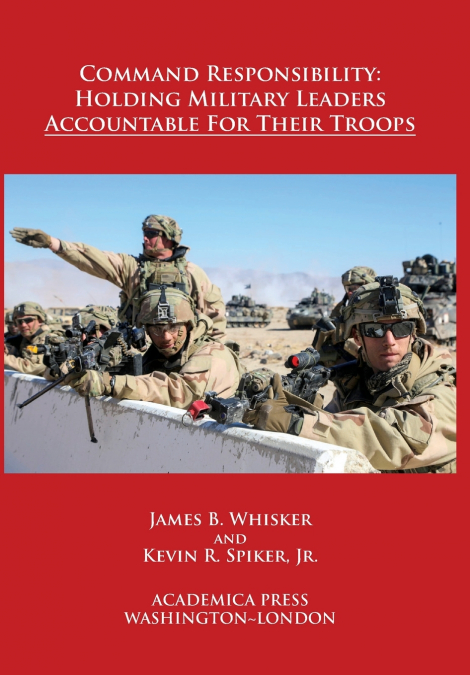
  • Command responsibility
    James B Whisker / Kevin R Spiker
    Command responsibility, or executive accountability, assumes that leaders are responsible for the actions of their subordinates. If subordinates misbehave, violate basic moral laws, transgress international law, or thwart international standards of behavior, their leader may be called before to justice. Standards that set the boundaries of human action have been evolving for ma...
  • International Organizations and Reparations
    Dimitris Liakopoulos
    In the first part of this book, noted legal scholar Dimtris Liakopoulos deals with reconstructing the legal regulatory framework governing human rights violations in the activities of organizations. After identifying rules that are generally applicable to organizations’ offenses and govern the profile of reparations, this study assesses primary rules that guarantee the right to...
  • International Organizations and Legal Sanctions Against Governments
    Dimitris Liakopoulos
    This book examines the relationship between governments and international organizations under international law. After surveying the policing powers of international organizations under international law, it illustrates some normative aspects of law that distinguish regulation from enforcement via study of recent legal cases before international judicial bodies. According to Di...
  • The EU Foreign Subsidies Regulation
    Andreas Reindl / Isabelle Van Damme
    'The EU Foreign Subsidies Regulation' is a pioneering manual authored by legal experts Andreas Reindl and Isabelle Van Damme. This essential guide, the first of its kind, is tailored for legal practitioners, offering a thorough exploration of the tools and mechanisms embedded within this novel European regulatory framework. The authors meticulously dissect the EU Foreign Subsid...