 Librería Samer Atenea
 Kálamo Books
 Librería Elías (Asturias)
 Librería Kolima (Madrid)
 Librería Proteo (Málaga)
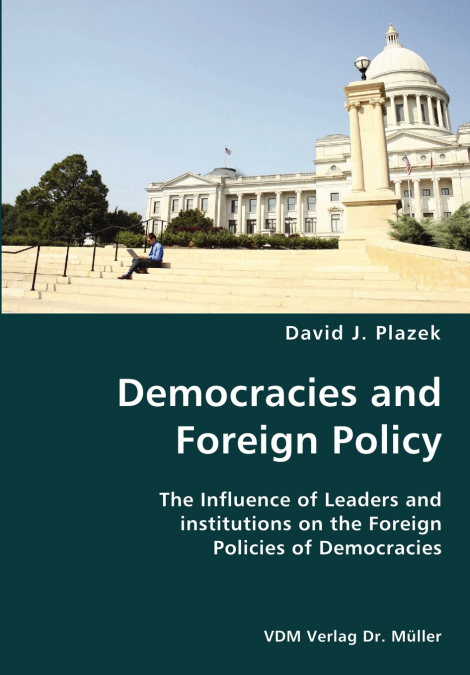
Democratic peace theory tends to view democracy in homogeneous terms.There are theoretically compelling reasons, however, to believe that variationsin democratic institutions and leadership can influence foreign policy outputs.As executive leadership is most often the center of foreign policy decision-making, one may logically question the degree to which institutions constrainleaders. This study investigates how variations in both leadership andinstitutions can affect whether democracies pursue conflictual or cooperativeforeign policies. The findings here indicate that leadership, institutions, andthe interaction between these two variables, what I call the leadership/institutionsnexus, play a significant role in shaping the international behaviors ofdemocracies. This suggests that democratic peace theory would be betterserved by interpreting democracy in a more heterogeneous fashion. The bookis designed to assist academics and foreign policy practitioners as well as avidfollowers of international relations.