 Librería Samer Atenea
 Librería Aciertas (Toledo)
 Kálamo Books
 Librería Perelló (Valencia)
 Librería Elías (Asturias)
 Donde los libros
 Librería Kolima (Madrid)
 Librería Proteo (Málaga)
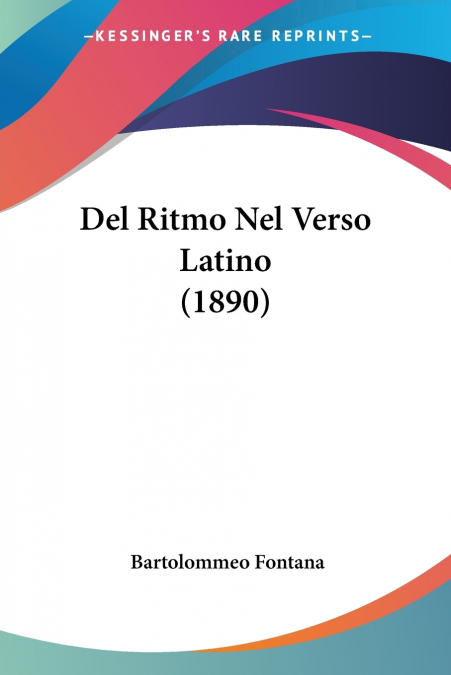
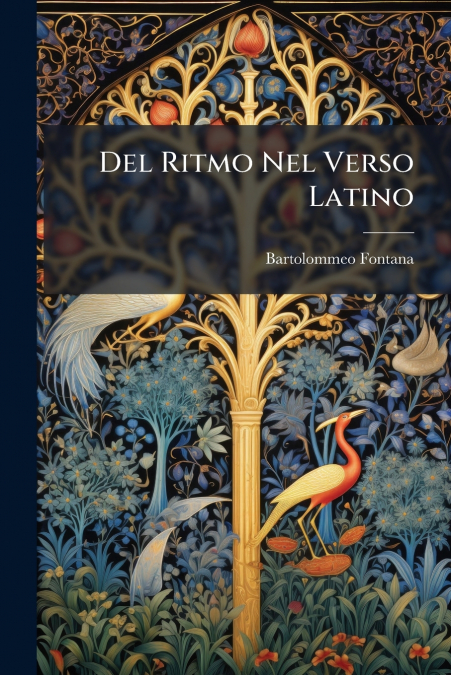
Del Ritmo Nel Verso Latino esplora in profondità le complessità ritmiche della poesia latina. Scritto da Bartolommeo Fontana, questo studio offre un’analisi dettagliata delle strutture metriche e dei modelli ritmici impiegati dai poeti latini. Il libro è una risorsa preziosa per studenti e studiosi di letteratura classica e linguistica, fornendo approfondimenti essenziali sulla musicalità e l’arte della poesia nell’antica Roma.Attraverso un’analisi rigorosa e approfondita, Fontana svela le tecniche e le convenzioni che regolano il ritmo nel verso latino, offrendo una comprensione più ricca e apprezzamento per le opere dei grandi poeti come Virgilio, Orazio e Catullo. Quest’opera rappresenta un contributo significativo alla comprensione della versificazione latina e rimane una risorsa indispensabile per chiunque sia interessato alla lingua e alla letteratura latina.This work has been selected by scholars as being culturally important, and is part of the knowledge base of civilization as we know it. This work was reproduced from the original artifact, and remains as true to the original work as possible. Therefore, you will see the original copyright references, library stamps (as most of these works have been housed in our most important libraries around the world), and other notations in the work.This work is in the public domain in the United States of America, and possibly other nations. Within the United States, you may freely copy and distribute this work, as no entity (individual or corporate) has a copyright on the body of the work.As a reproduction of a historical artifact, this work may contain missing or blurred pages, poor pictures, errant marks, etc. Scholars believe, and we concur, that this work is important enough to be preserved, reproduced, and made generally available to the public. We appreciate your support of the preservation process, and thank you for being an important part of keeping this knowledge alive and relevant.